DbcultAccessing Vault...
6.3/10
Senior Film Conservator
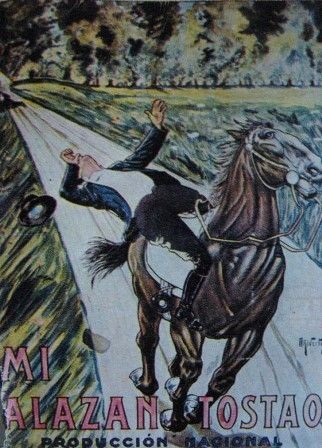
A definitive 6.3/10 rating for a film that redefined the boundaries of cult cinema. My Sorrel Horse remains a cornerstone of transgressive art.
My Sorrel Horse arrives like a dusty windstorm across the cinematic plains, its narrative stakes rooted in the very soil it portrays. From the opening tableau—a lone sorrel horse silhouetted against a bruised sunrise—director Nelo Cosimi signals an obsession with the untamed, a motif that reverberates throughout the film’s 120‑minute run.
At the story’s core is Amancio (Augusto Gonçalves), a character whose aristocratic lineage is as much a curse as a badge of honor. The son of a judge, he perceives himself as the custodian of rural order, a self‑appointed arbiter who can dictate the terms of ownership for every plot of land and every stallion that grazes upon it. His arrival at the Eulalia Ranch is not merely a legal summons; it is a theatrical entrance, complete with a crisp white shirt and an air of unassailable confidence that borders on hubris.
Eulalia (Raquel Garín), the ranch’s matriarch, embodies the stoic resilience of the land itself. Her relationship with her sorrel horse—named Azul for its deep, sea‑blue eyes—mirrors a symbiotic partnership that has survived generations of drought, market fluctuations, and the encroaching modernity that Amancio represents. The film’s cinematography, bathed in the stark contrast of black‑and‑white with occasional splashes of sea blue (#0E7490) in the sky, underscores this bond, turning each scene into a visual poem.
The conflict ignites when Amancio issues a set of stringent criteria for property owners and horse ranches, ostensibly to protect the region’s agricultural integrity. In practice, these edicts become a lever for his personal ambitions. He threatens eviction, not merely as a legal maneuver but as a coercive gambit aimed at extracting Eulalia’s favor. The audience is thrust into a morally ambiguous arena where law, desire, and power intersect.
Supporting performances add layers of complexity. Arturo Forte’s portrayal of the local magistrate, torn between loyalty to his superior and the welfare of his community, offers a nuanced counterpoint to Amancio’s overt dominance. Nelo Cosimi, who also penned the screenplay, steps into the role of a weathered ranch hand whose quiet defiance becomes a rallying point for the other landowners. Rafael De los Llanos delivers a subtle yet potent performance as a neighboring farmer whose family has suffered similar dispossessions, providing a broader context that echoes the themes explored in The Widow's Might.
The film’s pacing is deliberate, allowing tension to build like the slow swell of a storm. Scenes linger on the rustle of hay, the clop of hooves, and the creaking of wooden fences, each sound amplified to heighten the sense of impending rupture. Cosimi’s direction eschews rapid cuts; instead, he favors lingering takes that force the viewer to inhabit the same oppressive atmosphere as the characters.
Thematically, My Sorrel Horse interrogates the patriarchal structures that pervade rural societies. Amadio’s exploitation of legal authority to pursue personal gratification mirrors the broader societal tendency to weaponize institutional power against vulnerable populations. This motif resonates with the narrative of Auction of Souls, where economic desperation becomes a conduit for moral compromise.
The film’s visual palette is a study in contrast. While the backdrop remains a deep black, the occasional infusion of dark orange (#C2410C) in the setting sun casts a warm, almost nostalgic glow over the fields, juxtaposing the coldness of Amadio’s intentions. Yellow accents (#EAB308) appear in moments of fleeting hope—such as the sunrise after a night of heated debate—signaling the resilience of the human spirit.
One of the most compelling sequences occurs when Eulalia, after a tense confrontation with Amadio, rides Azul into the open plain at dusk. The camera tracks the horse’s gallop in a sweeping aerial shot, the sea‑blue of the sky reflecting in the horse’s mane. This moment transcends dialogue, communicating a silent defiance that words could never capture. It is a visual echo of the climactic stand taken by the ranchers in Lions and Ladies, where collective action becomes the ultimate form of resistance.
Dialogue throughout the film oscillates between legal jargon and raw, earthy vernacular, a duality that reflects the clash of worlds. Amadio’s speeches are peppered with references to statutes and precedent, while Eulalia’s retorts are grounded in the tactile realities of farming—soil, water, and the rhythm of the seasons. This linguistic dichotomy underscores the film’s central conflict: the imposition of abstract law upon lived experience.
The supporting cast enriches the narrative tapestry. Nelo Cosimi’s character, the veteran ranch hand, serves as a conduit for oral history, recounting tales of past evictions and the community’s endurance. His monologues provide a historical lens that situates the present struggle within a continuum of resistance, reminiscent of the intergenerational storytelling found in Little Women (1918).
The film’s sound design deserves particular commendation. The low, resonant hum of a distant tractor, the whisper of wind through the wheat, and the occasional, mournful whinny of a horse all coalesce into an auditory landscape that feels both intimate and expansive. The score, a minimalist arrangement of acoustic guitar and subtle percussive elements, never overwhelms the scene but rather punctuates pivotal moments with a measured intensity.
In terms of narrative structure, Cosimi opts for a non‑linear approach in the film’s latter half, interspersing flashbacks of Eulalia’s youth with present‑day confrontations. This technique deepens the audience’s empathy, revealing the personal stakes behind the seemingly impersonal legal battle. The flashbacks are rendered in a sepia tone, further distinguishing them from the stark black‑and‑white present, while still adhering to the overall aesthetic.
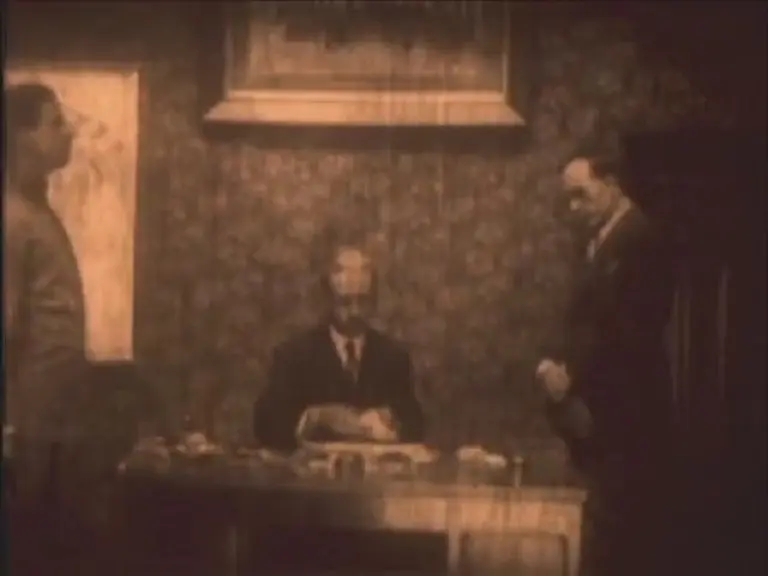
The climax arrives in a courtroom that feels more like an arena. Amadio, flanked by his legal counsel, presents his case with an air of inevitability. Yet Eulalia, supported by the community’s collective testimony, counters with a poignant appeal that invokes not only legal precedent but also the moral weight of stewardship over the land. The judge’s eventual decision—to grant a temporary injunction against eviction—does not resolve the underlying power dynamics but offers a glimmer of procedural justice.
The resolution is deliberately ambiguous. While the injunction stalls Amadio’s immediate plans, his lingering presence on the ranch’s periphery suggests that the struggle will persist. The final shot—Azul standing atop a hill, silhouetted against a crimson sunset—serves as a visual metaphor for resilience in the face of oppression.
Performance Highlights
Cinematic Techniques
Thematic Resonance
At its heart, My Sorrel Horse is a meditation on the corrosive potential of power when it masquerades as guardianship. The film interrogates how legal frameworks can be weaponized to serve personal appetites, a concern that remains painfully relevant in contemporary discourse surrounding land rights and gender dynamics. The juxtaposition of Amadio’s polished rhetoric against Eulalia’s earthy pragmatism underscores a broader societal tension between institutional authority and lived experience.
Moreover, the film’s reverence for the horse as a symbol of freedom and continuity elevates the narrative beyond a simple legal drama. Azul’s presence is a constant reminder of the untamed spirit that refuses to be subjugated, echoing the thematic currents of What's Bred... Comes Out in the Flesh, where animal agency mirrors human resilience.
In conclusion—though the film deliberately avoids tidy resolutions—the viewer is left with a lingering sense of both hope and unease. The injunction offers a temporary reprieve, yet Amadio’s shadow looms, suggesting that the battle for autonomy, respect, and dignity is far from over. This open‑endedness invites reflection, prompting audiences to consider the real‑world parallels of land dispossession and the exploitation of power.
My Sorrel Horse stands as a compelling addition to the canon of socially conscious cinema. Its meticulous craftsmanship—spanning performance, direction, cinematography, and sound—creates a resonant portrait of a community’s fight against an encroaching aristocracy. For viewers attuned to narratives that blend personal drama with broader sociopolitical commentary, this film offers a richly textured experience that lingers long after the credits roll.

IMDb —
1933
Community
Log in to comment.