DbcultAccessing Vault...
Cult Review
Senior Film Conservator
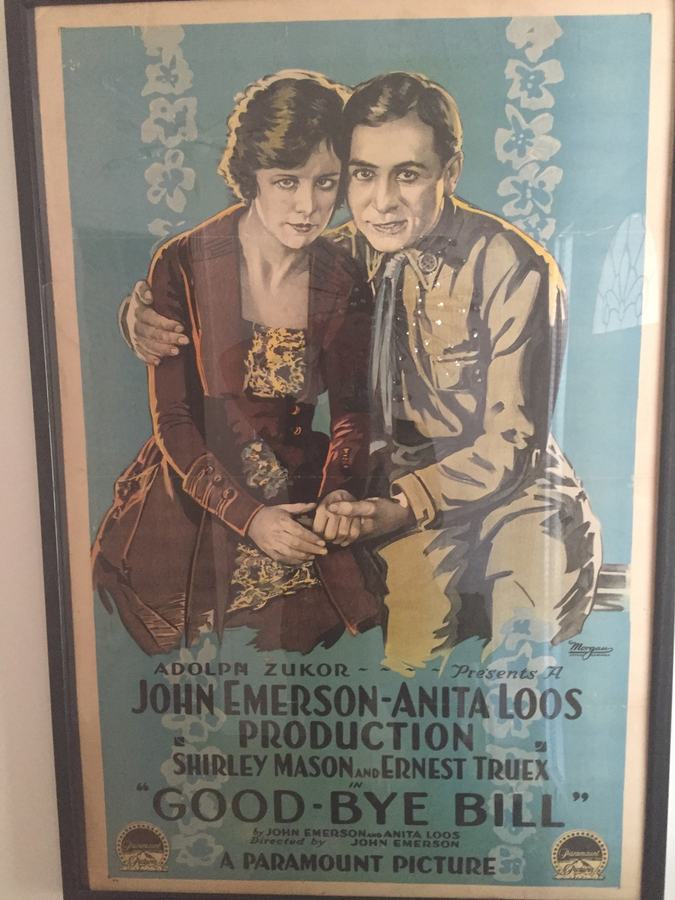
In the annals of cinematic history, few films capture the peculiar zeitgeist of wartime propaganda quite like the 1918 silent comedy, Good-Bye, Bill. It's a whimsical, almost hallucinatory journey into the heart of World War I, filtered through a lens of patriotic fervor and outright absurdity. The premise itself is a testament to the era's inventive, often outlandish, approaches to storytelling: a German-American professor, Herr Dresser, residing in West Hoboken, New Jersey, stumbles upon an invention that could, theoretically, alter the course of human conflict. Not a super-weapon of mass destruction, nor a stealth device, but a 'mustache fixer.' This tonic, designed to stiffen whiskers into an intimidating, fierce configuration, becomes the unlikely MacGuffin that propels the narrative into a dizzying spiral of international intrigue and romantic escapades.
The film, penned by the illustrious duo John Emerson and Anita Loos, wastes no time in establishing its outlandish stakes. Dresser's seemingly innocuous invention catches the eye of none other than Kaiser Wilhelm II, who, with a characteristic blend of imperial arrogance and strategic myopia, recognizes its potential to transform his entire army into a legion of fearsome, bristling warriors. The imagery alone is enough to elicit a chuckle: thousands of German soldiers, their faces adorned with rigidly upright mustaches, marching into battle. It's a comedic inversion of military might, reducing the gravitas of war to a matter of facial hair. This summons to Berlin, however, throws Dresser's ardently patriotic daughter, Elsie, into a profound moral quandary. An American through and through, she finds herself reluctantly entangled in the enemy's machinations, a prisoner of her father's peculiar genius.
Elsie's predicament is not lost on her devoted sweetheart, Teddy Swift, portrayed with an endearing blend of earnestness and comedic timing by Ernest Truex. Disturbed by the unfolding events, Teddy resolves to follow Elsie to Germany, a mission fueled by love and burgeoning patriotism. His determination to earn enough money for the journey underscores the personal sacrifices demanded by the war, even in a narrative so steeped in farce. When the United States finally casts its lot with the Allies, Teddy's personal quest seamlessly merges with the national imperative. He enlists with a zeal that speaks volumes about the popular sentiment of the era, transforming from a lovesick suitor into a bona fide American soldier. His subsequent deployment, by a stroke of narrative convenience that only silent comedies can truly pull off, lands him directly in Berlin, setting the stage for a dramatic rescue mission.
The narrative then shifts into high-octane adventure, a thrilling sequence of clandestine operations and daring escapes. Teddy's primary objective: to liberate Elsie from her German captivity. Shirley Mason, as Elsie, imbues her character with a spirited defiance that makes her more than just a damsel in distress; she is an active participant in her own liberation, a reflection of the emerging, more independent female archetypes in early cinema. Their combined efforts lead them through a series of nail-biting encounters, each escape more improbable than the last, building a delightful sense of suspense tempered by the underlying comedic tone. The film masterfully employs visual gags and physical comedy, characteristic of the silent era, to underscore the absurdity of their situation while simultaneously advancing the plot with a brisk, engaging pace.
The climax of their daring escapade involves infiltrating the very heart of the enemy's war effort: the mustache factory. This scene is a brilliant piece of visual satire, depicting a factory churning out not munitions, but vials of hair tonic, a poignant commentary on the often-misguided priorities and trivialities that can emerge even in the gravest of conflicts. The blowing up of the factory is a moment of triumphant rebellion, a symbolic blow against the Kaiser's perceived invincibility, and a declaration of American ingenuity overcoming German mechanization. It's a grand, explosive gesture that perfectly encapsulates the film's blend of lightheartedness and patriotic fervor. The immediate aftermath sees Teddy and Elsie brought before the furious Kaiser, a moment designed for maximum dramatic tension, yet always with an undercurrent of impending comedic resolution.
The ultimate rescue arrives in the nick of time, a classic cinematic trope executed with satisfying flourish. American troops, sweeping into Berlin, storm the palace, a vivid representation of the Allied victory. The ensuing chaos culminates in the Kaiser's symbolic, and literal, downfall: he loses his mustache. This final, farcical indignity is the perfect capstone to the narrative, signifying not just a personal humiliation but the utter defeat of his imperial ambitions and, by extension, the end of the war. It's a powerful visual metaphor, reducing the architect of a global conflict to a figure of comedic pathos, shorn of his defining characteristic and, thus, his power. The film's conclusion, while overtly propagandistic, delivers its message with a charming wink and a smile, leaving audiences with a sense of patriotic satisfaction and a good-natured chuckle.
The creative genius behind Good-Bye, Bill lies squarely with its writing team, John Emerson and Anita Loos. This formidable duo was renowned for their sophisticated wit and keen understanding of comedic pacing, a rarity in the early days of silent cinema. Loos, in particular, was a pioneering figure, her sharp observations on human nature and social foibles often elevating what could have been mere slapstick into something far more incisive. Their screenplay for Good-Bye, Bill is a masterclass in blending farce with patriotic sentiment, creating a narrative that is both entertaining and ideologically resonant. They understood the power of visual comedy, knowing precisely when to deploy a broad physical gag and when to allow the inherent absurdity of the situation to carry the humor.
Their collaboration often resulted in films that defied simple categorization, and Good-Bye, Bill is no exception. It's a romantic comedy, a wartime adventure, and a satirical commentary all rolled into one. Unlike many contemporary films that relied heavily on melodrama or straightforward action, Emerson and Loos injected a distinctive intellectual playfulness into their work. They crafted characters with discernible motivations, even if those motivations were wrapped in a layer of comedic exaggeration. Herr Dresser, for instance, is not simply a mad scientist; he is a German-American caught in a cultural crossfire, his invention a symbol of his unwitting complicity. Elsie is not a passive heroine; she is a woman of conviction, driven by her American identity. These nuances, subtle as they might be in a silent film, are the hallmarks of their superior craftsmanship.
The success of any silent comedy hinges significantly on the expressive capabilities of its cast, and Good-Bye, Bill is fortunate to have a lineup capable of delivering its unique brand of humor. Ernest Truex, as Teddy Swift, is the film's beating heart. His portrayal is a delicate balance of earnestness and physical comedy. He conveys Teddy's romantic devotion to Elsie with genuine warmth, making his patriotic transformation feel authentic rather than merely a plot device. His wide-eyed reactions to the escalating absurdity around him provide a relatable anchor for the audience, drawing them into the fantastical narrative with an easy charm. Truex's ability to communicate complex emotions and comedic timing without dialogue is truly commendable, a testament to his stage background.
Shirley Mason, as Elsie Dresser, is equally compelling. She brings a vibrant energy to the role, embodying the spirit of American patriotism without resorting to one-dimensional flag-waving. Elsie is resourceful, brave, and fiercely independent, a character who actively participates in her own destiny rather than merely awaiting rescue. Mason's animated expressions and decisive actions ensure Elsie is a memorable figure, a heroine who can hold her own amidst the chaos. Joseph Allen Sr. as Herr Dresser, the unwitting inventor, provides a solid comedic foil. His befuddled demeanor and gradual realization of the implications of his invention are played for maximum comedic effect, anchoring the film's central conceit with a touch of endearing eccentricity.
The caricatured portrayal of Kaiser Wilhelm, a staple of wartime propaganda films, is handled with an appropriate blend of menace and buffoonery. While his presence is meant to evoke the enemy, the film never loses sight of its comedic objectives, ensuring his ultimate defeat is both satisfyingly dramatic and humorously undignified. The entire ensemble works in concert, understanding the delicate balance required to make such an outlandish premise not only believable within its own framework but also genuinely entertaining. Their performances are a vibrant encapsulation of the silent film era's unique acting style, where exaggerated gestures and facial expressions conveyed worlds of meaning.
Released in 1918, Good-Bye, Bill stands as a fascinating artifact of World War I-era cinema. It reflects the prevailing sentiment of its time, a blend of fervent patriotism, demonization of the enemy, and a need for escapist entertainment amidst global conflict. Many films of this period, such as the more dramatic and somber narratives like The World Against Him or Heroes of the Cross, focused on the brutal realities or heroic sacrifices. Good-Bye, Bill, however, chose a different path, leveraging comedy to rally spirits and satirize the enemy. This approach, while less common than outright melodramas, was nonetheless effective in shaping public opinion and providing a much-needed morale boost. The film's lighthearted take on the war allowed audiences to confront anxieties without being overwhelmed by them, offering a cathartic release through laughter.
The 'mustache fixer' itself is a brilliant piece of allegorical invention. It symbolizes the often-absurd nature of military innovation and the desperate attempts to gain an advantage, no matter how trivial. It’s a subtle critique, perhaps, of the grandiosity and superficiality that can sometimes accompany the machinery of war. The film's conclusion, with the Kaiser losing his mustache, is a potent visual metaphor for emasculation and defeat, a playful yet powerful image that resonates with the desire for a swift and decisive end to the conflict. It speaks to the universal human impulse to reduce formidable adversaries to manageable, even laughable, figures.
While Good-Bye, Bill may not possess the same enduring artistic reverence as some of its more dramatic contemporaries, its historical significance as a piece of wartime propaganda and comedic filmmaking cannot be overstated. It offers a unique window into the cultural psyche of America during WWI, showcasing how humor was employed as a tool for national unity and psychological warfare. Its blend of romance, adventure, and political satire, all wrapped in a visually engaging silent film package, makes it a compelling study for anyone interested in early cinema or the intersection of art and conflict. The film remains a testament to the ingenuity of filmmakers like Emerson and Loos, who, even under the shadow of global war, found ways to entertain, inspire, and provoke thought through the magic of the moving image. It reminds us that even in the gravest of times, there is always room for a good laugh, especially when it comes at the expense of tyranny.

IMDb 6.3
1930
Community
Log in to comment.