DbcultAccessing Vault...
Cult Review
Senior Film Conservator
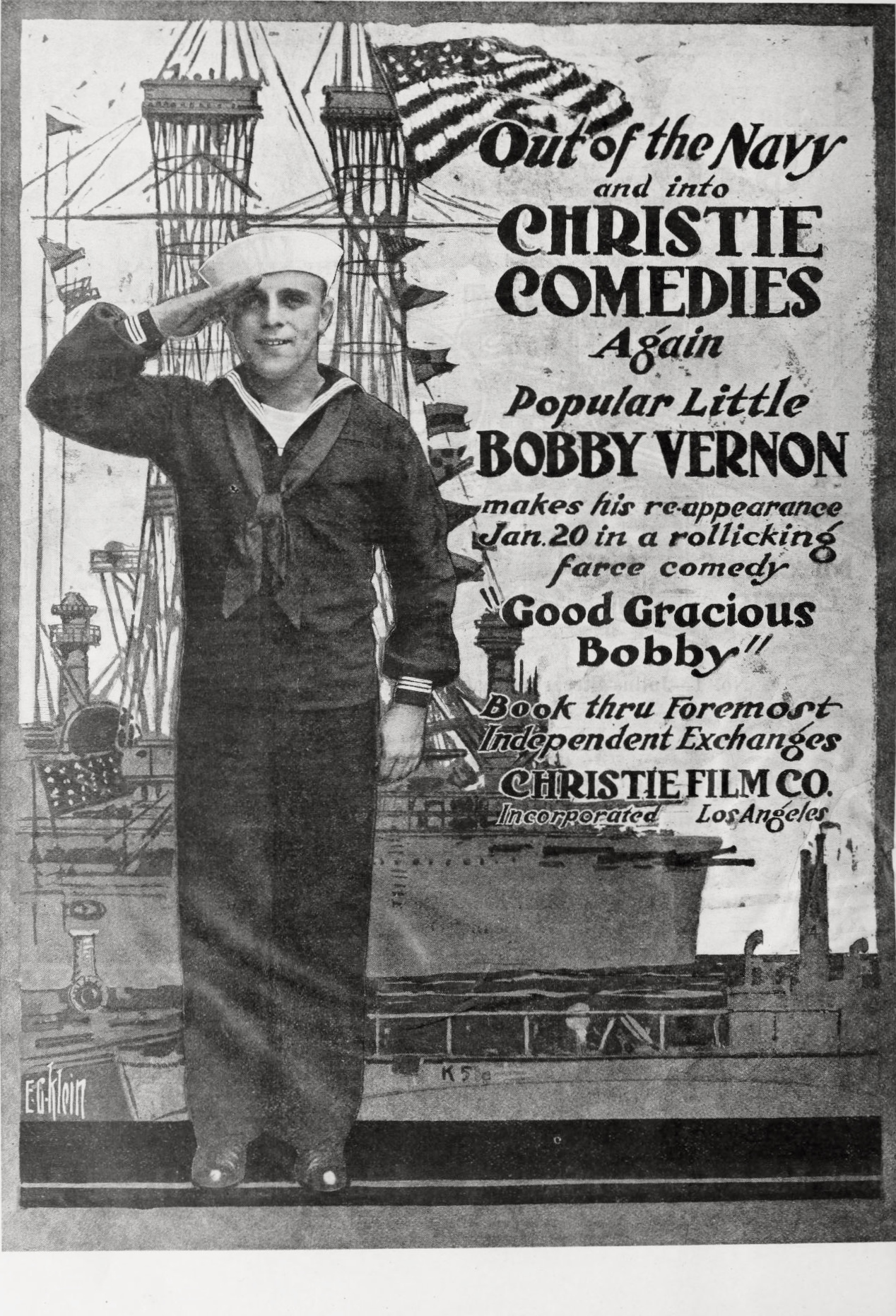
Good Gracious, Bobby, a 1918 silent romp, thrusts its titular protagonist into a sartorial masquerade that feels both absurdly comic and oddly prescient. The narrative commences with a troupe of schoolgirls awaiting their chaperone, only to be abandoned by circumstance. Bobby, portrayed by the effervescent Bobby Vernon, is coerced by his peers into assuming the role, a decision that propels the film into a cascade of farcical set‑pieces. The moment he slips into a frilly dress, the audience is invited to witness a subversion of gender expectations that predates contemporary discourse by a century.
The costume itself is a visual punchline: a pastel gown embroidered with delicate motifs, a bonnet perched at a jaunty angle, and a pair of dainty shoes that squeak with each tentative step. This wardrobe becomes a narrative engine, driving Bobby into situations where his performance oscillates between earnest devotion and comedic exaggeration. The film’s cinematography captures the texture of the fabric, the soft rustle echoing against the stark black backdrop, while the intertitles punctuate each mishap with wry commentary.
The girls, a chorus of giggling innocence, treat Bobby’s faux‑feminine guise with a mixture of reverence and playful affection. Their kisses—delivered to his cheek, forehead, and even the back of his hand—serve as both a comedic device and a subtle exploration of affection directed toward a figure of authority. In these moments, the film flirts with the notion of performative gender, suggesting that the trappings of femininity can elicit a different kind of respect and tenderness.
Bobby Vernon’s physicality shines throughout. He navigates the delicate dance of maintaining poise while contending with the impracticalities of his attire—tripping over lace, fumbling with a parasol, and attempting a waltz that devolves into a slapstick tumble. The choreography, while deliberately clumsy, showcases Vernon’s mastery of silent-era slapstick, reminiscent of the kinetic brilliance seen in The Mark of Cain’s chase sequences.
Patricia Palmer delivers a poised performance as the matronly figure who arrives belatedly, her entrance framed by a soft focus that contrasts with the frenetic energy of Bobby’s masquerade. Dorothy Devore, embodying the spirited ingénue, provides a counterpoint with her sharp wit and lingering glances that hint at an unspoken admiration for the “chaperone.” Earle Rodney’s role as the bewildered suitor adds an extra layer of comic tension, as he attempts to reconcile his expectations with the absurd reality before him.
The film adheres to a tight three‑act structure. Act one establishes the crisis—the missing chaperone—and the forced disguise. Act two escalates as Bobby’s attempts at decorum become increasingly ludicrous, culminating in a garden promenade where the girls, enamored, parade him before a bewildered audience. Act three resolves with the arrival of the legitimate chaperone, whose stern demeanor instantly restores order, yet leaves the audience with a lingering sense of the transitory nature of identity.
Beyond its surface comedy, Good Gracious, Bobby subtly interrogates the fluidity of gender roles. By placing a male protagonist in a traditionally female position of care, the film invites viewers to question the rigidity of societal expectations. This thematic thread aligns with later works such as La belle Russe, which also explores identity through performance.
The cinematographer employs stark contrasts: the luminous white of the dresses against the inky backdrop, punctuated by splashes of dark orange (#C2410C) in set decorations and props, while the occasional sea‑blue (#0E7490) drapery provides a cool counterbalance. This palette not only enhances visual interest but also underscores the emotional oscillation between embarrassment and exhilaration.
When juxtaposed with contemporaneous comedies like The Reward of the Faithless, Good Gracious, Bobby distinguishes itself through its focus on gender masquerade rather than mere situational humor. Its willingness to flirt with subversive ideas prefigures later silent gems such as The Perils of Divorce, which also leverages domestic scenarios to probe deeper societal currents.
Although the film did not achieve blockbuster status in its era, modern scholars have revisited it for its daring approach to gender performance. Its inclusion in retrospectives on early queer cinema underscores its relevance. The film’s preservation in several archives ensures that contemporary audiences can still experience its blend of slapstick and subtle critique.
Good Gracious, Bobby endures as a testament to the silent era’s capacity for layered storytelling. Its comedic veneer masks a nuanced exploration of identity, making it a rewarding watch for cinephiles interested in the intersection of humor, gender, and early twentieth‑century social mores. The film’s vibrant visual style, deft performances, and daring premise secure its place as a noteworthy artifact in the annals of cinematic history.
IMDb —
1923
Community
Log in to comment.