DbcultAccessing Vault...
Cult Review
Senior Film Conservator
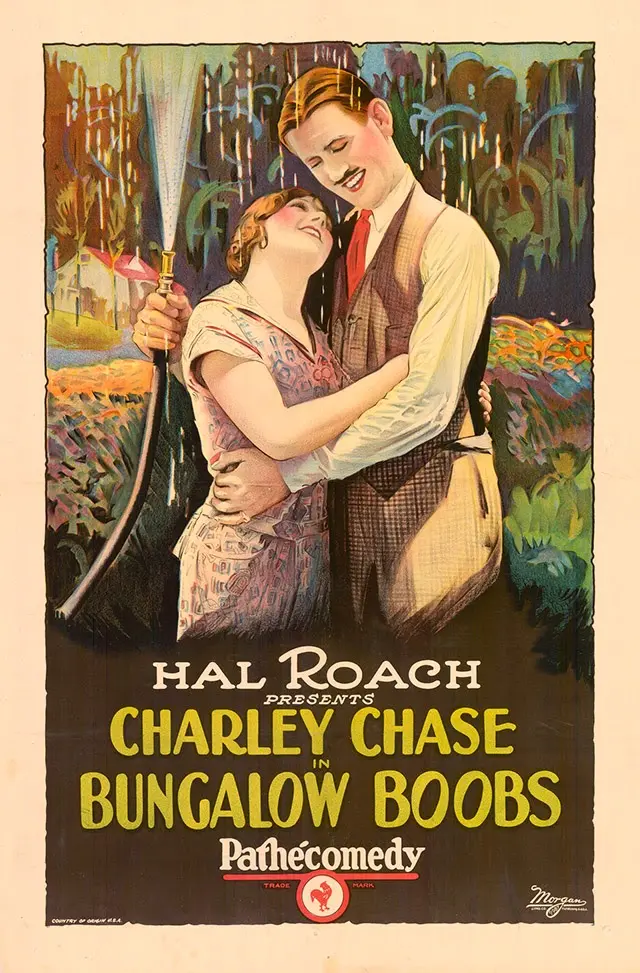
The cinematic landscape of 1924 was a crucible of comedic experimentation, and few figures navigated this terrain with as much suave agility as Charley Chase. In Bungalow Boobs, Chase—appearing as his recurring persona Jimmy Jump—delivers a performance that transcends simple physical comedy, touching upon the anxieties of the burgeoning American middle class. Unlike the more surreal antics found in This Way Out, this film anchors its humor in the tangible, albeit flimsy, reality of real estate and social standing. It is a work that manages to be both a hilarious romp and a biting critique of the 'kit-home' era.
The premise is deceptively simple: a man buys a house and it falls apart. Yet, under the direction of Leo McCarey, Bungalow Boobs transforms this mundane nightmare into a choreographed ballet of destruction. The bungalow itself is the silent antagonist of the piece. During the early 1920s, the dream of homeownership was being sold as a prefabricated reality, a sentiment echoed in the sentimental dramas of the time like The Old Nest. However, Chase subverts this sentimentality. His Jimmy Jump is not building a legacy; he is buying a facade. The pride he feels as he carries Beth Darlington across the threshold is palpable, which makes the subsequent disintegration of the property all the more visceral.
The arrival of the neighbors serves as the catalyst for the film's descent into chaos. While many silent shorts of the period, such as The Stimulating Mrs. Barton, dealt with the social frictions of domestic life, Bungalow Boobs literalizes these frictions. The neighbor, played with a terrifyingly casual destructive energy by Leo Willis, represents the 'expert' whose knowledge is a weapon. As a builder who finds Jimmy’s home 'below par,' Willis doesn't just offer advice; he performs a live-action demolition. The way he pokes holes through the floorboards as if they were made of wet parchment is a masterclass in visual hyperbole.
There is a profound cynicism lurking beneath the laughter. In an era where films like The Dawn of Freedom celebrated the promise of a new world, Chase suggests that this new world is built on shoddy foundations. The destruction of the plumbing is particularly noteworthy. As water erupts from the floor, it symbolizes the uncontrollable nature of the modern world. Jimmy Jump tries to maintain his dignity—a hallmark of the Chase character—while his very environment conspires against him. This 'dignity under fire' is what separates Chase from the more chaotic energy of Buster Keaton or the pathos of Chaplin. Chase is the man we all know: the one who wants to look good in front of the neighbors even as his roof is caving in.
The pacing of the film is relentless. It shares a certain rhythmic intensity with international thrillers like De røvede Kanontegninger, though directed toward a much different end. Every time the audience thinks the destruction has peaked, Willis finds a new structural weakness to exploit. It is a deconstruction of the 'Home Sweet Home' trope that was so prevalent in Victorian-era adaptations like Barnaby Rudge. Here, the home is not a sanctuary; it is a trap.
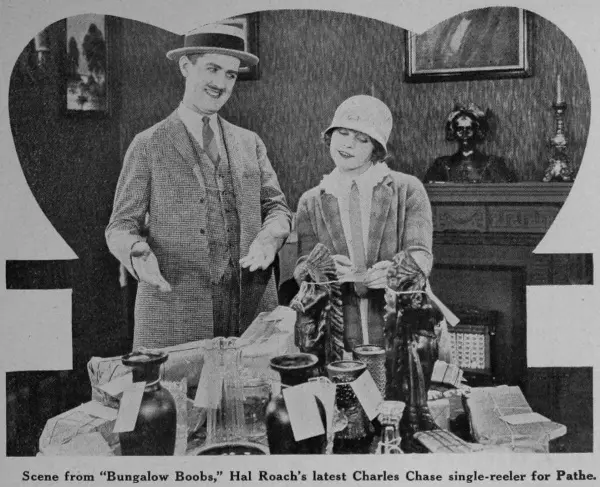
The cast is impeccably utilized. Helen Gilmore provides a wonderful foil to the madness, her reactions grounding the escalating absurdity. The chemistry between the actors suggests a world that exists beyond the frame—a neighborhood of busybodies and critics that feels eerily modern. The cinematography, while standard for the Roach lot, excels in capturing the depth of the bungalow's interior, allowing the audience to see the destruction unfolding in both the foreground and background. This layering of gags is something that would later be perfected in the sound era, but it is already fully realized here.
When comparing this to other films of the decade, such as the gritty realism of The Sea Wolf or the epic scale of The Queen of Sheba, Bungalow Boobs might seem like a minor entry. However, its influence on the domestic sitcom cannot be overstated. It captures a specific type of American masculine anxiety—the fear of being a 'boob' or a failure in the eyes of one's peers and spouse. The title itself is a double entendre, mocking both the structural 'boobs' (errors) and the characters who inhabit them.
The final sequence, where the guests depart and leave Jimmy in a literal skeleton of a house, is hauntingly funny. It lacks the redemptive arc of Mr. Opp or the moral clarity of Under Suspicion. Instead, it leaves us with the image of a man standing amidst the ruins of his ambition. It is a nihilistic conclusion wrapped in a comedic bow. The film’s brevity is its strength; it doesn't overstay its welcome, much like the neighbors eventually do. It is a sharp, twenty-minute burst of architectural satire that remains relevant in an age of 'flipping' houses and suburban sprawl.
Even when compared to the high-stakes drama of 5,000 Reward, the stakes in Bungalow Boobs feel more personal. The loss of a home is a primal fear, and seeing it played for laughs requires a delicate touch. Chase and McCarey navigate this by making the destruction so over-the-top that it becomes abstract. The neighbor pulling down a pillar isn't just an act of vandalism; it's a philosophical statement on the transience of material goods. It’s a theme that resonates even in more obscure works like Centocelle or the maritime chaos of The Skipper's Narrow Escape.
In the broader context of 1920s cinema, including historical pieces like When Broadway Was a Trail or the financial comedies like Dodging a Million, Bungalow Boobs stands out for its focus on the immediate, physical environment. It doesn't need a million dollars or a trail to Broadway to tell its story; it just needs four walls and a very enthusiastic neighbor with a sledgehammer mentality. Charley Chase’s Jimmy Jump remains one of the most relatable figures of the silent era, a man whose only crime was wanting a nice place to live and a few friends to share it with. The fact that his dream ends in a pile of sawdust and broken pipes is a testament to the film's enduring, darkly comic spirit.
Ultimately, Bungalow Boobs is a essential viewing for anyone interested in the evolution of visual storytelling. It demonstrates how a simple set—a bungalow—can be utilized as a character in its own right, reacting and changing as the plot progresses. The film’s legacy is found in every modern comedy where a character’s pride is systematically dismantled by the world around them. It is a masterpiece of the 'small' story, told with grand, destructive gestures.
IMDb —
1923
Community
Log in to comment.