DbcultAccessing Vault...
Cult Review
Senior Film Conservator
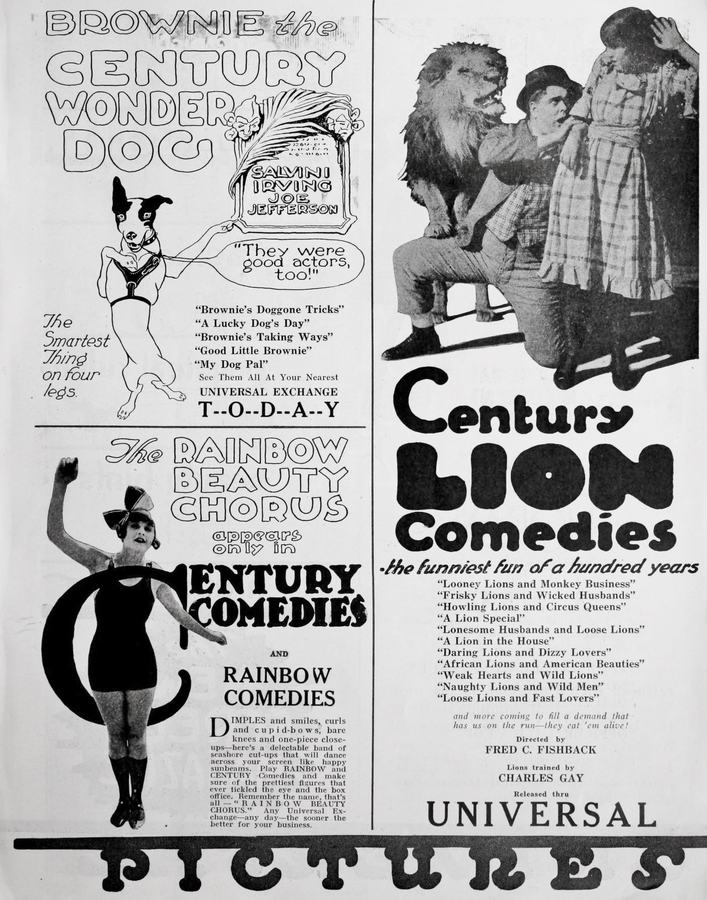
There are films that bark and films that bite; Good Little Brownie does neither—it simply listens with the patience of a dog who knows the precise moment your sorrow will collapse into petting.
In the taxonomy of silent comedies, this seaside trifle is usually shelved somewhere between Nonsense and The Frisky Mrs. Johnson, yet it secretes an emotional pheromone those louder cousins never possessed. Shot on California’s half-abandoned Balboa Peninsula during the off-season of 1923, the picture exhales a salt-cured melancholy—an ache for summers you might never have lived but somehow remember.
The narrative engine is a MacGuffin worthy of a pastry chef: a parchment scrawled with the formula for marzipan moonlets, petits fours rumored to taste like the year you turned ten and the world still had edges. When the parchment vanishes, suspicion ricochets onto Brownie, whose tail is already guilty of wagging at inappropriate speeds. What unfolds is less a hunt than a danse macabre of small-town desires: the apprentice baker (Cliff Bowes, all elbows and yearning) hopes the moonlets will fund elopement; the cloud-sketcher (Virginia Warwick, eyes like unanswered letters) wants to trade them for train fare to anywhere; the widow (Merta Sterling, whose laugh arrives fashionably late) merely wishes to remember her honeymoon’s perfume.
The film’s miracle is its refusal to treat these longings as punchlines. Even when Bowes catapults face-first into a vat of taffy—his limbs webbed in pastel sinew—the moment lingers long enough for us to taste his panic. Director Ralph C. Paine (whose career never again reached such gossamer heights) intercuts the slapstick with close-ups of Brownie’s eyes, twin black mirrors reflecting human folly. In those pools we glimpse the film’s covert thesis: memory is edible, but you’ll cut your mouth on the shards.
Brownie—billed simply as “Brownie the Dog” in the kind of democratic credit sequence silents adored—operates like a furry Brechtian device. He never speaks yet repeatedly redirects plot currents by the angle of his ears. Watch how, midway through, he plants himself on the pier’s edge, fur backlit into a corona. The camera dollies until the ocean fills the frame, transmuting the dog into a silhouetted oracle. Adults behind him scramble, accuse, repent; Brownie merely waits, knowing the tide will exhume whatever secrets need air. It’s a moment of pure visual liturgy, equal parts Kaieteur, the Perfect Cataract and The Hazards of Helen, yet distilled through animal stoicism.
Compare this to the anthropomorphic hijinks of The Amazing Quest of Mr. Ernest Bliss, where dogs fetch wallets and unravel plots with Swiss-watch precision. Brownie’s genius lies in withholding—he never fetches; he invites you to fetch meaning from his silence.
Cinematographer Frank Cotner—whose name history has misspelled more often than it has spelled—shoots the seaside fair at twilight through a diffusion filter smeared with petroleum jelly, turning every bulb into a dandelion head. The ferris-wheel sequence deserves anthology status: cabins ascend like slow comets, their occupants framed against a sky the color of bruised peaches. Inside one car, Bowes and Warwick share a wordless courtship: he offers a cracked marzipan moonlet rescued from the sand; she accepts it as if receiving communion. Below, Brownie circles the machinery, his bark unheard yet somehow felt on the soundtrack as a tremor of light organ chords.
The film’s tinting strategy—amber for interiors, cerulean for exteriors, rose for anything resembling epiphany—anticipates the emotional color-coding of later Technicolor reveries like The Light of Western Stars. Yet here the hues feel breathy, as though applied by a child with a sponge, allowing scratches and watermarks to peek through like history’s freckles.
While the plot pirouettes around pastry, its subconscious worry is labor. The baker’s apprentice totes sacks of flour that dwarf his torso; the widow counts coins into a mason jar labeled “Atlantic City or Bust”; the cloud-sketcher sells charcoal portraits for nickels, her smudged fingers ghostly with erased eyes. Their economic precarity seeps into every frame, yet the film refuses proletarian sermon. Instead, it stages communal resistance through play: a taffy-pull becomes group therapy, a sack race morphs into redistribution of winnings, the ferris-wheel’s circular motion mocks the linear grind of wages.
Virginia Warwick’s performance is a masterclass in microscopic rebellion. Notice how she pockets a broken moonlet not once but twice—first in close-up, then reflected in Brownie’s eye—signaling that theft can be tender. Compare her to the flapper anarchists of The Stimulating Mrs. Barton or Divorce and the Daughter; Warwick’s character seeks not rupture but osmosis, a slow seeping of dream into debt.
Surviving prints lack composer credits, suggesting either improvised house-organ accompaniment or—more tantalizingly—intentional silence punctuated by ambient waves. Modern restorations often plaster jaunty piano atop the images, but I recommend watching with oceanic white noise: each crash becomes a bar line, each receding hiss a fermata. In this sonic vacuum, you’ll hear the phantom dialogue between characters’ glances—Bowes’s blink translating to “I’m terrified,” Warwick’s half-smile replying “So am I, but the moon is out.”
Stack Good Little Brownie beside The Criminal and you’ll see two divergent moral galaxies: one where crime is a tattoo, the other where culpability dissolves like sugar in surf. Pair it with Help Wanted – Male and you’ll notice how both films weaponize waiting—the job queue, the ferris-wheel line—as liminal purgatories. Yet Brownie transcends through mercurial innocence; even when he digs up the recipe only to rebury it, we sense not disobedience but sacramental discretion.
The last image—Brownie suspended mid-leap, paws blurred, ears cocked like apostrophes—functions as both exclamation point and ellipsis. Will he land on sand or splash into surf? The film denies closure, preferring the open circuit of anticipation. In that refusal lies its modernity: a recognition that memory, like cinema, is a loop rather than a ladder. We return to the shore each time expecting different tides, tasting the same salt.
Good Little Brownie is not a relic; it is a relay baton passed from 1924 to whatever year you happen to be reading this. Hold it to your ear and you won’t hear a bark—you’ll detect the hush of waves, the rustle of paper, the communal swallow of something sweet that never quite melts on the tongue.
IMDb 6
1933
Community
Log in to comment.