DbcultAccessing Vault...
Cult Review
Senior Film Conservator
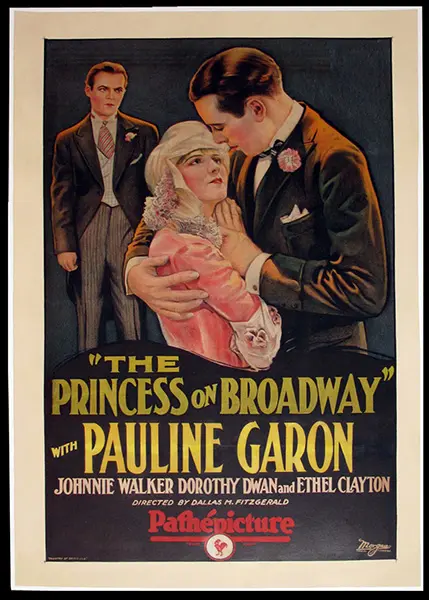
Does this silent-era social satire still hold up for modern audiences? Short answer: no, unless you possess a deep academic interest in the evolution of the 'gold-digger' trope in American cinema.
This film is for dedicated silent film historians and fans of Dorothy Dwan's physical comedy, but it is definitely not for viewers who require narrative complexity or a departure from 1920s gender stereotypes.
1) This film works because it captures the frantic, almost desperate energy of the 1920s theatrical world, showing how easily the public can be swayed by the mere suggestion of royalty.
2) This film fails because its central conflict hinges on a misunderstanding that feels thin even by the standards of 1927, leading to a climax that lacks genuine emotional stakes.
3) You should watch it if you want to see a pre-Code exploration of identity and class that mirrors modern 'influencer' culture in surprisingly accurate ways.
The Princess on Broadway is a film obsessed with the surface. In an era where the Broadway myth was being manufactured by films like The Jazz Hounds, this production attempts to pull back the curtain, albeit with a shaky hand. The plot, penned by Doris Schroeder and Ethel Donoher, leans heavily into the 'fake it 'til you make it' ethos that defined the decade.
Mary's transformation from a struggling dancer to a royal figurehead is played for laughs, but there is a persistent undercurrent of cynicism. Unlike the more earnest melodrama found in A Mother's Confession, this film suggests that the world doesn't want the truth; it wants a well-dressed lie. Dwan plays this with a wide-eyed intensity that occasionally borders on the manic.
There is a specific scene in the second act where Mary is being interviewed by a group of skeptical reporters. The way she uses her costume—a heavy, faux-regal fur—as a shield against their questions is a masterclass in silent-era characterization through props. It’s a lie wrapped in silk. But it’s flawed.
Dorothy Dwan was a capable lead, but here she is often overshadowed by the sheer absurdity of the script. Her chemistry with Johnnie Walker is serviceable, yet it lacks the spark seen in contemporary romantic comedies like The Mirage. Walker plays the straight man to Mary's royal antics, and while he provides a necessary grounding, his character feels like an afterthought.
The supporting cast, including Pauline Garon and Harold Miller, fill the archetypal roles of the era: the jealous rival, the oblivious wealthy suitor, and the scheming agent. These performances are broad, even for silent cinema. Where a film like Shadows of Suspicion used its ensemble to build tension, this film uses them as mere obstacles for Mary to dance around.
One surprising observation is the film's treatment of the press. The reporters are portrayed as scavengers, a theme that would become a staple of cinema in the decades to follow. This cynicism feels more modern than the rest of the film's trappings. It’s a relic, not a revelation.
The direction is functional but uninspired. There is a lack of visual flair that one might find in more ambitious projects like The Leopard Woman. The camera remains mostly static, relying on the intertitles to convey the nuances of the deception. This results in a pacing that feels sluggish in the middle third.
The film struggles to balance its comedic aspirations with its social commentary. Is it a farce about a girl in over her head, or a critique of a society that values titles over character? By trying to be both, it succeeds fully at neither. The editing, particularly during the stage performance sequences, lacks the rhythmic energy found in The Masked Mannequin.
However, the costume design deserves a mention. The contrast between Mary's threadbare rehearsal clothes and her 'royal' attire provides a visual shorthand for her internal conflict. It’s a simple trick, but it works. In the world of The Princess on Broadway, clothes literally make the woman.
If you are looking for a definitive masterpiece of the silent era, look elsewhere. This film is a mid-tier studio product that served its purpose in 1927 but has little to offer a general audience today. It lacks the emotional weight of His Debt and the visual innovation of The Golden Goal.
However, for those interested in the history of Broadway on film, it provides a fascinating look at the industry's self-image. It portrays the stage not as a place of art, but as a factory of celebrity. That perspective alone makes it worth a single viewing for the historically curious.
Pros:
Cons:
When placed alongside The Better Way, this film feels significantly more frivolous. While other films of the era were beginning to experiment with deeper psychological themes, The Princess on Broadway remains firmly in the realm of light entertainment. It shares some DNA with The Idle Rich in its exploration of class, but it lacks that film’s sharper wit.
Even compared to minor works like The Forbidden Range, there is a sense that the production was rushed. The sets feel thin, and the extras often look bored. It is a film that was clearly made to capitalize on a trend rather than to set one. It’s a paycheck movie for everyone involved.
The Princess on Broadway is a passable silent comedy that offers a glimpse into the 1920s obsession with fame and social standing. While it is hampered by a predictable script and uninspired direction, Dorothy Dwan's performance provides enough charm to keep the ship afloat. It is not a classic, but it is a curious artifact of a time when a fake title and a fur coat were all you needed to conquer New York. It works. But it’s flawed.
IMDb —
1922
Community
Log in to comment.