DbcultAccessing Vault...
Cult Review
Senior Film Conservator
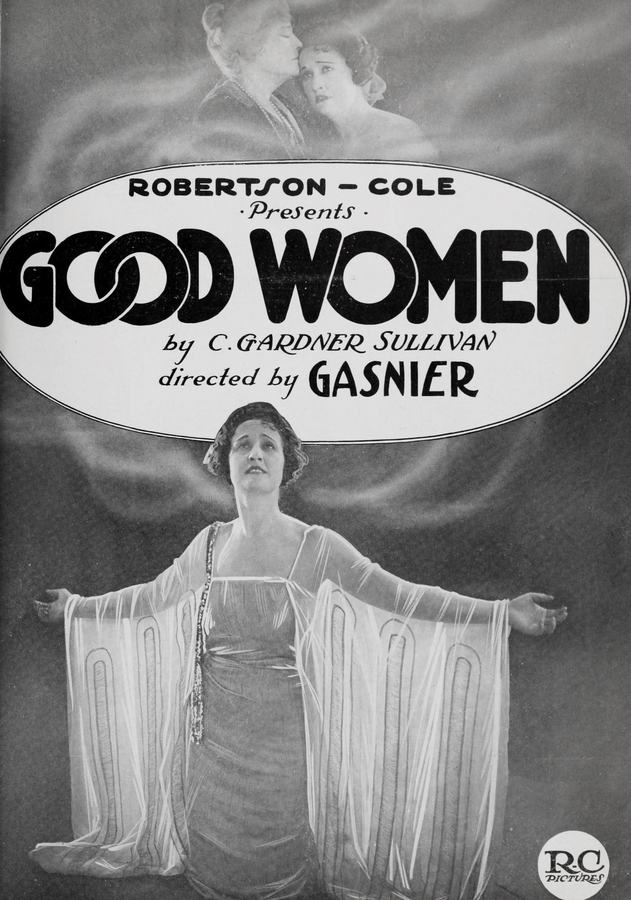
Stepping back into the cinematic landscape of the 1920s, one encounters a fascinating tapestry of societal anxieties and burgeoning freedoms, often distilled into narratives that, even a century later, retain a surprising resonance. Among these, the film Good Women emerges not merely as a historical artifact but as a potent commentary on reputation, love, and the relentless scrutiny faced by women who dared to stray from prescribed paths. This silent drama, a poignant exploration of moral judgments and the elusive nature of redemption, invites us to consider how much, or how little, has truly changed in our collective perceptions of female agency and transgression.
At the heart of Good Women lies Katherine Brinkley, portrayed with compelling nuance by Rosemary Theby. Katherine is not your typical ingénue of the era; she is a woman of considerable means, yes, but more importantly, a woman of spirit. Her wealth affords her a certain latitude, yet it is her innate defiance of convention that truly defines her. She possesses a restless soul, one that finds the confines of polite society stifling, the expectations of her station utterly mundane. This is a woman who actively seeks to challenge the status quo, to test the boundaries of what is deemed acceptable for a woman of her standing. Her initial foray into what society would deem scandal is not born of malicious intent or even a profound, all-consuming passion, but rather a profound yearning for an experience beyond the gilded cage of her existence. When she elopes with Nicolai Brouevitch, a married musician brought to life by Hamilton Revelle, it is an act of rebellion, a declaration of independence from the stifling expectations that dictate her life. It’s a move that, in its brazenness, speaks volumes about her character—a fiery rejection of the passive role society had carved out for her.
The consequences of Katherine’s audacious choice are swift and brutal. Brouevitch, a character whose moral compass seems to spin wildly, ultimately deserts her, leaving her to face the full, unsparing wrath of a judgmental society. The very circles that once courted her, perhaps secretly admiring her independent spirit, now cast her out with a chilling unanimity. She becomes a pariah, her name whispered with disdain, her reputation irrevocably tarnished. This segment of the film powerfully illustrates the double standards prevalent in the era: a man might err, but a woman’s transgression was indelible, a brand that marred her forever. This theme resonates with other films of the period, such as The Day She Paid, which similarly grappled with the severe social penalties exacted upon women who stepped outside the bounds of conventional morality. Katherine's subsequent wandering to Italy is not merely a geographical shift but an existential one—a desperate search for a place where her past might not precede her, where she might simply exist without the crushing weight of societal censure.
In the sun-drenched, ancient landscapes of Italy, Katherine finds a semblance of peace, a fragile sanctuary from the ghosts of her past. It is here that she encounters Franklin Shelby, played by Earl Schenck, an American gentleman who, ironically, is also bound by the strictures of matrimony. Their meeting sparks a connection, a mutual understanding that transcends their complicated circumstances. Shelby is drawn to Katherine’s depth, her resilience, perhaps even the very unconventionality that had made her an outcast. For Katherine, Shelby represents not just affection, but a chance at genuine companionship, a recognition of her worth beyond the scandal that had defined her. Their burgeoning love affair is portrayed with a delicate sensitivity, highlighting the emotional complexities of two individuals seeking solace and connection amidst lives already claimed by others. The film masterfully avoids simplistic moralizing, instead inviting the audience to empathize with the predicament of these characters, caught between societal expectations and deeply felt personal desires. This nuanced portrayal of forbidden love, while risking societal condemnation, is a recurring motif in cinema, echoing the thematic tensions found in films like The Desired Woman, where female protagonists often navigate treacherous romantic waters with profound personal stakes.
The delicate idyll of Katherine and Shelby’s Italian romance is shattered by an agonizing twist of fate: a chance encounter with Nicolai Brouevitch and his wife. The presence of Brouevitch’s spouse, portrayed by Rhea Mitchell, becomes the catalyst for the film's climactic unraveling. Her own marital dissatisfaction, perhaps combined with a bitter jealousy or a desire for retribution, propels her to expose Katherine’s past to Shelby’s unsuspecting wife, played by Eugenie Besserer. This moment is a masterclass in silent film drama, where the weight of unspoken accusations and the shock of revelation are conveyed through powerful gestures and expressions. The scene is fraught with tension, the fragile peace of the characters’ lives collapsing under the weight of past misdeeds. The film does an excellent job of showing how one person’s unresolved bitterness can wreak havoc on others, a reminder that the past, however distant, often casts long shadows. The revelation sets in motion a chain of events that forces everyone involved to confront their own biases and preconceptions.
In the face of devastating exposure, Shelby's reaction is perhaps the most pivotal moment for Katherine. He does not recoil in disgust or abandon her to her fate. Instead, he rises to her defense, a testament to his understanding of her character beyond the single scandalous act. This act of loyalty and belief is crucial, providing Katherine with a validation she has long been denied. It forces a reckoning, not just for Shelby's wife, but for his mother as well. These women, initially quick to judge based on societal gossip and rigid moral codes, are compelled to look beyond the surface. The film subtly argues that true goodness is not defined by an unblemished past or strict adherence to convention, but by the integrity of one’s character and the capacity for self-sacrifice. This theme is profound, challenging the very title of the film to be more than just an ironic jab, but a genuine question posed to the audience about what truly constitutes a "good woman."
The climax of Good Women is marked by Katherine’s profound act of self-renunciation. In a move that defies the expectations of a melodramatic resolution, she chooses to send Shelby back to his wife and family. This decision is not born of weakness or defeat, but of immense strength and a deep, selfless love. She understands that her continued presence would only bring further turmoil and unhappiness to Shelby’s life, and perhaps, more importantly, to his innocent family. It is through this act of letting go, of prioritizing the well-being of others over her own desires, that Katherine truly embodies the "good woman" of the title. This sacrifice is her ultimate redemption, not in the eyes of society, which may never fully forgive her, but in the eyes of those who matter most: Shelby, his mother, and his wife, who finally see past the scandal to the genuine nobility of her spirit. It’s a powerful statement about the nature of love and sacrifice, suggesting that true love sometimes means choosing what is best
IMDb 6.3
1932
Community
Log in to comment.