DbcultAccessing Vault...
Cult Review
Senior Film Conservator
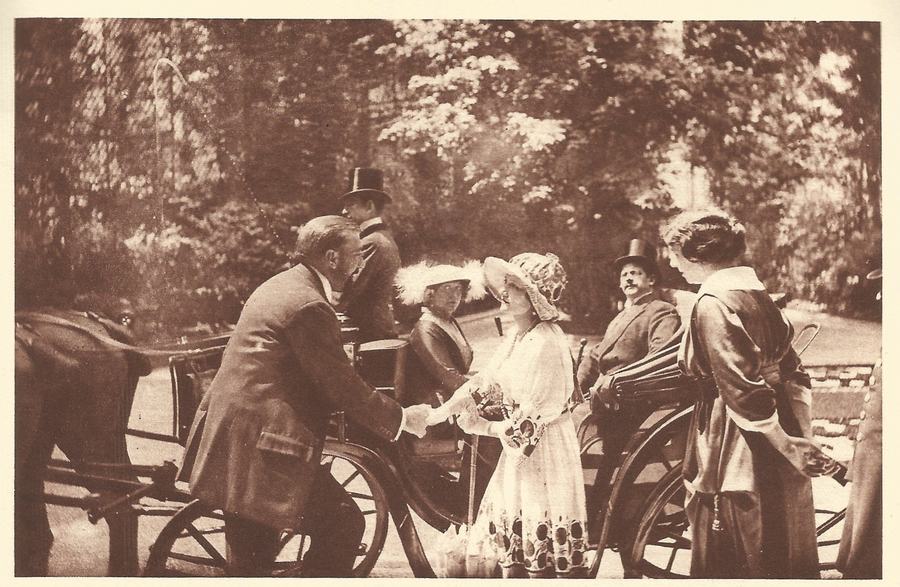
Paris, 1919: the war is over yet the city still trembles like a tuning fork struck by ghosts. Into this post-traumatic haze glides Montmartre, a film so drunk on its own celluloid secretions it feels less like entertainment and more like a séance conducted inside a absinthe bottle.
Strip away whatever cursory synopsis survives in the archives and you’re left with a narrative that behaves like a stack of Toulouse-Lautrec posters left in the rain: colors bleeding, paper buckling, faces sliding off their skulls. Jean Toulout—whose name alone sounds like a sigh escaping a mausoleum—plays the Count of Roquemaure, a bankrupt noble who sketches pornographic marginalia in the margins of military ledgers. His eyes carry the weight of centuries, as if he’s watched every belle époque balloon pop and now waits for the sky itself to deflate.
Opposite him, Pierre Frondaie’s Lucien is all restless mandibles and cigarette smoke, reciting verses that sound stolen from Rimbaud’s wastebasket while hustling American tourists into alleyways where the gaslights hiss like serpents. Their relationship is never friendship, never romance—more a mutual parasitism, each man using the other as a whetstone to sharpen his own despair.
And then there’s Jean-José Frappa’s Raoul, the tubercular bomb-maker who insists that dynamite is merely paint for the air itself. When he cradles his nitroglycerin like a colicky infant, you sense the film tipping into outright myth: the anarchist as Holy Fool, convinced that if he blows a hole clean through Montmartre the world will at last see the stars hidden behind the grime.
Shot on whatever short ends of stock the producers could cadge, the picture nevertheless invents visual grammar on the fly. Double exposures stack centuries atop one another: a 1793 guillotine blade swoops toward the neck of a 1919 flapper; a 1940s Luftwaffe bombardment illuminates the Commune’s barricades. The effect is less montage than temporal whiplash, as though history itself has developed a stutter.
Consider the sequence inside the Chat Noir cabaret: the camera pirouettes 720 degrees, yet instead of landing on the expected reverse shot it plunges through the orchestra pit and surfaces inside a sewer where Raoul is wiring plastique. The cut is so audacious you feel the auditorium tilt beneath your seat. Contemporary viewers reportedly vomited; modern cinephiles will recognize the embryo of every post-modern swivel Gus Van Sant ever dared.
Color tints—hand-applied, streaky, defiant—do not merely signify day-for-night; they hemorrhage psychology. Sepia for imperial nostalgia, viridian for opium vertigo, arterial scarlet for the moment the sketchbook exchanges hands. When the screen floods with indigo you know someone’s about to betray a lover, even if neither character has yet met.
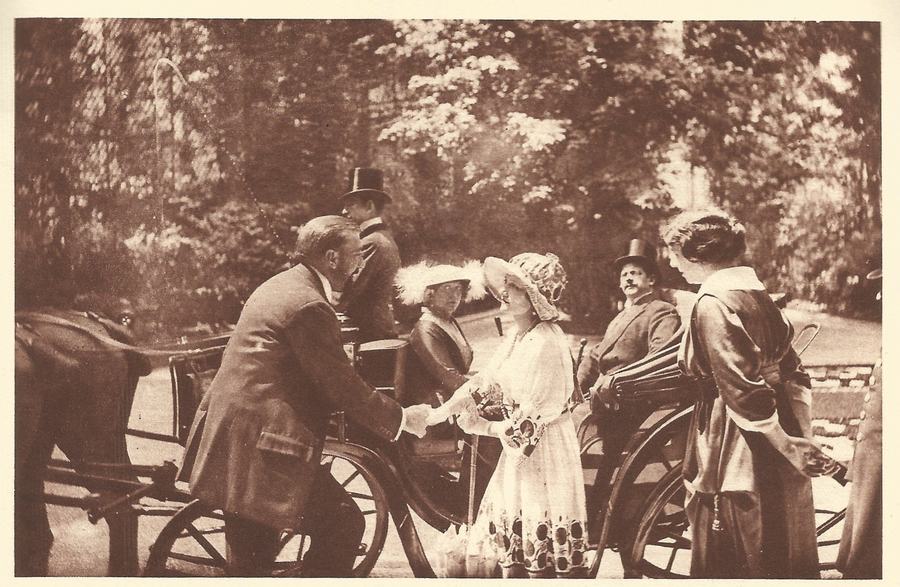
Released the same year as the Treaty of Versailles, the film arrived sans score—an orphan even in its own cradle. Archivists have tried rehabilitating it with everything from Satie gymnopédies to Aphex Twin glitch. Ignore them. Project it mute, let the whir of the projector speak for the artillery that still rattles in every character’s lungs. In that hush you’ll hear the sub-bass thrum of a continent trying to forget the trenches yet incapable of scraping the mud from its boots.
Listen closer and the intertitles themselves grow feral. “Il n’y a pas de lendemain sur la butte” (“There is no tomorrow on the hill”) appears twice—once forward, once mirrored—an admission that time here is a Möbius strip you can stroll along forever without finding exit.
Toulout acts with his cheekbones: when guilt gnaws, the bones seem to sharpen, ready to slice the skin from inside. Frondaie performs as if every gesture were an epigram aimed at posterity—wrist flicked like a too-long ash, grin screwed to the left because the right side of his face was promised to a bullet that hasn’t yet arrived. Meanwhile Frappa’s consumptive tremors are so authentic you can practically taste the rusty sputum; legend claims he punched his own ribs nightly to induce hemorrhage for the lens.
Together they form a trinity of decline: aristocracy, art, anarchy—each convinced it is the last legitimate heir to a city that has already pawned its own shadow.
The MacGuffin sketchbook—forty obscene caricatures of ministers, generals, and courtesans locked in configurations that defy both gravity and decorum—functions as both pornography and warrant for sedition. Whoever owns it can blackmail the chamber of deputies; whoever merely glimpses it risks discovering that their own deepest perversion has already been inked in sanguine wash.
Yet the film refuses to moralize. Instead it posits obscenity as the only honest cartography left after maps have been redrawn by generals who have never visited the front. In that sense Montmartre sidles up to Trompe-la-Mort and whispers: what if every crime is merely love wearing a mask too heavy to lift?
Where Called Back flirts with amnesia as spiritual cleanse, Montmartre treats memory as an abscess to be lanced. The Last Volunteer mourns a world that could still produce heroes; Montmartre scoffs at the notion that heroes were ever anything more than gossip columnists’ shorthand for cannon-fodder with good cheekbones.
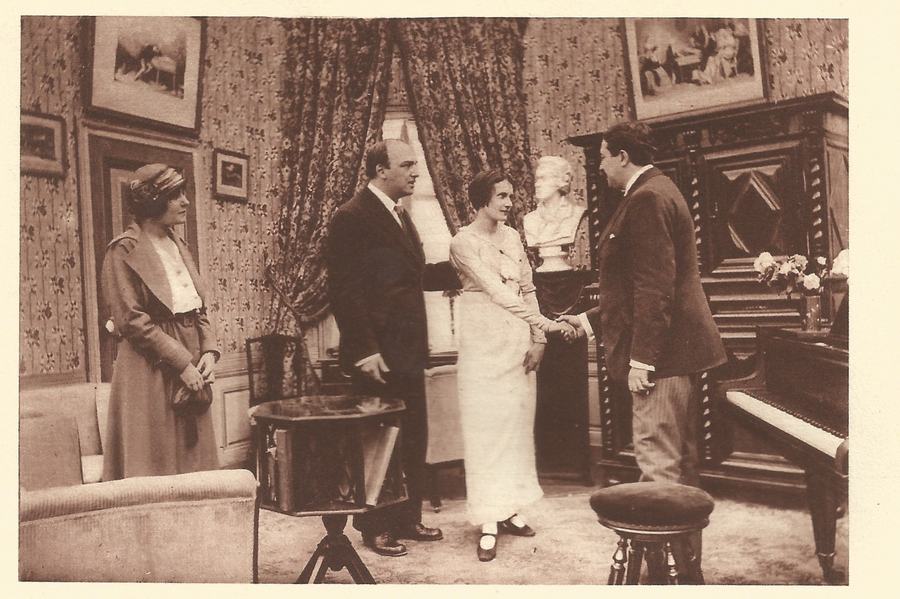
Meanwhile the American silents—Peril of the Plains, Where the Trail Divides—offer manifest destiny as redemption. Montmartre retorts that destiny is merely the story the winners tell while the rest of us pick plaster dust from our hair.
Project this print in 2024 and the audience will swear the street banners read Macron instead of Clemenceau. The same fractured idealism, the same conspiratorial fever, the same suspicion that art and pornography share a border patrolled by censors who cannot tell ecstasy from espionage. Watch it while your phone pings with push-notifications about drone strikes and influencer breakups; the juxtaposition will make you queasy in ways no CGI battlefield ever could.
Most circulating prints lack the final six minutes—lost, allegedly, when a projectionist used them to plug a leaking roof during a 1926 flood. What remains fades exactly as Raoul strikes the fuse: a freeze-frame of Toulout’s eyes widening, not in horror but in recognition that the explosion has already occurred somewhere off-screen, sometime off-calendar.
Some scholars splice on a 1917 newsreel of the Paris gun bombardment to simulate closure. Others prefer to let the sudden darkness stand as the most honest finale a film about historical amnesia could ever offer. Either way, the exit sign above the theater door becomes part of the text, glowing red like the last page of the sketchbook you will never be allowed to read.
Montmartre is not a comfort; it is a dare. It dares you to laugh while a city eats its own heart, dares you to blink while time folds in on itself, dares you to leave the auditorium and pretend that your own era’s obscenities are any less sketched in disappearing ink.
Seek it out in whichever underground archive still dares to strike a carbon arc. Sit on the aisle so you can bolt when the images start crawling off the screen. But sit you must. Because every frame is a love-letter addressed to a future that keeps refusing delivery, and if you never open it you’ll spend the rest of your life mistaking propaganda for memory.
Grade: A crater masquerading as a star.
IMDb 5
1930
Community
Log in to comment.