DbcultAccessing Vault...
Cult Review
Senior Film Conservator
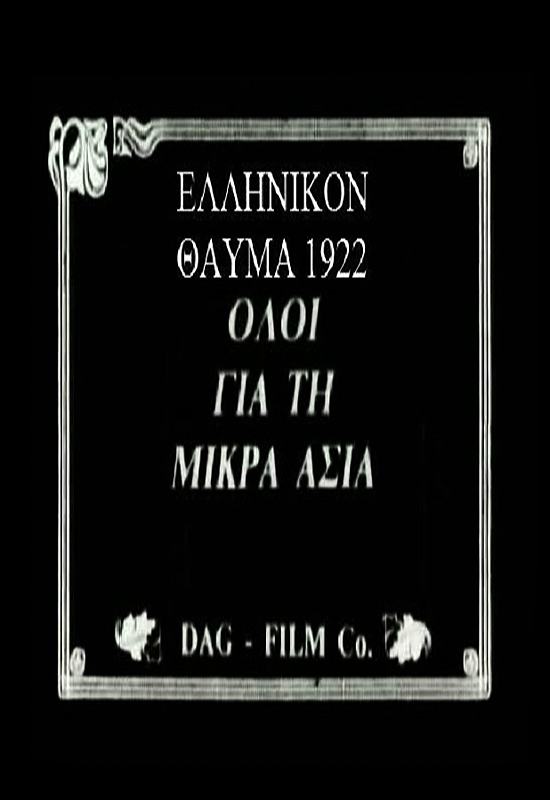
To witness Greek Miracle is to step into a temporal rift where the grain of the film stock serves as a veil between the viewer and the brutalist beauty of the 1920s Asia Minor campaign. This isn't merely a document of war; it is an exercise in cinematic historiography. While contemporary audiences might be accustomed to the visceral, hyper-kinetic editing of modern war cinema, this film operates on a frequency of stillness and gravitas. It captures the 'pictures' of an expedition with a painterly eye that rivals the biographical solemnity seen in A Vida do Barão do Rio Branco, yet it possesses a raw, unpolished energy that feels far more immediate.
The collaboration between writers D. Aravandinos and Tzelepis yields a structure that is deceptively simple. By focusing on the 'pictures'—the static moments of movement, the repose of the infantry, and the vast, echoing landscapes—they create a narrative of atmosphere rather than plot. It is a bold choice that stands in stark contrast to the theatrical melodrama of The Unwelcome Wife or the structured legal tensions of Signori giurati.... Here, the land itself is the protagonist, a sprawling, dusty antagonist that swallows the Hellenic dream whole.
The presence of Kalmanova and Georg Asagaroff provides a human anchor to this sprawling visual essay. Asagaroff, who would later carve a significant path in European cinema, displays even here an innate understanding of the camera's gaze. His performance is one of restraint, a necessary counterpoint to the overwhelming scale of the expedition. There is a sense of theatrical pedigree in the way these actors carry themselves, reminiscent of the stage-to-screen transitions seen in At the Old Stage Door, yet they adapt their physicality to the harsh sunlight and open-air realism of the Anatolian plateau.
M. Kroupenskaya adds a layer of enigmatic grace to the proceedings. In a film that could easily have devolved into jingoistic propaganda, these performers maintain a sense of individual vulnerability. They are not merely soldiers or observers; they are phantoms in a landscape that is both ancient and terrifyingly new. This vulnerability is a far cry from the lighthearted escapism of Puppchen or the comedic antics of Artie, the Millionaire Kid. Instead, Greek Miracle occupies a space of somber reflection.
The cinematography is the true revelation here. The way the light hits the columns of marching men, creating long, distorted shadows across the plains, suggests a directorial vision that understood the psychological impact of light and shadow—chiaroscuro in the desert. The film lacks the polished urbanity of Lu, a kokott, but it replaces that sophistication with a gritty, tactile reality. Every frame feels heavy with the scent of gunpowder and the heat of the sun.
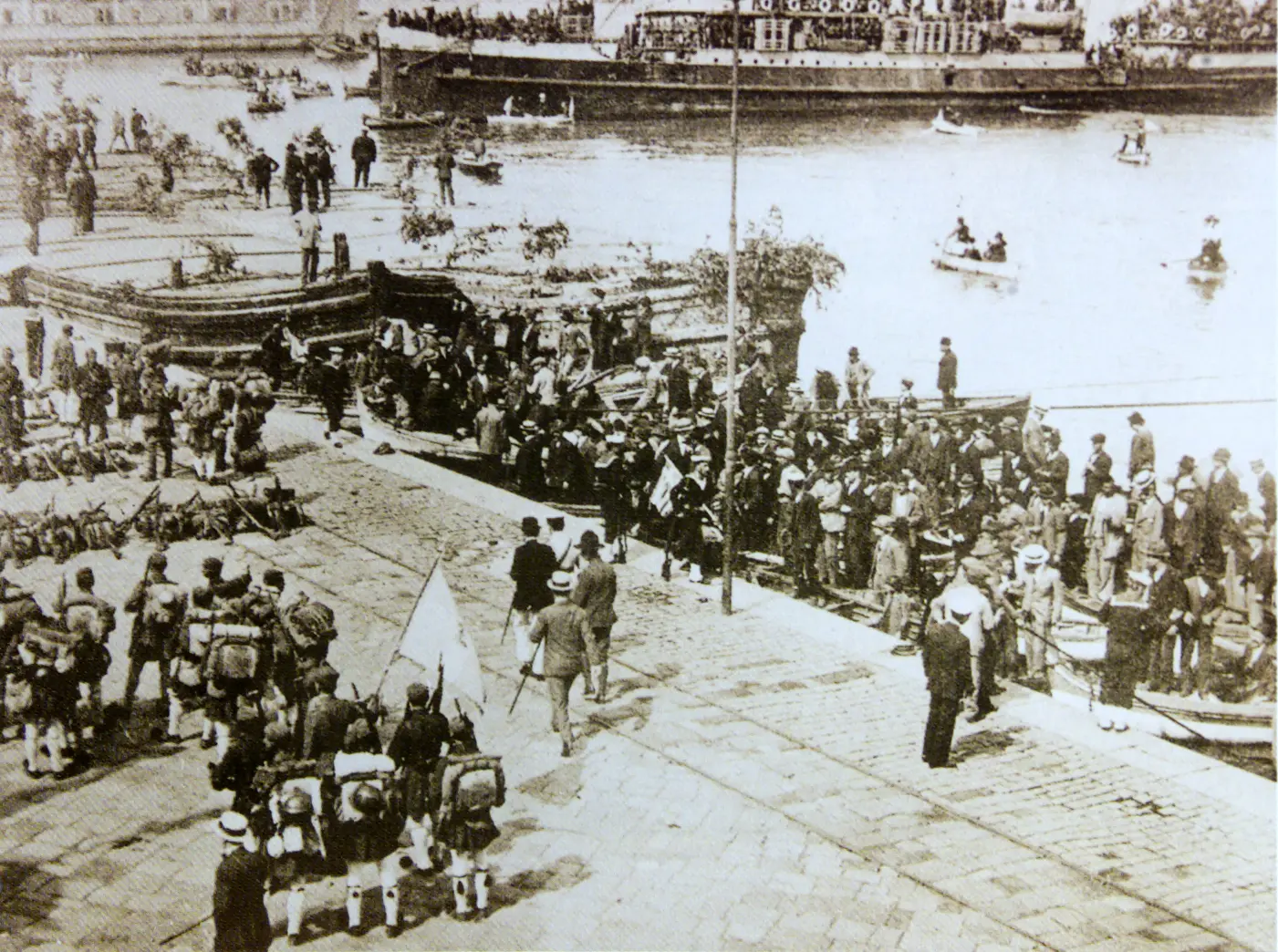
One cannot help but compare the pacing to the slow-burn tension of Her Reckoning. There is no rush to reach a climax; the 'miracle' is found in the endurance of the journey itself. The editorial rhythm is deliberate, almost meditative, forcing the viewer to sit with the images until they become uncomfortable. It is a stark departure from the quick-fire reporting of Hot Off the Press, opting instead for a lingering, almost voyeuristic look at the mechanics of an empire in motion.
As a silent film, Greek Miracle relies heavily on its visual language to convey the complex emotions of the campaign. The intertitles, provided by Aravandinos and Tzelepis, are sparse, allowing the imagery to carry the narrative weight. This silence creates a vacuum that the viewer must fill with their own understanding of the historical context—the Greco-Turkish War and the shifting borders of a post-WWI world. It is a film that demands an active, informed audience, much like the intricate character studies in Foolish Lives.
The film’s title itself is a fascinating piece of rhetoric. Is the 'miracle' the military success, the survival of the troops, or the very act of capturing these images against all odds? There is an irony present that one might find in Rent Free, though here the stakes are infinitely higher. The 'miracle' is framed by the knowledge of the impending disaster that would follow the expedition, giving every frame a tragic, retrospective glow. It is the visual equivalent of a thumbprint on history, as indelible and unique as the mystery in The Thumb Print.
In the grand pantheon of silent cinema, Greek Miracle stands as a monolith of ambition. It eschews the easy charm of Bonnie Bonnie Lassie or the rugged individualism of Oh, Johnny! to present something far more collective and existential. It is a film about the movement of peoples, the collision of cultures, and the sheer audacity of trying to reclaim a past that may no longer exist. While it lacks the slapstick brilliance of The Paleface, it offers something far more enduring: a window into a moment where history was being written in the dust of Asia Minor.
For the modern cinephile, this film is an essential artifact. It challenges our perceptions of 'war movies' and asks us to find the beauty in the struggle, the art in the expedition, and the miracle in the mundane. It is a testament to the power of the early camera to not just record events, but to capture the soul of a nation in transition. The 'pictures' provided by Asagaroff and his team are not just historical data; they are the flickering embers of a fire that once burned across the Anatolian plains, now preserved forever in the amber of cinema.
"Greek Miracle is not merely a chronicle of soldiers; it is a topographical poem where the Anatolian dust becomes the ink of a disappearing empire."
Ultimately, the film's legacy lies in its refusal to simplify. It embraces the complexity of the expedition, the weariness of the soldiers, and the alien beauty of the landscape. It is a work of profound lexical diversity in its visual language, speaking volumes without saying a word. In the quiet moments between the 'pictures,' we find the true essence of the Greek Miracle—a fleeting, beautiful, and ultimately haunting vision of a world on the brink of total transformation.
IMDb 5.8
1924
Community
Log in to comment.