DbcultAccessing Vault...
Cult Review
Senior Film Conservator
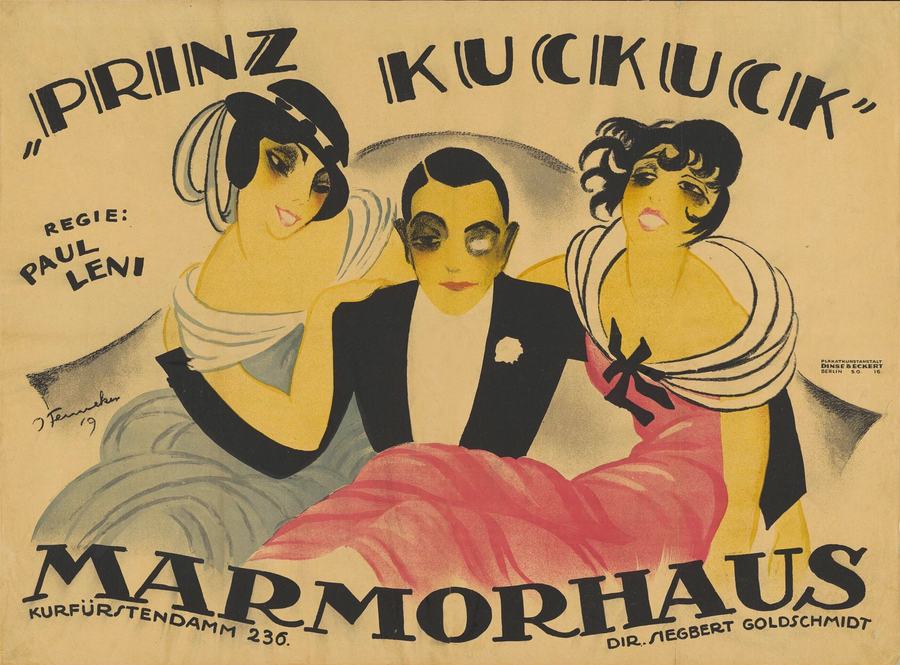
There are films that merely tell a story, and then there are those that rip open the very fabric of an era, exposing its festering wounds and fleeting ecstasies. Georg Kaiser and Otto Julius Bierbaum’s ‘Prinz Kuckuck - Die Höllenfahrt eines Wollüstlings’ is unequivocally the latter. This German Expressionist masterpiece, a relic from the tumultuous heart of the Weimar Republic, doesn’t just chronicle a man’s journey; it charts the spiritual and moral bankruptcy of a generation, echoing with a haunting resonance that persists even today. To call it a mere plot would be a disservice; it is a meticulously crafted psychological excavation, a grand, operatic plunge into the darkest corners of human desire and societal decay.
The film introduces us to Prinz Kuckuck, a character whose very name, 'Cuckoo,' hints at an innate otherness, a detachment from the conventional nest. He is not merely wealthy or aristocratic; he is a soul adrift, an embodiment of the post-Great War disillusionment that permeated German society. The traditional paths to fulfillment – duty, family, societal contribution – hold no allure for him. Instead, he finds himself suffocated by the gilded cage of his privilege, seeking an escape not in noble pursuits, but in the intoxicating allure of the forbidden. His 'Höllenfahrt,' or 'hell ride,' is less a journey to a literal underworld and more a self-willed descent into a personal inferno constructed from unbridled hedonism and a relentless pursuit of sensation.
The narrative itself is less a straight line and more a series of fragmented, dreamlike sequences, each one pulling Kuckuck deeper into the abyss. We witness his initial dalliances in the smoky, clandestine salons of the urban elite, where boredom masquerades as sophistication. These early scenes, likely infused with the stark chiaroscuro typical of Expressionist cinema, establish the superficiality of his world. But Kuckuck yearns for something more visceral, more 'real,' even if that reality is steeped in vice. This hunger leads him to the city's underbelly, to the bohemian enclaves where artists, performers, and pleasure-seekers converge in a vibrant, yet ultimately corrosive, tapestry of human interaction.
It's here that the film truly blossoms into its dark potential, showcasing a fascinating array of characters who both facilitate and reflect Kuckuck's moral erosion. There's Lona, an enigmatic cabaret singer, whose magnetic allure is powerfully conveyed through the performance of an actress like Hanna Ralph or Olga Limburg. Lona is not just a lover; she is a catalyst, a siren whose songs promise liberation but deliver only deeper entanglement. Her scenes, likely staged with exaggerated theatricality and dramatic lighting, would have been pivotal in illustrating Kuckuck's growing obsession and loss of self. Then there's Victor, perhaps portrayed by Henri Peters-Arnolds or Fritz Junkermann, an artist who observes Kuckuck’s dissolution with a mix of fascination and disdain. Victor represents the cynical intellectual, a common archetype of the era, who sees through the glamour to the underlying emptiness.
The visual language of ‘Prinz Kuckuck’ is, as expected for a film of its pedigree and period, quintessentially Expressionist. Expect dramatically skewed perspectives, exaggerated set designs that mirror the characters' internal turmoil, and a masterful use of light and shadow to create an atmosphere of unease and psychological tension. The urban landscapes are not merely backdrops; they are active participants in Kuckuck's downfall, their jagged angles and oppressive shadows reflecting his increasingly fragmented psyche. One can easily imagine scenes of Kuckuck wandering through labyrinthine streets, the architecture itself seeming to close in on him, a visual metaphor for his entrapment.
This stylistic choice is not merely aesthetic; it is deeply thematic. The distorted reality on screen is a direct representation of Kuckuck's own distorted perception, his inability to distinguish between genuine connection and fleeting pleasure. The film's power lies in its ability to externalize internal states, making Kuckuck’s psychological torment palpable to the viewer. In this regard, it shares a spiritual kinship with other German Expressionist works that sought to explore the darker recesses of the human mind, often through a lens of societal critique. It's a stark contrast to the more straightforward realism found in films like The Hostage or Who Pays?, which, while offering their own dramas, rarely delve into the same psychological depths with such visual audacity.
The ensemble cast is nothing short of superb, a testament to the talent pool of early German cinema. While the specific role of Prinz Kuckuck remains a tantalizing mystery without a precise cast listing for the lead, one can envision an actor of Conrad Veidt's caliber, known for his intensity and capacity for portraying tormented souls, bringing the character to life with chilling precision. Veidt, whose work in films like Das Mädchen aus der Opiumhöhle often explored characters on the fringes of society or grappling with internal demons, would have been a perfect fit for Kuckuck's complex, deteriorating psyche. His subtle gestures, his haunted eyes, and his ability to convey profound inner turmoil without uttering a single word would have elevated the character beyond mere caricature.
Beyond the central figure, the supporting cast paints a vivid picture of Kuckuck's world. Gertrud Wolle and Toni Zimmerer, along with Henri Peters-Arnolds and Fritz Junkermann, would have inhabited the various denizens of the bohemian underworld and high society, each contributing to the rich tapestry of the film. Max Gülstorff, a versatile actor, could have portrayed a jaded mentor or a cynical observer. Olga Limburg and Hanna Ralph, both formidable screen presences, would have brought depth and allure to the female characters, perhaps as the seductive Lona or the more grounded Agnes. Blandine Ebinger and Margarete Schlegel, with their expressive faces, would have perfectly captured the innocence or despair of those caught in Kuckuck's orbit.
The performances, unburdened by dialogue, rely heavily on exaggerated physicality and facial expressions, a hallmark of silent cinema. Yet, in the hands of these accomplished actors, these techniques never feel over-the-top; instead, they become powerful tools for conveying complex emotions. The silent film era, often unfairly dismissed as simplistic, truly allowed for a different kind of acting, one that demanded immense control and expressive power. The cumulative effect of these performances is a visceral experience, drawing the viewer into Kuckuck's spiraling world of sensation and despair. It's a masterclass in non-verbal storytelling, where every flicker of an eye, every subtle gesture, carries profound meaning.
At its core, ‘Prinz Kuckuck’ is a profound meditation on the dangers of unbridled hedonism and the spiritual vacuum that can plague a society in flux. Kuckuck’s 'Höllenfahrt' is not a journey to find pleasure, but a desperate, ultimately futile, attempt to fill an existential void. The film implicitly critiques the moral laxity of post-war Germany, where traditional values had crumbled, leaving a generation adrift in a sea of uncertainty. The pursuit of pleasure, initially a rebellion against suffocating norms, becomes its own form of enslavement. Kuckuck, the 'Wollüstling,' finds that each new sensation, each new conquest, leaves him emptier than before, driving him to seek ever more extreme experiences.
The writers, Georg Kaiser and Otto Julius Bierbaum, were masters of their craft, known for their incisive social commentary and psychological depth. Kaiser, a prominent Expressionist playwright, would have infused the narrative with a stark, almost allegorical quality, transforming Kuckuck into a symbol of a generation's malaise. Bierbaum, a poet and novelist, would have contributed a lyrical, often melancholic, sensibility to the story's emotional landscape. Their collaboration likely resulted in a screenplay that was both intellectually rigorous and emotionally devastating, elevating the film beyond a simple morality tale into a complex character study. The film doesn't preach; it merely observes, allowing the audience to draw their own conclusions about Kuckuck’s fate. This nuanced approach is what gives the film its enduring power, making it relevant far beyond its historical context. It explores universal themes of desire, disillusionment, and the search for meaning, much like how Undine explores the longing for soul or The Wasted Years examines regret and missed opportunities.
The film’s climax is not a dramatic external confrontation, but a profound internal collapse. Kuckuck’s 'Höllenfahrt' doesn't end with a bang, but with a whimper – a slow, agonizing psychological dissolution. The narrative eschews easy answers or simplistic redemption arcs. Instead, it posits that some descents are irreversible, some souls too profoundly scarred by their choices to ever truly recover. The final scenes, stripped of the earlier opulence and excess, likely focus on Kuckuck in a state of utter brokenness, his mind fractured, his spirit extinguished. It's a chilling, unforgettable image, a stark warning against the siren call of unbridled desire.
This tragic conclusion resonates deeply, leaving a lasting impression on the viewer. It’s a powerful testament to the film's artistic integrity, refusing to compromise its bleak vision for the sake of a more palatable ending. In this sense, it aligns with the darker, more introspective strains of Expressionist cinema, which often preferred psychological realism over conventional happy endings. Unlike lighter fare such as We Should Worry or Betsy's Burglar, 'Prinz Kuckuck' dares to gaze unflinchingly into the void, and in doing so, reveals profound truths about the human condition.
‘Prinz Kuckuck - Die Höllenfahrt eines Wollüstlings’ stands as a monumental achievement in German Expressionist cinema. Its daring exploration of hedonism, its unflinching portrayal of moral decay, and its innovative visual style coalesce into a cinematic experience that is both intellectually stimulating and emotionally devastating. The film is a vital historical document, capturing the zeitgeist of a specific moment in German history, yet its themes of disillusionment, the search for meaning, and the perils of excess are timeless. For cinephiles and historians alike, it offers a window into a period of immense artistic ferment and societal upheaval.
Revisiting this film today is not merely an act of historical appreciation; it is an active engagement with a work of art that continues to challenge and provoke. It reminds us that the pursuit of sensation without substance inevitably leads to emptiness, and that true liberation lies not in unbridled indulgence, but in a deeper understanding of self and society. Its intricate plotting, stunning visuals, and powerful performances solidify its place as an essential, if darkly unsettling, contribution to the cinematic canon. It's a film that demands to be seen, studied, and discussed, a stark, beautiful testament to the power of silent cinema to convey the most profound human dramas.
In its unflinching gaze at a soul’s unraveling, 'Prinz Kuckuck' offers not just a story, but a profound, almost spiritual, experience. It’s a film that lingers long after the final frame, its echoes reverberating with the haunting beauty of a lost era, a testament to the enduring power of cinema to explore the human condition in all its glorious, terrifying complexity. It remains a stark reminder that some 'hell rides' are not external journeys, but deeply internal descents, from which return is a distant, perhaps impossible, dream. The film is a cinematic warning, a vibrant, if unsettling, portrait of a society teetering on the brink, and a man who dared to plunge headfirst into its intoxicating, destructive currents.
Community
Log in to comment.