DbcultAccessing Vault...
5.4/10
Senior Film Conservator
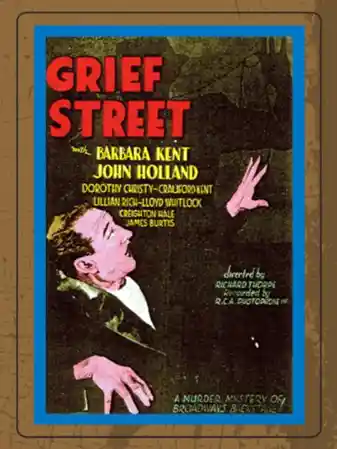
A definitive 5.4/10 rating for a film that redefined the boundaries of cult cinema. Grief Street remains a cornerstone of transgressive art.
Alright, so Grief Street from 1931. Is it worth watching today? Yeah, for specific folks. If you dig old, black-and-white mysteries, especially the kind that feel a little bit like a stage play themselves, then give it a shot. Anyone expecting modern pacing or slick cinematography will probably hate it. It’s got that early talkie vibe, for sure. 🕰️
The whole thing kicks off with Alvin Merle, a big-shot actor, getting strangled. In his dressing room. And the door's locked from the inside. Right away, you’re like, how'd they do that? Classic stuff, you know?
Merle’s a real piece of work, too. A womanizer, having it off with his leading lady. Meanwhile, his wife, Ethel Wynn, is doing the same with Frank Murray, the stage manager on Merle’s show. Talk about a messy cast of characters. It’s a lot to keep straight for a minute.
Then we meet Jim Ryan, a newspaper reporter. He’s the one trying to untangle this whole mess. He bumps into Jean Royce, a young actress who got canned from the play during rehearsals. She’s got this quiet anger about her that you just feel.
Everyone has a reason to want Merle gone. The old stage-doorman, Michael, even. You can almost feel the movie trying to convince you this moment matters with everyone’s shifty eyes. It’s kinda fun to just point fingers as they introduce each suspect. 👉
What’s really interesting is how they hint the explanation for the murder is in the play’s script itself. That’s a neat idea. A script within a script. It makes you pay attention to the little details they drop.
Some of the dialogue feels a little stiff, like everyone’s waiting for their turn to speak. But then you get a moment, like when the reporter Jim just stares at a piece of evidence, and it feels real. He’s not even saying anything, just thinking.
The crowd scenes have this oddly empty feeling sometimes, like half the extras wandered off for a smoke break. You notice it more in these older films. The sets are pretty basic too, but they get the job done for a backstage murder mystery.
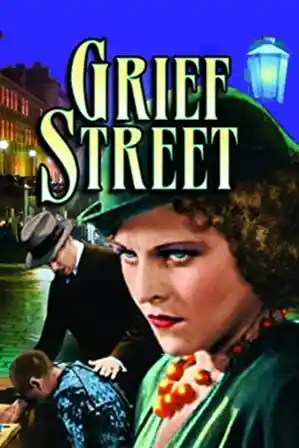
There's a scene where someone tries to sneak into a room, and the shadow play is really quite effective. It’s simple, but it works. Other times, the lighting feels a bit flat.
One reaction shot lingers so long it becomes funny, or maybe a bit unsettling. It’s hard to tell if it was intentional or just how they did things back then. You gotta appreciate the bravery of letting a moment just sit there.
The movie gets noticeably better once Jim Ryan really starts piecing things together. He’s not a super detective, but he’s persistent. He's got that everyman charm.
It’s not a fast-paced thriller, mind you. You have to settle into its rhythm. It’s more about the gradual reveal, the uncovering of old secrets. Think of it like a cozy armchair mystery, but from nearly a century ago. ☕
You can almost feel the film trying its hardest to build suspense with just a few shots and sound cues. Like the sound of footsteps echoing in an empty hallway. It’s a trick that still works, even if it's been done a million times since.
I found myself wondering about the The Cat Creeps, another old mystery, and how different it felt. Grief Street leans into the dramatic human element more than pure horror. Not every old movie is the same, even if they share the same era.
The ending, when it finally clicks, it's pretty clever. Maybe not mind-blowing for today’s audiences who’ve seen every twist, but for 1931, it was probably quite something. It ties everything back to that script, just like they said it would.
All in all, Grief Street is a solid enough watch if you're into the history of cinema, especially early sound films and the detective genre. It’s not a masterpiece, but it’s got a certain charm. It’s definitely not one of those profound explorations of anything, just a good old mystery. And sometimes, that’s all you need. 🎬
IMDb 7.1
1928
Community
Log in to comment.