DbcultAccessing Vault...
Cult Review
Senior Film Conservator
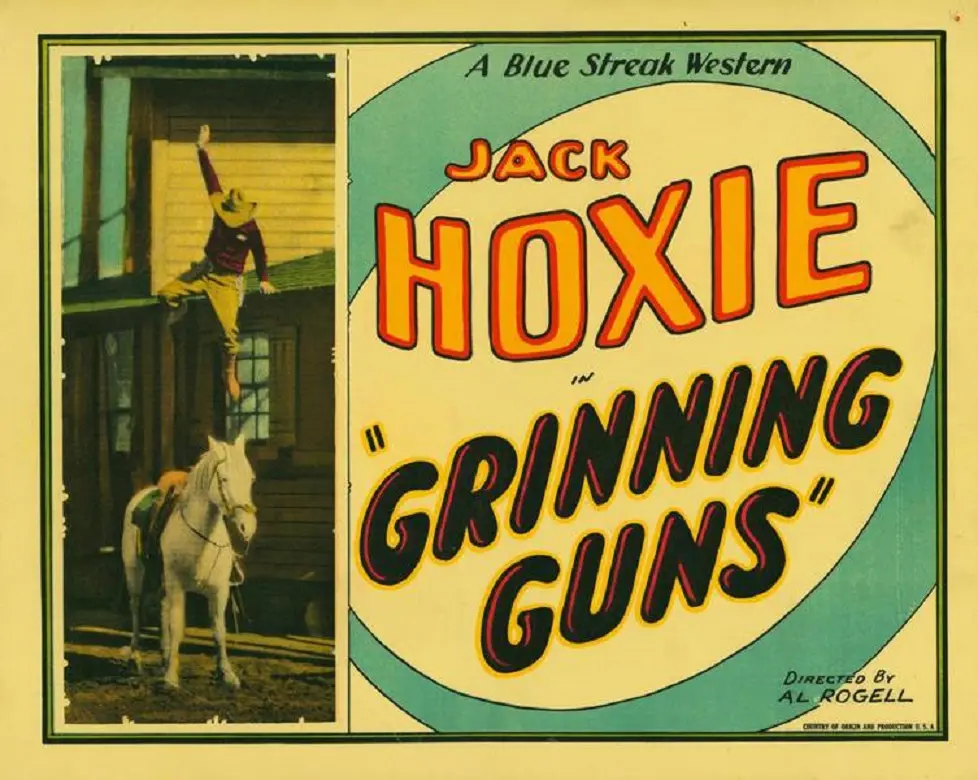
Is Grinning Guns worth your time in the age of digital blockbusters? Short answer: yes, but only if you have a high tolerance for the melodramatic pacing and black-and-white morality of the silent era.
This film is specifically for the archival enthusiast who finds beauty in the grain and the Jack Hoxie completionist who wants to see the star at his physical peak. It is certainly not for the casual viewer who requires a complex, multi-layered plot or modern psychological realism.
1) This film works because Jack Hoxie’s 'Grinner' Martin provides a charismatic, optimistic focal point that manages to transcend the limitations of a relatively thin script.
2) This film fails because the antagonist, Purcell, is a mustache-twirling caricature whose motivations never extend beyond basic greed and villainy.
3) You should watch it if you want to witness one of the most daring and un-doubled waterfall stunt sequences of the early 1920s.
Jack Hoxie was never the most subtle actor in Hollywood, but in Grinning Guns, his overt physicality is his greatest asset. The character of 'Grinner' Martin is a fascinating precursor to the 'optimistic hero' trope we see in modern superhero cinema. He doesn't just fight; he smiles through the peril.
This optimism is framed through his love for Amos Felden’s writing. It’s a surprisingly intellectual hook for a B-Western of 1923. Usually, these characters are motivated by stolen cattle or a murdered brother. Here, Martin is motivated by the power of the written word. It’s a meta-commentary on the influence of media that feels strangely ahead of its time.
Consider the scene where Martin first meets Felden. The reverence in Hoxie’s eyes isn't for a man of action, but for a man of letters. It’s a quiet moment in a film otherwise dominated by dust and gunpowder, and it provides the necessary emotional stakes for the violence that follows.
The core conflict of Grinning Guns revolves around the publication of 'undesirable' citizens. This is a fascinating narrative choice by writer Grover Jones. In 1923, the concept of public accountability through the press was a cornerstone of the American identity. By making the newspaper office the primary battleground, the film elevates a standard Western into a socio-political drama.
When Purcell sets fire to the office, it isn't just an act of arson; it’s an attempt to silence the truth. The imagery of the burning printing press is potent. It echoes the themes found in other films of the period like The Hope Chest, where societal structures are challenged by individual integrity.
However, the film doesn't fully commit to the complexity of this theme. It quickly reverts to a standard chase-and-fight structure. While the 'naming and shaming' of citizens is a bold plot point, the resolution is found not in the court of law or public opinion, but at the edge of a waterfall. It’s a missed opportunity for a more nuanced ending, but it satisfies the bloodlust of the 1920s audience.
If there is one reason to watch Grinning Guns today, it is the final confrontation. The fight between Martin and Purcell in the waterfall is a masterclass in silent film stunt work. There are no CGI safety nets here. The water is cold, the rocks are slick, and the danger is palpable.
The cinematography during this sequence is surprisingly fluid. The camera captures the spray and the desperation of the struggle with a grit that modern action films often lose in post-production. It reminds me of the raw intensity found in The Red Circle, where the environment serves as a secondary antagonist.
The death of Tony is the film's emotional low point. Whether Tony is a horse or a man—a common ambiguity in poorly preserved silent synopses—the sacrifice serves to harden Martin’s resolve. The transition from the 'grinning' hero to the grim executioner is the film's most honest character beat. It works. But it’s flawed.
Yes, Grinning Guns is worth watching if you are a student of film history. It represents a transition point in the Western genre where the hero began to take on more specific, idiosyncratic personality traits. It isn't just about a man with a gun; it's about a man with a philosophy.
However, if you are looking for the narrative sophistication of The Unguarded Hour, you will be disappointed. The plot is linear to a fault, and the secondary characters, including Ena Gregory’s Mary, are given very little to do besides look concerned or be rescued. It is a product of its time, for better and for worse.
Pros:
- Jack Hoxie’s unique screen presence and physical commitment.
- The innovative use of a newspaper as a plot catalyst.
- High-quality stunt work that puts modern green screens to shame.
Cons:
- Extremely predictable plot beats.
- Underutilized female lead (Mary).
- The 'grinning' gimmick can occasionally feel forced during serious scenes.
Grinning Guns is a sturdy, if unexceptional, piece of silent cinema. It survives on the back of Jack Hoxie’s charm and a few standout action sequences. While it doesn't reinvent the wheel, it rolls it with enough confidence to justify a viewing for those interested in the roots of the Western genre. It is a film of simple virtues and clear-cut endings—a relic of a time when the good guys wore white, smiled at death, and always got the girl. It’s clunky. It’s earnest. It’s essential for the historian, but a pass for the modernist.
IMDb —
1919
Community
Log in to comment.