DbcultAccessing Vault...
5.6/10
Senior Film Conservator
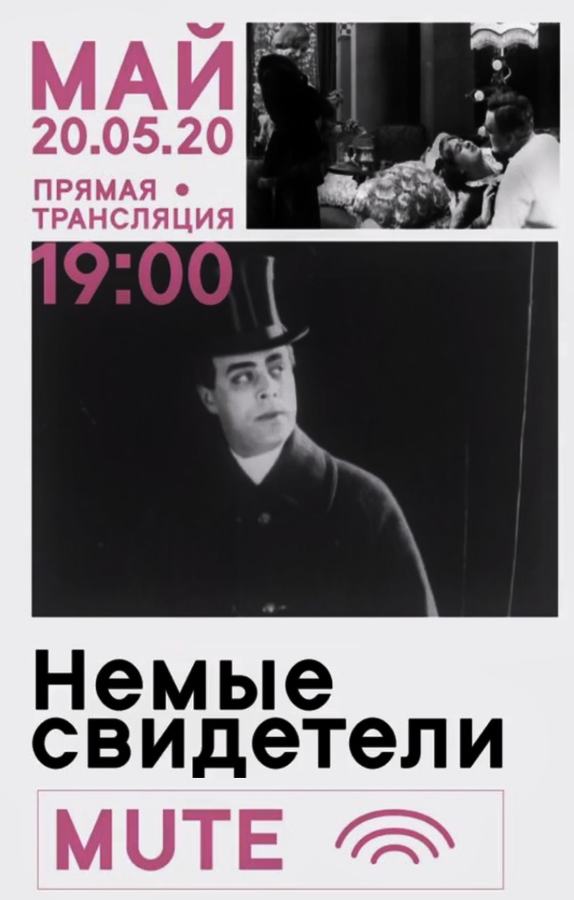
A definitive 5.6/10 rating for a film that redefined the boundaries of cult cinema. Mute Witnesses remains a cornerstone of transgressive art.
The 1915 silent film Mute Witnesses, directed by Aleksandr Voznesensky, is a masterclass in visual storytelling, using its stark monochromatic palette to amplify the moral claustrophobia of its narrative. Set in a decaying aristocratic estate, the film’s most striking achievement is its ability to render silence as a character in its own right. The absence of dialogue is not a limitation but a narrative device, forcing the audience to read between the lines of gesture and gaze. Nastya’s sacrifice, her silent substitution for another servant, is the catalyst for a series of events that expose the rot festering beneath the household’s gilded surface. The film’s use of space is deliberate: the grandeur of the estate becomes a prison, its opulence a reminder of the servitude that sustains it.
At its core, Mute Witnesses is a study in the quiet heroism of the marginalized. Nastya’s decision to take her fellow servant’s place is framed not as a noble gesture but as a tragic necessity, a microcosm of the systemic exploitation that defines her world. Her grandfather’s role as a porter—a liminal figure between servant and master—adds a layer of generational tension, as his stoicism contrasts with Pavel’s youthful recklessness. Pavel, heir to the estate, embodies the collapse of aristocratic values; his engagement to Ellen becomes a farce, a hollow ritual undermined by her affair with Baron von Rehren. The film’s most poignant moment occurs when Nastya, caught in the act of witnessing Ellen’s infidelity, is left to grapple with the impossibility of confronting a truth that society has no means of acknowledging.
The cast, led by Elsa Krueger as Nastya, delivers performances of haunting subtlety. Krueger’s ability to convey internal turmoil through the twitch of an eyebrow or the stillness of a hand is nothing short of extraordinary. In one scene, she is tasked with polishing a silver tray while Ellen flirts with Pavel in the next room; the camera lingers on Krueger’s face, where a flicker of anger and resignation registers before she returns to her silent labor. Aleksandr Chargonin, as Pavel, plays his character as a figure of arrested development, his charm undercut by a pervasive indifference to the consequences of his actions. The chemistry between Dora Tschitorina as Ellen and Viktor Petipa as Baron von Rehren is charged with a dangerous allure, their affair a dance of power and manipulation that leaves the household in disarray.
Voznesensky’s direction is marked by a meticulous attention to visual metaphor. The estate itself becomes a character: its grand staircase, a symbol of social hierarchy; its mirrored surfaces, reflections of the characters’ fractured identities. In the film’s most memorable sequence, Nastya ascends the staircase to deliver a tray, her path intersecting with Ellen’s descent—a visual representation of their diverging fates. The use of shadows is particularly effective; as the woman of the house departs for her trip, the household is bathed in an eerie half-light, a visual cue that the moral order has been destabilized. The film’s climax, in which Nastya is forced to remain silent about the affairs she has witnessed, is underscored by a close-up of her face as the camera slowly zooms in, her eyes wide with the burden of unspoken knowledge.
Mute Witnesses exists within a broader tradition of early 20th-century Russian cinema that grappled with themes of social upheaval and moral ambiguity. Its exploration of class dynamics and the invisibility of domestic labor can be compared to the works of Eisenstein, albeit through a more subdued and humanist lens. The film’s psychological depth and focus on female agency also draw parallels to The Miner’s Curse, which similarly examines the cost of sacrifice in patriarchal systems. Unlike the more overtly political Der Hund von Baskerville, Mute Witnesses opts for a quiet, introspective approach, its drama unfolding in the spaces between words.
What elevates Mute Witnesses beyond its era is its unflinching portrayal of the emotional toll of complicity. The film’s silence is not passive but active, a space where the characters’ unspoken conflicts take on a life of their own. This technique is reminiscent of Fantômas: In the Shadow of the Guillotine, which also uses visual cues to convey suspense, though with a more overtly thriller-driven narrative. Here, the silence is a form of resistance, a refusal to participate in a system that demands silence as a condition of survival. The final scene lingers on the household in twilight, the servants’ faces blurred into the background—a visual reminder of their erasure from the narrative of power.
For contemporary audiences, Mute Witnesses remains a powerful meditation on the unseen labor that sustains privilege. Its themes resonate with current discussions about systemic inequality and the psychological impact of living in a stratified society. The film’s pacing, though deliberate by modern standards, invites the viewer into a world where time itself is a form of oppression. The lack of intertitles is a gamble that pays off, requiring the audience to engage actively with the visual language. For those familiar with The Student of Prague, the contrast is stark: where that film leans into supernatural horror, Mute Witnesses finds horror in the mundane, in the daily rituals of servitude that grind the human spirit into dust.
As the credits roll, one is left with the lingering sense that the true tragedy of Mute Witnesses is not the affair or the social decay but the suffocation of truth. Nastya’s muteness is both her protection and her punishment, a symbol of the way systems of power demand silence from those who witness their corruption. The film’s enduring relevance lies in its ability to make the viewer an accomplice to this silence, forcing us to confront our own complicity in the structures we take for granted. In an age of constant noise, Mute Witnesses is a haunting reminder that some truths are too dangerous to speak aloud—and that the cost of silence is often borne by the most vulnerable.
IMDb 3.9
1918
Community
Log in to comment.