DbcultAccessing Vault...
Cult Review
Senior Film Conservator
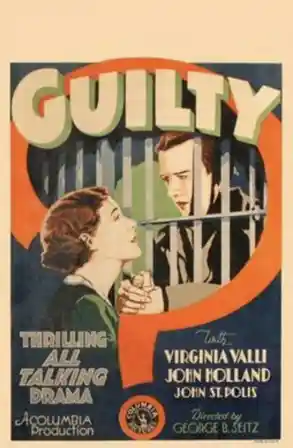
Alright, let’s talk about Guilty? from 1930. Is it a must-see today? Probably not for your average movie night crowd. 🍿 This one’s more for the film history buffs, folks who dig into early talkies and unusual narrative stunts. If you're hoping for clear answers or modern pacing, you'll likely find yourself a bit lost, maybe even annoyed.
The whole premise is pretty neat, though. We’ve got this Senator Carter — a name you hear thrown around a lot, but his full character feels slippery. He’s accused of bribery, gets locked up, and then decides to, well, *end it*. All so his daughter can marry a judge’s son, which felt like a slight thin reason for such a dramatic act, honestly.
The real hook here is how the story gets told: through ten different folks' eyes. Each person, from his wife to a servant, spills their version. And these versions? Wildly different.
One minute, Carter’s a kind, misunderstood man. The next, he’s… well, definitely looking guilty.
You can almost feel the movie trying to convince you this moment matters, each new perspective aiming to shift your idea of him. But it doesn’t always land cleanly.
There's a scene where one witness describes Senator Carter’s walk, a slow, deliberate stride. Then another person comes on and practically contradicts it, saying he was always a man in a hurry. It's a small detail, but it’s so central to what this film is trying to do with truth and memory.
Clarence Muse has a part here, and he always brings a certain weight to the screen. Even in what feels like a smaller role, his presence is undeniable. He just commands attention, even with less dialogue than others.
The pacing is… of its time. Very deliberate. Some scenes just hold on, maybe 20 seconds too long, and the silence starts to feel awkward rather than emotional. It's an early talkie thing, I guess. The dialogue itself can be a bit stilted, too. You see the actors working through the new technology.
Virginia Valli, as the daughter, brings some genuine feeling to her role. Her despair, especially when she’s grappling with her father's fate, really cuts through the otherwise formal tone. You feel for her, even if the whole 'marrying the judge's son' thing is a bit of a stretch.
Other characters, like the judge himself (Erville Alderson), seem to morph based on whose memory we’re in. It's less about a consistent character and more about a reflection in a funhouse mirror. Mischa Auer pops up, too, though in a blink-and-you-miss-it kind of way. He's always distinctive.
The suicide scene itself, it feels a bit… staged. Less like raw despair and more like an act for the audience. The drama is there, but it’s not particularly subtle. You can tell they were still figuring out how to portray these intense moments on film back then.
And the court scenes? Surprisingly dry. I thought they'd be more dramatic, given the stakes. But they mostly serve as a backdrop for these conflicting stories.
Honestly, the movie gets noticeably better once it stops trying so hard to present each 'version' as equally valid and just lets the fragmented nature of it all sink in. It’s like, just let the confusion be the point, you know? The core idea, this unreliability of memory, is so much stronger than some of the clunky execution.
This isn't a masterpiece, not by a long shot. But it’s a fascinating peek into how filmmakers were experimenting with storytelling almost a century ago. It’s a bit messy, often unclear, but it tries. And sometimes, that’s enough to make an old film worth a look. Just don't expect all your questions answered. You'll leave with more thoughts than conclusions. 🤔
IMDb —
1929
Community
Log in to comment.