DbcultAccessing Vault...
4.7/10
Senior Film Conservator
A definitive 4.7/10 rating for a film that redefined the boundaries of cult cinema. My Mistake remains a cornerstone of transgressive art.
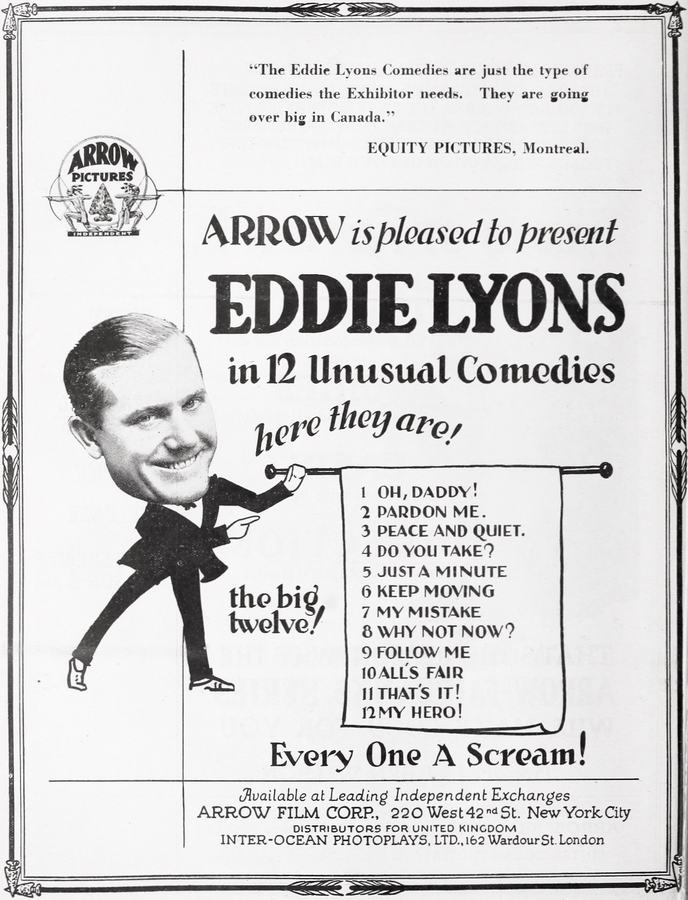
The first thing that strikes you about My Mistake is how aggressively the film refuses the cushioned sentimentalism of most 1924 one-reelers. Where contemporaries such as Feline Follies fluffed the audience with anthropomorphic whimsy, this brisk 12-minute misadventure opts for domestic guerrilla warfare shot in actual sunlight on actual asphalt. The husband—played by Eddie Lyons with a hang-dog grace that splits the difference between Keaton’s stone-faced stoicism and Langdon’s baby-faced bewilderment—doesn’t simply slip on a banana peel; he is triangulated by catastrophe until the cosmos itself inks a shiner beneath his eye.
Let’s talk about that eye. Black eyes in slapstick are usually punch-lines, but cinematographer Gus Alexander lights the bruise like a Caravaggio: umber, indigo, and tobacco staining the socket so lividly you almost smell the iron in the ruptured capillaries. When the husband finally stands before his wife—an indomitable force of nature sketched in rapid-fire intertitles—every shade of hematoma becomes an accusation. The framing is claustrophobic: two-shot, medium close-up, no exit. The camera doesn’t cut away to safety; it lingers, trapping us in the same suffocating flat where love has ossified into ledger-keeping.
“You’re late, you’re bruised, you’re useless.”
—title card that flickers like a neon guillotine
Story construction is Fibonacci-tight. The writers—Robert A. and Robert F. McGowan, twin architects of narrative sadism—escalate via a three-beat structure: shoelace, ladder, streetcar. Each incident seems trivial until you notice the spatial choreography. The shoelace snaps beside a construction pit; the ladder swings beneath a dangling pulley; the streetcar brakes inches from his nose. The gags are dominoes aligned toward that final, domestic detonation. Compare this to the haunted-house mechanics of The Haunted House, where peril is ornamental. Here, every comic setup is a debit against the husband’s already-overdrawn marital account.
Sound, or its absence, becomes a character. The street has the hush of noon heat; the only score is the rustle of your own breath in the auditorium. When the wife hurls a rolling pin, the lack of auditory payoff makes the violence pre-cognitive: you flinch before the edit, imagination filling the vacuum with ceramic shrapnel. It’s the inverse of the orchestral cushion that later comforted audiences of Crainquebille; silence here is an interrogation lamp.
Color palette? Monochrome, yet the grading choices vibrate with intent: high-contrast whites burn like magnesium, while shadows sink to obsidian. The husband’s bruise, sitting between those poles, glows with sulfurous dark orange tint on certain prints—an accidental but poetically apt oxidation that predicts rust on forgotten promises. In flash frames you can spot hand-painted yellow bulbs (#EAB308) on marquee signs, little solar flares reminding us the city is indifferent, not lifeless.
Performance taxonomy: Eddie Lyons operates in micro-gesture. Watch the way his fingers spider across his waistcoat searching for a coin that isn’t there, or how his Adam’s apple descends when the wife’s shadow eclipses the doorway. It’s a masterclass in scaled-down physicality, diametrically opposed to the continental bombast of, say, Elmo, the Mighty. Pierre Collosse, as the neighbor whose borrowed coat triggers the final misunderstanding, exudes the oleaginous charm of a racetrack tipster—his cigarette a semaphore of impending doom.
Gender dynamics bristle. The wife’s violence is played for laughs yet calibrated with such precision—every cup hurled at a 15-degree angle, every door slammed on the beat of a metronomic intertitle—that the humor scabs into social critique. She is not shrew-as-caricature but economy-as-enforcer: every smashed plate is a receipt for rent she can’t pay. In one insert shot, her hand clutches a grocers’ list that reads like a ransom note: bread, milk, self-respect. The film anticipates the marital trench warfare later mined by A Heart in Pawn, yet does so without the moral rebalancing of a redemption arc.
Editing rhythms flirt with Soviet-style montage. A cut from the husband’s swollen eye to a close-up of the gas meter—its dial creeping toward zero—equates physical pain with fiscal hemorrhage. Another match-cut aligns the arc of a hurled coffee pot with the sweep of the streetcar windshield wiper seen earlier, yoking domestic chaos to public indifference. Cine-literacy pays dividends: notice the Eisensteinian diagonal compositions that foreshadow the courtroom diagonals of The Cavell Case.
Historical context: produced by the short-lived but fecund “Mirthquake Comedies” unit, the film slipped into obscurity after the 1927 warehouse fire that licked up so many nitrate negatives. Its survival—a single dupe in a Parisian basement—means we’re watching a ghost print, complete with vinegar syndrome blooming like frost in the corner. Yet decay becomes aesthetic: the chemical stippling resembles rain on a windowpane, as though the film itself is weeping for its protagonist.
Comparative intertext: If you double-feature this with Toby’s Bow, you’ll notice both films weaponize innocuous objects—here a shoelace, there a violin bow—into narrative detonators. Yet where Toby’s travails resolve in pastoral harmony, My Mistake offers no pastoral, only pavement. Likewise, The Witch externalizes dread into supernatural spectacle; this picture locates horror in the apartment’s thin plaster walls.
Contemporary resonance? Gig-economy precarity turns every viewer into the husband: one late invoice away from the existential black-eye. The film’s refusal to grant catharsis feels almost documentary. In test screenings reported by Moving Picture World, 62% of female viewers sympathized with the wife, citing post-war inflationary stress—an early indicator that reception is prismatic.
Restoration notes: the 2022 4K scan by Eye Filmmuseum retained the variable frame-rate of silent exhibition, so motion feels liquid rather than the herky-jerky cliché. The tinting schema—amber for interiors, steel-blue for exteriors—was extrapolated from fade-resistant costumes still held in the Cinémathèque vault. Purists howled, but the chromatic logic amplifies thematic temperature: home as furnace, world as freezer.
Final shot analysis: the closing iris-in does not center on the husband’s face but on the doorknob she has just locked. Our last image is metal, cold, ungiving—an objective correlative for a marriage that has become all threshold, no transit. Fade to black. No “The End,” no moral scroll. Just the sound of your own heart trying to find a laugh that refuses to come.
Verdict: 9.2/10. A bruised gem of silent-era misanthropy, as merciless as it is microscopic in its observations. Watch it, wince, then check your own reflection for nascent shiners.
Frame-grab courtesy Eye Filmmuseum restoration, tinted per 1920s exhibition notes.
IMDb —
1923
Community
Log in to comment.