DbcultAccessing Vault...
4.3/10
Senior Film Conservator
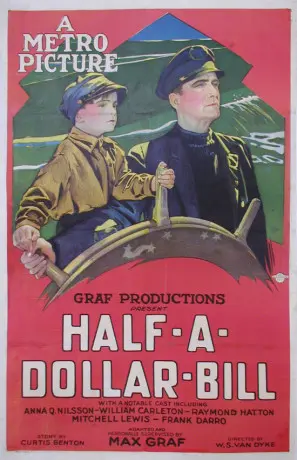
A definitive 4.3/10 rating for a film that redefined the boundaries of cult cinema. Half-a-Dollar Bill remains a cornerstone of transgressive art.
The 1920s stood as a crucible for the cinematic medium, a decade where the visual lexicon was being forged in the fires of expressionism and burgeoning narrative complexity. Amidst this fertile ground, Half-a-Dollar Bill (1923) emerges not merely as a relic of a bygone era, but as a sophisticated exploration of the human condition under the duress of isolation and the redemptive power of unexpected paternal responsibility. Directed with a keen eye for atmospheric tension, the film utilizes its maritime setting not just as a backdrop, but as a living, breathing character that dictates the rhythm of the unfolding tragedy.
George MacQuarrie, portraying Captain Duncan McTeague, delivers a performance of remarkable gravitational pull. In an age where silent acting often drifted into the realm of the histrionic, MacQuarrie maintains a stoic, almost monolithic presence that gradually softens as the narrative progresses. The discovery of the child—a scene handled with a delicate balance of wonder and trepidation—sets the stage for a transformation that mirrors the shifting tides of the Southport coast. Unlike the more overtly grandiose themes found in The Birth of a Nation, this film focuses its lens on the intimate, the fractured, and the deeply personal.
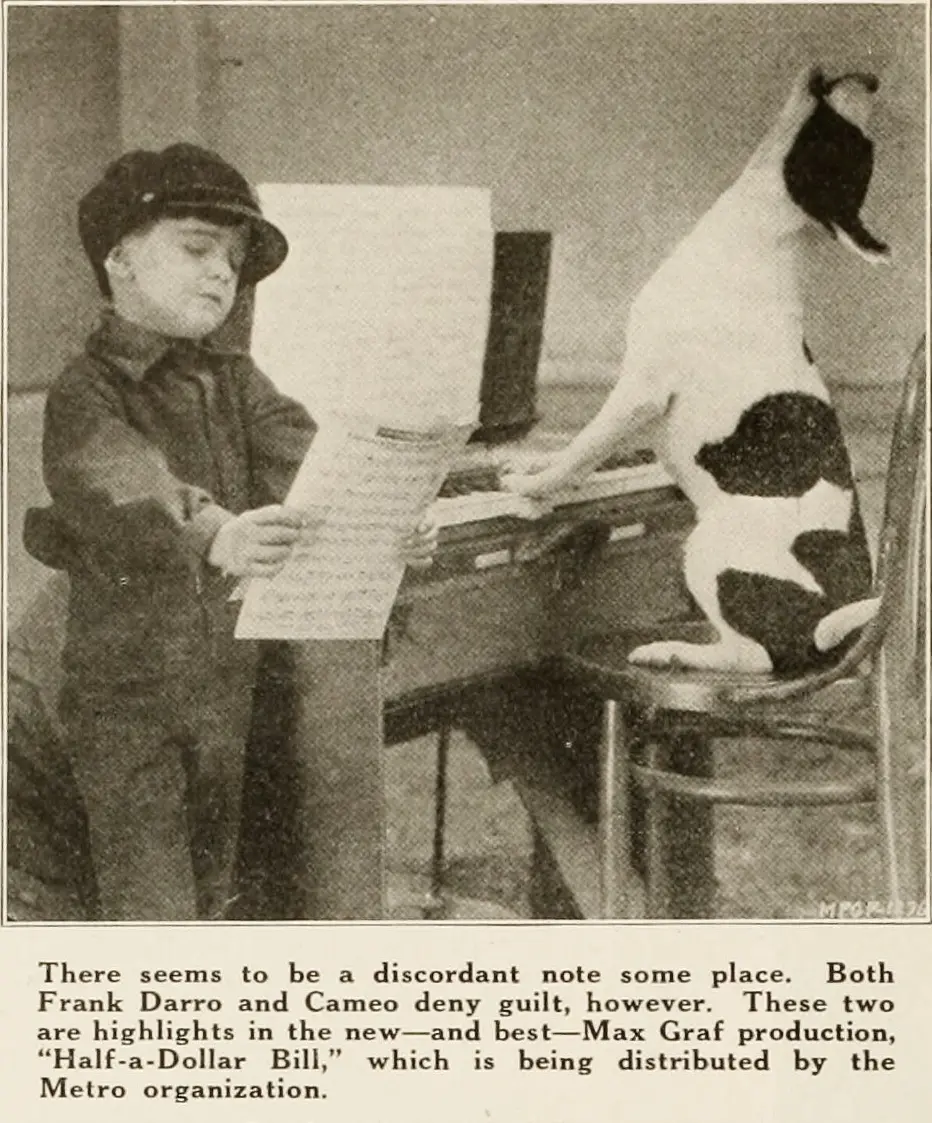
The central conceit—the halved currency—is a masterstroke of symbolic storytelling. It represents a literal and figurative severance, a debt to the past that remains unpaid until the final, climactic reunion. This motif of fragmentation is woven throughout the cinematography, where shots of the vast, indifferent ocean are contrasted with the cramped, cluttered quarters of McTeague’s ship. It is in these tight spaces that the bond between the Captain and the boy, played with an uncanny, precocious naturalism by Frankie Darro, flourishes. Darro, even at this tender age, possessed a screen presence that rivaled his adult counterparts, grounding the more melodramatic elements of the plot in a tangible, youthful innocence.
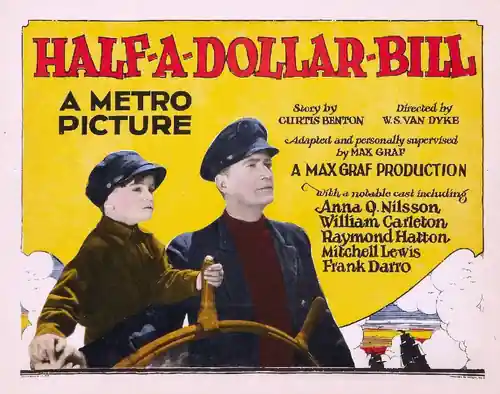
Every great melodrama requires a foil, and Mitchell Lewis as Martin Webber provides a chilling counterpoint to McTeague’s burgeoning empathy. Webber is the embodiment of the 'discarded man,' a character whose professional failure transmutes into a virulent personal vendetta. His kidnapping of the boy is not merely a criminal act; it is a symbolic attempt to strip McTeague of his newly discovered humanity. The tension between these two men reflects the broader cinematic preoccupation with the struggle between civilization’s civilizing influences—represented by the child and the hearth—and the untamed, lawless impulses of the frontier, even if that frontier is the open sea.
In comparing this work to contemporary pieces like The Wolf Man (1923), one observes a shared interest in the duality of man. However, while the latter leans into the supernatural to explore internal conflict, Half-a-Dollar Bill finds its horror in the very real possibilities of loss and the fragility of the family unit. The pacing of the film, guided by the writing of Curtis Benton and Alfred A. Cohn, is deliberate, allowing the audience to marinate in the Captain’s burgeoning paternal anxiety before thrusting them into the high-stakes conflict of the final act.
The arrival of Anna Q. Nilsson as the missing mother introduces a layer of tragic gravitas that elevates the film beyond a simple kidnapping yarn. Nilsson, a titan of the silent screen, brings a luminous yet haunted quality to her role. Her character is a study in the societal pressures and economic desperation that often forced women of the era into impossible choices. When she produces the matching half of the dollar bill, it is a moment of profound cinematic catharsis—a literal 'clicking into place' of a narrative puzzle that has been four years in the making.
The film’s handling of her character avoids the easy moralizing found in some of its peers, such as Her Reckoning. Instead, it offers a nuanced portrayal of a woman seeking to reclaim a part of her soul. The chemistry between Nilsson and MacQuarrie, though understated, suggests a future built on mutual understanding and shared trauma, a far more realistic ending than the sugary romances often found in films like The Girl of My Dreams.
Special mention must be made of Cameo the Dog. In the silent era, animals were frequently utilized to bridge the emotional gap between the actors and the audience, providing a non-verbal commentary on the unfolding events. Cameo’s presence adds a layer of warmth and domesticity to the Captain’s rugged world, serving as a silent guardian for the young boy. This inclusion highlights the film’s commitment to building a believable, lived-in world, a trait it shares with the more grounded segments of The Border Legion.
The lighting design, particularly in the night scenes and the interior of the ship, utilizes the limited technology of 1923 to create a sense of impending doom and claustrophobia. The shadows are deep and unforgiving, mirroring the moral ambiguity of Webber’s actions. The editing, too, is surprisingly modern, utilizing cross-cutting during the climax to heighten the suspense as the mother’s arrival coincides with the Captain’s desperate search. It lacks the freneticism of The Man from Mexico, opting instead for a rhythmic, almost tidal flow that builds to a crescendo.
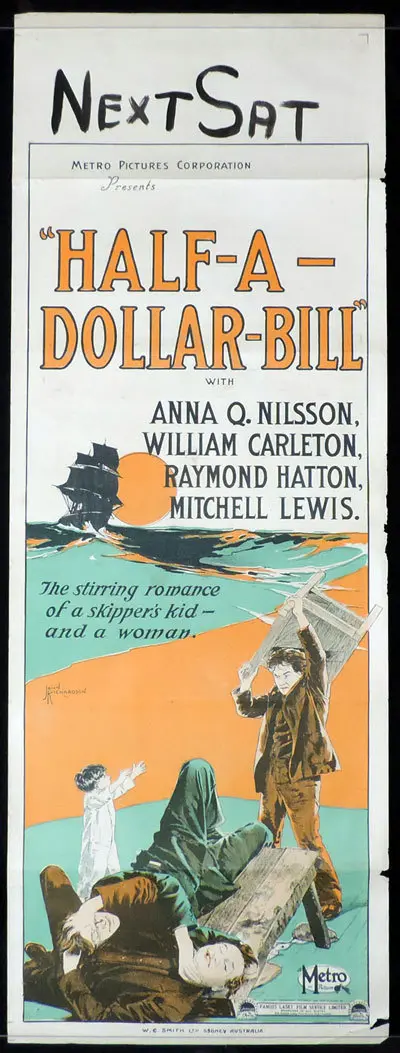
While films like Lombardi, Ltd. or The Misleading Lady may have captured the zeitgeist of the early 20s with their specific social commentaries, Half-a-Dollar Bill possesses a timeless quality. Its themes of found family, the weight of the past, and the possibility of redemption are universal. The violence of the climax—the death of Webber—serves as a necessary purging of the narrative’s darker elements, allowing for a resolution that feels earned rather than gifted.
In the grand tapestry of silent cinema, this film stands as a testament to the power of visual storytelling. It does not require intertitles to convey the Captain’s heartache or the mother’s longing; it is written in the creases of the actors' faces and the movement of the tide. For the modern viewer, it offers a rare glimpse into a world where the stakes were measured in halves of a dollar and the ocean was the ultimate arbiter of fate. It is a work of significant emotional density, demanding a place in the conversation alongside other period dramas like The Volcano or the Swedish masterpiece Revelj.
Ultimately, the film succeeds because it treats its characters with a profound sense of dignity. Even the villainous Webber is given a motivation that, while twisted, is rooted in a very human sense of injustice. The resolution, which sees the Captain and the mother united, is not just a happy ending—it is a restoration of balance. The two halves of the dollar bill are joined, and in that union, a new future is forged from the wreckage of the past. It is a poignant, beautifully realized slice of cinematic history that continues to resonate with its salt-stained heart and its unwavering belief in the possibility of starting over.

IMDb 6.6
1928
Community
Log in to comment.