DbcultAccessing Vault...
Cult Review
Senior Film Conservator
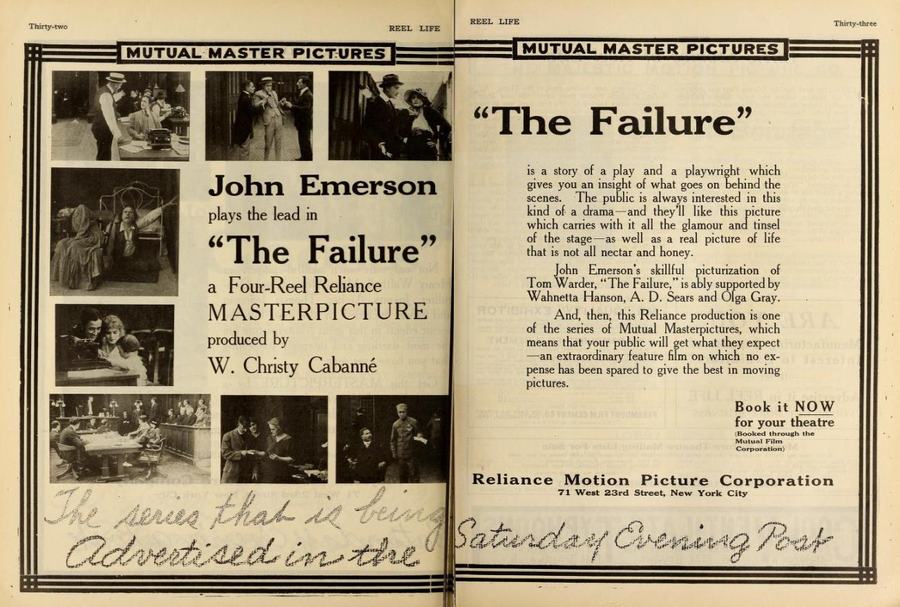
Broadway’s rot never looked so exquisite.
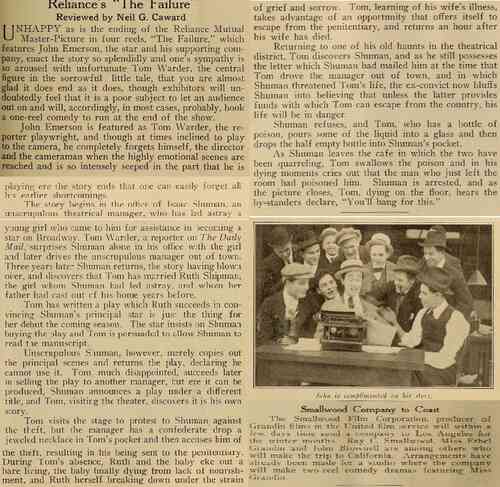
Christy Cabanne’s The Failure—a 1915 five-reel knockout that time forgot—unspools like a sulphurous fever dream: predatory glamour, ink-smudged valour, and vengeance distilled to its most cinematic quintessence. Viewed today through the brittle prism of a surviving 16mm print, the film still exhales an acrid perfume, a heady bouquet of ambition and moral putrefaction.
There is, first, the chiaroscuro of Henry B. Walthall’s face—those hollowed cheeks, those eyes that flicker between righteous fire and self-lacerating doubt. His Tom Warder is no square-jawed superhero but a man who gnaws his own conscience, aware that every exposé may torch not merely a villain but the fragile hopes of the ingénues he seeks to shield. Walthall, fresh from Griffith’s crucible, plays the reporter like a violin whose strings are tightened until they whimper.
Opposite him, George Siegmann’s Isaac Shuman stalks each frame with top-hat silhouettes that seem cut from Zola’s pages. Watch how Cabanne blocks him: foreground windows fracture his reflection, multiplying him into a hydra of lechery; mirrors split his grin into a kaleidoscope of menace. The mise-en-scène whispers: predator as industry, industry as contagion.
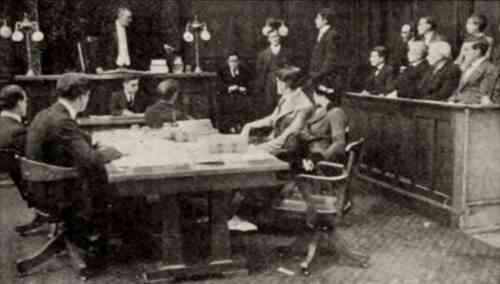
Cabanne, once Griffith’s lieutenant, grafts Birth-scale crowd choreography onto intimate skulduggery. Note the courtroom montage: superimposed ticker-tape headlines swirl like locusts over jurors’ faces, while a metronomic pendulum slices the screen—a visual verdict before the foreman opens his mouth. The effect anticipates Eisenstein by a full decade yet feels quintessentially American: speed, sensation, sales.
The film’s temporal ellipse—Shuman’s exile and return—compresses years into a single fade, a dissolve that stinks of stale cigar smoke and sour ambition. When we next see Broadway, neon has ousted gaslight, chorus girls sport ostrich feathers instead of moth-eaten tulle, yet the predation persists, merely toggling its mask. One thinks of During the Plague, where history’s bacillus merely swaps vectors; here the virus is masculine entitlement.
Olga Grey, as the starlet-turned-collaborator Mary Lane, embodies the suffrage-era bind: her agency is both weapon and trap. Grey’s eyes—panoramic, tragic—register each betrayal with the helpless clarity of a doe watching the hunter reload. In a bravura medium-close-up, Cabanne holds her tear-tracked cheek as focus racks to the newspaper’s headline: “SHUMAN INDICTED.” The tear does not fall; it trembles, suspended like the moral ambiguity of a nation negotiating its first wave of feminist discourse.
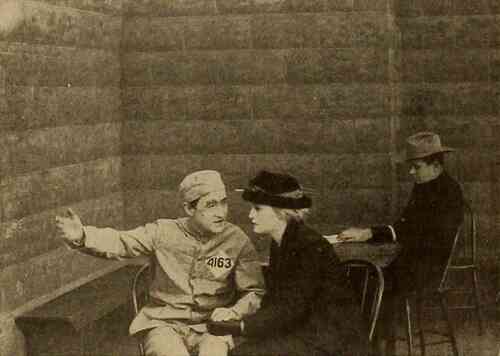
The prison sequences, shot on location at Sing Sing, exhale damp stone and rust. Cinematographer William Fildew under-cranks the jail-yard march so that Warder’s stride becomes a staccato twitch—time as torment. Meanwhile, a parallel edit lands us in Shuman’s rooftop soirée, champagne popping in sync with the warden’s keys. It’s a dialectical punch worthy of Quo Vadis?’ arena scenes, yet confined to the verticality of Manhattan ambition.
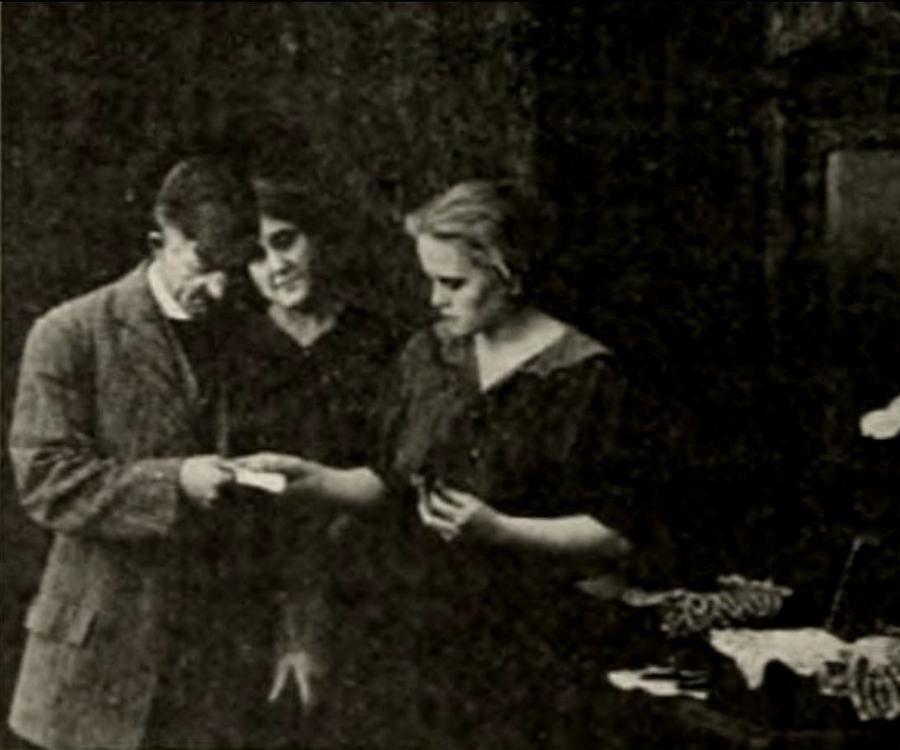
Spoilers seep from here like ink through blotting paper, but the plot’s architecture is less whodunit than how-will-he-untangle-the-noose.
Tom’s counter-scheme involves forged hotel registers, a dictaphone cylinder hidden in a hollowed-out Bible, and a third-act cameo by Erich von Stroheim—still billed as “Hans”—as a Prussian stenographer whose glacial scruples melt under the heat of Warder’s exposé. The climax erupts during a gala performance of The Count of Luxembourg: stage lights blackout, a single magnesium flare limns Shuman’s arrest, the curtain drops on a tableau that would make Daumier weep.
Yet the film refuses catharsis. In the coda, Tom and Mary exit the courthouse into a snowfall that erases footprints almost instantly. Cabanne cuts to a street urchin selling papers whose headline screams the next sensation. The camera lingers on the boy’s gloveless fingers, then tilts up to the skyscrapers—mute, indifferent. Justice, the film suggests, is merely another commodity; tomorrow’s headline will bury today’s triumph.
Archivally, the print is a patchwork quilt: Hungarian intertitles, Czech nitrate stamps, a lone French censor card snipped into reel three. MoMA’s 2019 restoration dyes the night scenes a livid cyan, turning Shuman’s silk hat into a bruise against the snow. Some purists howled, but the chromatic violence feels apt—this is, after all, a story about stains that refuse to launder.
Compare it to contemporaneous morality tales like The Lure of Millions—all mustache-twirling financiers and last-minute reprieves—and The Failure plays like a telegram from a darker continent. Its DNA coils through von Stroheim’s own Greed, through the litigation noir of Judge Not, even through the toxic boardrooms of Ready Money. Yet Cabanne’s cynicism feels leaner, hungrier, unburdened by Expressionist ornament.
Performance kudos aside, the film’s sonic afterlife fascinates: the 1921 reissue boasted a live prologue—lecturer, soprano, and a ten-piece orchestra hammering out “The Prisoner’s Song.” Accounts describe patrons fainting during the verdict scene, a symbiotic hysteria that prefigures midnight Rocky Horror rituals. Today, in the era of screen-fatigue, such communal convulsions feel as distant as nickelodeon parlors, yet the film’s ethical vertigo persists.
What lingers most is the title’s bitter irony. Shuman, the ostensible failure, dies richer than ever—his assets liquidated, his notoriety minted into legend—while Warder, the victor, must rent a garret, his byline forgotten by the carnival of news. In that asymmetry, The Failure locates the marrow of American myth: success as scar tissue, failure as the last honest wound.
Verdict: hunt down any flickering print, any digitised fragment, any university archive willing to crank a hand-cranked projector. Let the images stutter across a bedsheet, let the acetate reek fill your nostrils. For in this cracked celluloid lies a mirror—warped, merciless, unblinking—and if you stare long enough, you will spot your own reflection skulking in the wings, waiting for the spotlight to swing.
—reviewed by J. T. Halberstadt, New York, 2024
IMDb —
1923
Community
Log in to comment.