DbcultAccessing Vault...
3.8/10
Senior Film Conservator
A definitive 3.8/10 rating for a film that redefined the boundaries of cult cinema. Hamlet remains a cornerstone of transgressive art.
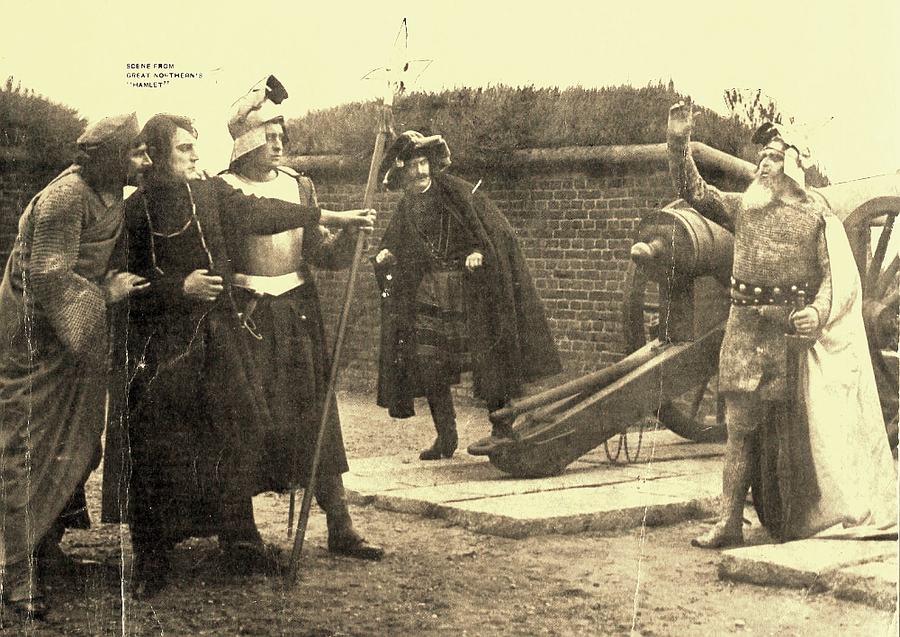
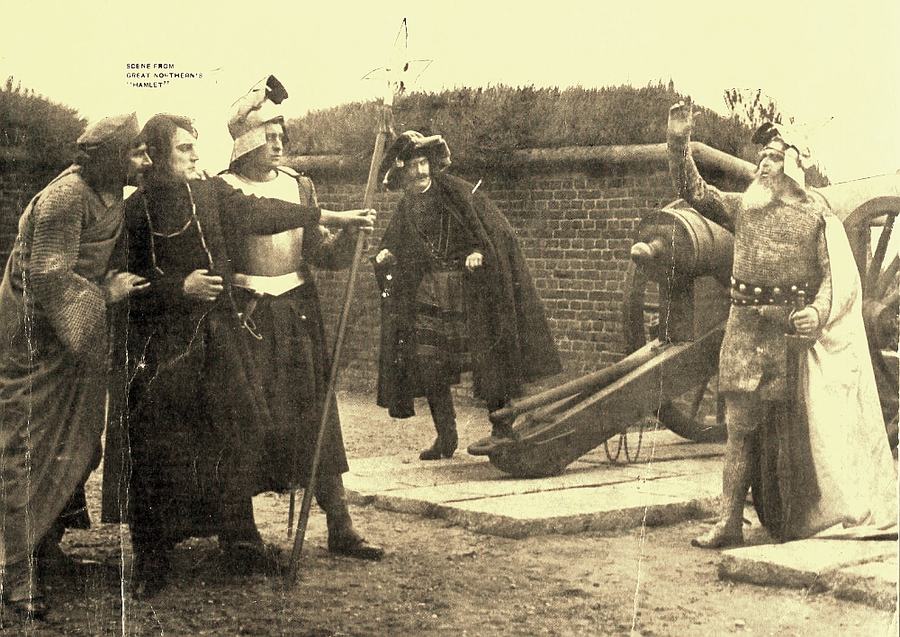
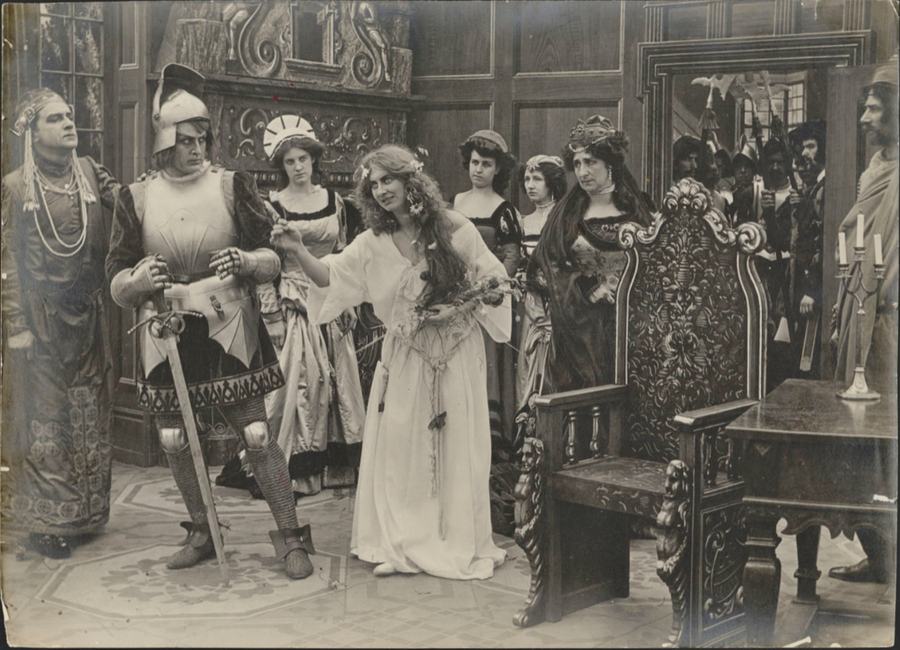
A frost-laden Elsinore looms in chiaroscuro; the camera, starved of colour, feasts on contrast instead. Every frame of this 1911 Hamlet feels carved from whale-bone and obsidian.
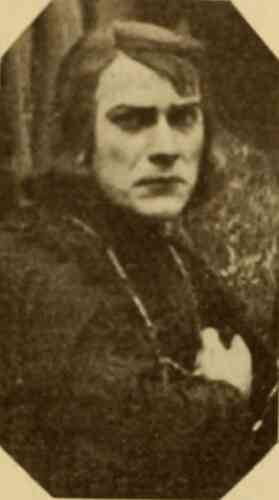
When the opening iris-in reveals battlements powdered with studio snow, we are not in Renaissance Denmark but inside a fever dream that Nordic Expressionism borrowed from Shakespeare and never returned. Alwin Neuß, cadaverous cheekbones dusted with grease-paint graphite, moves as though underwater; each gesture arrives two beats late, giving the impression that thought itself has mass, viscosity, inertia. Ella La Cour’s Gertrude drifts behind him in furs like a moth trapped behind velvet drapes, her gaze equal parts hunger and remorse. The camera loves the hollow at the base of her throat more than it loves dialogue, and in a silent film that choice screams subtext.
Shot in the dead of winter on Berlin’s Tempelhof backlot, the production repurposed leftover sets from Dante’s Inferno—hence the skewed cathedral arches that seem to breathe during Hamlet’s soliloquies. Directors Alwin Neuß and Franz Porten slice Shakespeare’s five acts into twenty-three tableaux, each introduced by an intertitle whose font drips like melting candle-stubs. Budgetary constraints become aesthetic triumphs: the ghost of King Hamlet is double-exposed onto swirling chimney-smoke, a translucent accusation that hovers between soot and starlight. The famous play-within-the-play is staged as a shadow-puppet phantasmagoria; silhouettes stab silhouettes, and the court’s horrified gasps are registered only by the flicker of torchlight on their eyeballs.
Silent Shakespeare demands physiognomic eloquence, and Neuß delivers a masterclass. Watch the micro-shifts around his scapula when the ghost commands “Remember me!”—shoulder-blades lift like wings denied flight, then collapse into a slump of existential fatigue. Compare that to Aage Hertel’s Laertes, whose athletic fury feels almost modern; he vaults tables, skids on rushes, and in the graveyard scene actually spits at Yorick’s skull, a globule of contempt caught mid-air by the camera’s 16 fps hunger for detail. The moment is startlingly intimate, a tear in Victorian etiquette that anticipates the rawer screen performances two decades later.
Emilie Sannom’s Ophelia dies off-screen—an ellipsis that feels brutal rather than coy. We glimpse merely her glove floating among reeds, picked apart by crows while Gertrude, reciting the drowning, fingers the ermine collar that once belonged to her first husband. The collar becomes a visual refrain: seen at wedding feast, at confession, finally at funeral. Each reappearance tightens like a noose around Gertrude’s identity, suggesting that female survival in this court is measured in scraps of fur and the speed with which one can swap allegiances. Silent cinema cannot give us Gertrude’s ambiguous complicity in regicide, but the collar, gleaming against La Cour’s clavicle, argues louder than any soliloquy.
Cross-cutting here predates Griffith’s Birth of a Nation by four years. During Hamlet’s sea-voyage to England, the film interlaces shots of the prince scribbling revisions to Rosencrantz & Guildenstern’s death warrant with images of those same courtiers gambling below deck, oblivious. The moral calculus is ruthless: thought itself becomes weaponised, ink transmutes to blade. When the pirates attack (rendered via a single, hand-tinted crimson frame), the narrative fracture feels like consciousness splintering under the weight of its own schemes.
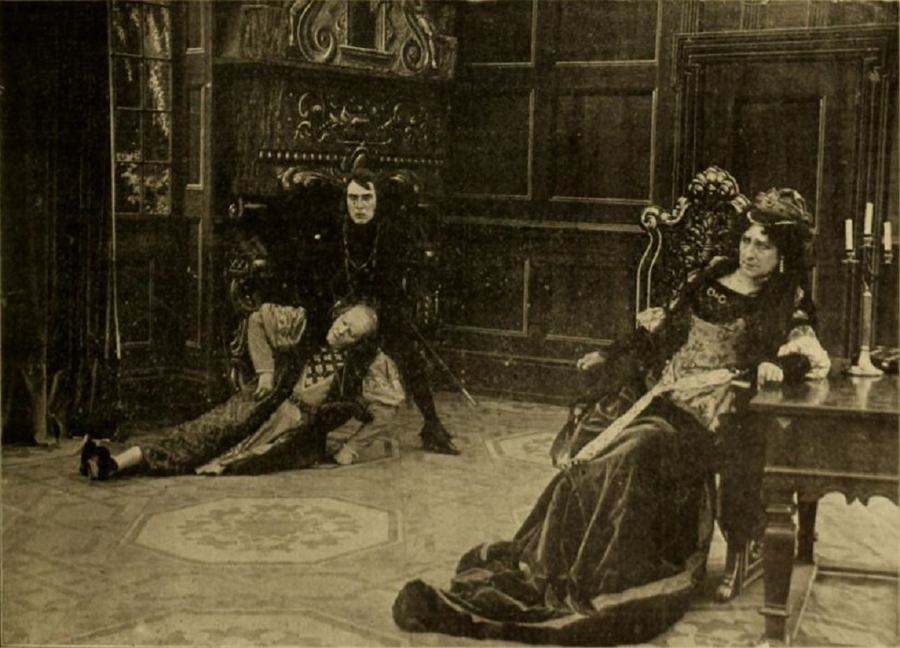
Prints surviving in Copenhagen and Turin reveal a sophisticated tinting strategy: amber for interior court intrigue, viridian for exterior ramparts, rose for Ophelia’s close-ups, and—most startling—indigo for the closet scene where Hamlet confronts Gertrude. Indigo, the colour of twilight bruises, stains the entire frame so that mother and son appear to argue inside a vein. The moment Claudius’s silhouette intrudes, the tint flashes to sulphur yellow, a visual shout that foreshadows violence. Contemporary critics dismissed tinting as ornamental; seen today it functions like synaesthetic commentary, a chromatic libretto guiding the eye when ears are denied Shakespeare’s words.
Original exhibition notes request a live cello performing Grieg’s Holberg Suite during Act I, switching to Wagner’s Tristan prelude for the closet scene. Few venues obliged; most accompanied the film with generic mood music. Yet even without score, the film sounds loud. Intertitles appear sparingly—never more than five words at a time—so that when “TO BE” suddenly blazes onscreen, the white sans-serif against black feels like a pistol crack. The brain supplies the rest of the monologue in subvocal static, a phantom orchestra of memory.
Place this Hamlet beside the boxing actualities popular in the same decade—Jeffries-Johnson or Corbett-Fitzsimmons—and the gulf yawns wider than the Atlantic. Where prizefight films chase motion for its own savage sake, Neuß pursues arrested motion: the terror of thinking too much, of being unable to strike. One genre celebrates kinetic release; the other dramatises kinetic paralysis. Together they map the polarities of early cinema’s moral imagination.
Thomas Mann attended a Munich screening and noted in his diary: “The Dane’s torment is no longer rhetorical; it is optical. I saw the skull beneath the skin because the skin itself was missing.” That perception haunts every subsequent screen Hamlet—from Olivier’s Oscar-laden prince to Kaurismäki’s proletarian reinterpretation—because Neuß established the template: make inertia visible. The 1911 version survives only in shards—approximately 42 minutes of a presumed 60—but those fragments glint like mirror-shards in a dark corridor, reflecting every later attempt to film the unfilmable: consciousness scrutinising itself.
A 4K restoration premiered at Il Cinema Ritrovato in 2022, scanned from a desaturated Czech print and re-tinted using photochemical analysis of Danish censorship cards. The new Blu-ray from Edition Filmmuseum pairs the film with a 1910 Italian Hamlet for a diptych of silent Danes. Extras include a video essay on tinting protocols and a booklet with Mann’s full diary entry translated into English for the first time.
Watching this Hamlet is like opening a reliquary and finding your own pulse inside. It is cinema before cinema knew its own name—raw, tremulous, ferociously introspective. If you measure greatness by the distance a film travels beyond its technical means, then this 1911 curiosity vaults across centuries and lands, still quivering, in the marrow of modernity. See it on the largest screen you can find; let the darkness fold around you like Elsinore’s stone, and discover how silence can scream in iambic pentameter.
IMDb —
1919
Community
Log in to comment.