DbcultAccessing Vault...
4.8/10
Senior Film Conservator
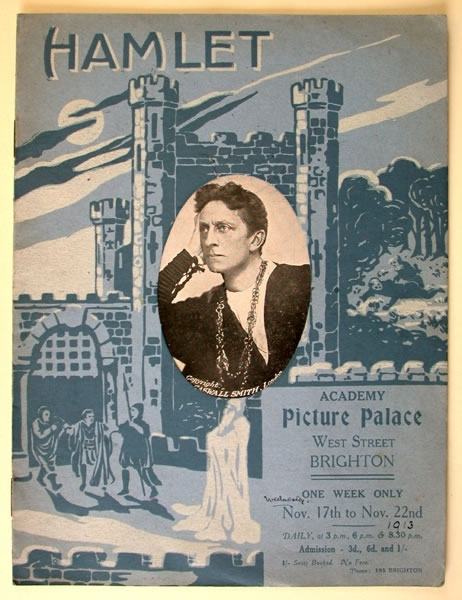
A definitive 4.8/10 rating for a film that redefined the boundaries of cult cinema. Hamlet remains a cornerstone of transgressive art.
The first time the ghost-king’s silhouette glides across the parapet, the 1911 camera does not tremble; instead it lingers, letting the frost of medieval dread seep through the celluloid like ink in water.
We are so accustomed to Shakespeare spoken that the silence of this early cinematic Hamlet feels almost sacrilegious—until you realize the visuals are screaming. Intertitles, sparse yet barbed, become drumbeats; the flicker of torchlight on armor becomes iambic pentameter rendered in chiaroscuro. Director Johnston Forbes-Robertson—also essaying the lead—understands that in the grammar of mute pictures, a close-up is a soliloquy. When his cheekbones knife forward into the frame, the Dane’s paralysis is no longer rhetorical but anatomical: every muscle clenches against an avalanche of filial nausea.
There is no incidental detail here.
The arras behind which Polonius conceals himself is not merely a curtain; it is a parchment-colored ulcer on the palace wall, its tassels quivering like guilty neurons whenever Hamlet’s mania ricochets through the corridor. The poison that drips into the cup is prefigured by an earlier insert shot: a snake slithering over the royal sigil, the emblem itself dissolving through double-exposure into a human skull. These proto-special-effects, wrought with in-camera ingenuity, pre-date by decades the Expressionist nightmares of Caligari yet already wield the same psychic torque.
Ophelia’s madness is staged as a lakeside pantomime—willow branches clawing at her hair like green talons—while the camera’s hand-cranked slowdown turns her wavering descent into Botticelli’s drowned Venus reincarnated as newsreel myth. Because we cannot hear her ballad-snatches, the actress makes her tongue visible: it darts, rolls, freezes against translucent teeth, a small pink animal trapped in a cage of grief. The moment she slips beneath the water is filmed in reverse, the splash running upward like time trying to redeem itself, before the cut slams us back to chronological despair.
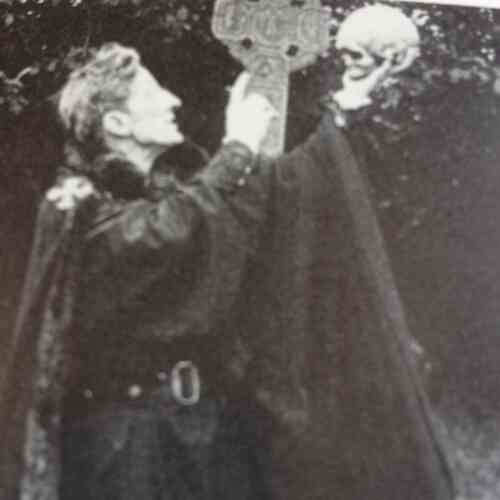
Forbes-Robertson was fifty-eight when he portrayed the student prince; age itself becomes performance.
The crow’s-feet carved around his eyes are fjords of melancholy, yet when he feigns lunacy those same wrinkles twitch into puppet-theater grotesque. Watch how he modulates tempo: the antic disposition is articulated in accelerated, almost Keystone-adjacent gestures—floppy sleeves whirl like carnival flags—whereas the “To be” sequence (rendered via a dissolving text card superimposed over his trembling profile) drops to a single frame-per-second tremor, the universe itself seeming to inhale and forget to exhale.
The play-within-the-play is the film’s bravura set-piece. A hand-tinted crimson wash seeps across the banquet scene as Claudius’ guilt erupts; the tinting is irregular, splotchy, as though the filmstrip itself blushes. Meanwhile, the camera pirouettes 360 degrees—a radical maneuver in 1911—its axis anchored by the poisoner’s leering face, so the courtiers become a centrifugal blur of complicity. The moment the king rises, the footage physically jitters: sprocket holes misaligned during exposure create a strobe of panic that feels eerily contemporary, a proto-MTV nervous breakdown.
Yet the true coup de cinéma arrives with the pirates.
Hamlet’s sea-change is conveyed through a miniature galleon bobbing in a zinc tub, shot from below so the water’s meniscus becomes a planetary horizon. Intercut are actuality shots of the English Channel—whitecaps stolen from a travelogue—then, via matte painting, a skeleton atop a looted vessel’s mast, Jolly Roger morphing into the Danish coat of arms. In seconds, the film collapses geography: the Baltic, the Atlantic, and the Styx flow into one another.
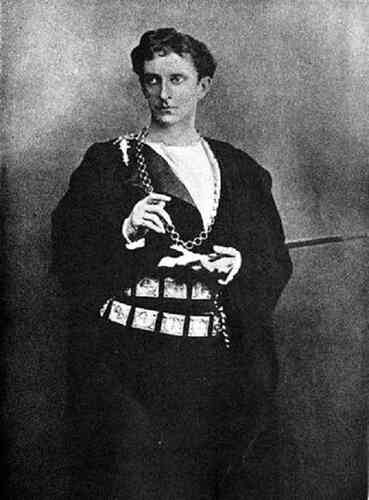
When the final duel detonates, the aspect ratio seems to widen, an optical illusion achieved by pulling the camera farther back while actors sprint toward it—Laertes’ foil elongates into a silver needle aimed at the audience’s pupil. The poisoned blade exchange is a master-class in constructive editing: a medium shot of Hamlet’s hand letting go, a cutaway to the rapier twirling mid-air, a reverse angle of Laertes catching it, all stitched so tightly that continuity feels like kinesis. The fatal thrust is shown only in shadow, two silhouettes merging into a single arachnid shape on the flagstones, blood substituted by a pool of spilled ink that spreads with capillary deliberation.
Death, here, is not a full stop but an ellipsis.
Claudius’ demise is double: first the sword-thrust, then a forced draught of his own tainted wine, the goblet rammed between his teeth by Hamlet’s gloved palm in an act that hovers between execution and Eucharist. The camera tilts downward, letting the king’s crown roll off-frame like a spun coin deciding a kingdom. Over the epilogue, Horatio lifts the prince’s corpse—achieved by superimposing a negative image so Hamlet appears phosphorescent, already half ghost again—while Fortinbras enters through a portcullis rendered in forced perspective so colossal it dwarfs the future.
Technically, the print survives incomplete; several reels are lost to nitrate decay. But the gaps feel intentional, as though history itself were practicing montage. Scholars sometimes splice in stills from the concurrent stage production, creating a stuttering daguerreotype hallucination. Even in its fragmented state, the 1911 Hamlet anticipates every existential thriller—from The Third Man to The Conversation—by weaponizing ambiguity itself.
Compare it to other 1911 morality plays—From the Manger to the Cross or The Life and Passion of Jesus Christ—and you’ll notice how seldom those films trust the viewer to decode theological nuance without sermonizing title cards. Here, Shakespeare’s verbiage is amputated, yet the stump bleeds richer meaning than many sound-era adaptations that drown in their own verbosity.
Restoration efforts by the BFI have stabilized the image, but faint chemical blossoms—magenta bruises and amber halos—still flicker across the duels and funerals. Do not mistake them for flaws; they are the patina of memory, the original audience’s gasp fossilized into pigment. When the curtain-like iris closes on Horatio’s final salute, the screen contracts to a pinpoint of light that feels, even now, like a star refusing to be named.
Verdict: A spectral lantern-slide of a play we thought we knew, this Hamlet proves silence can be more articulate than speech, and that every ghost needs a projector to haunt properly.
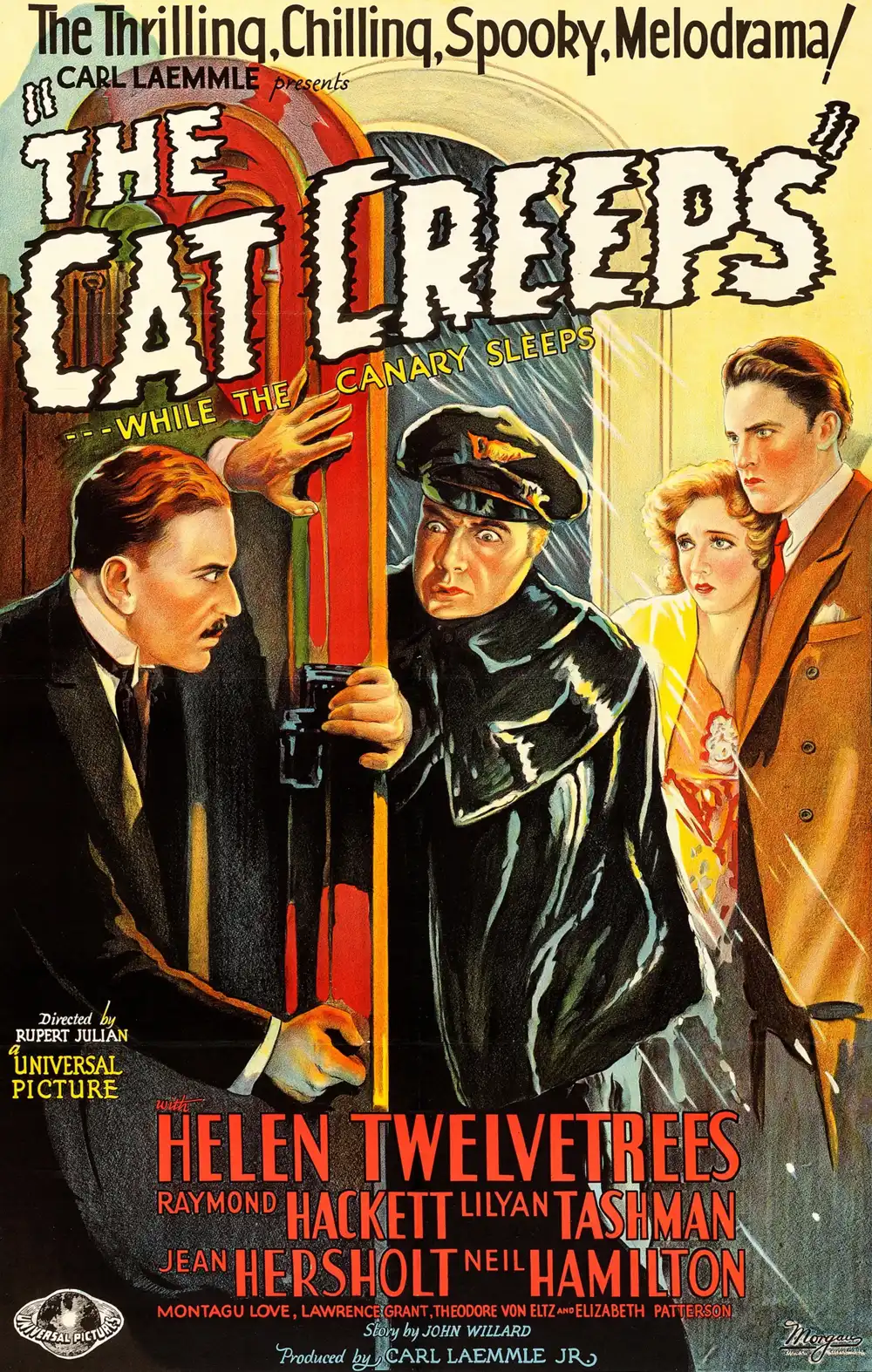
IMDb 6.9
1930
Community
Log in to comment.