DbcultAccessing Vault...
Cult Review
Senior Film Conservator
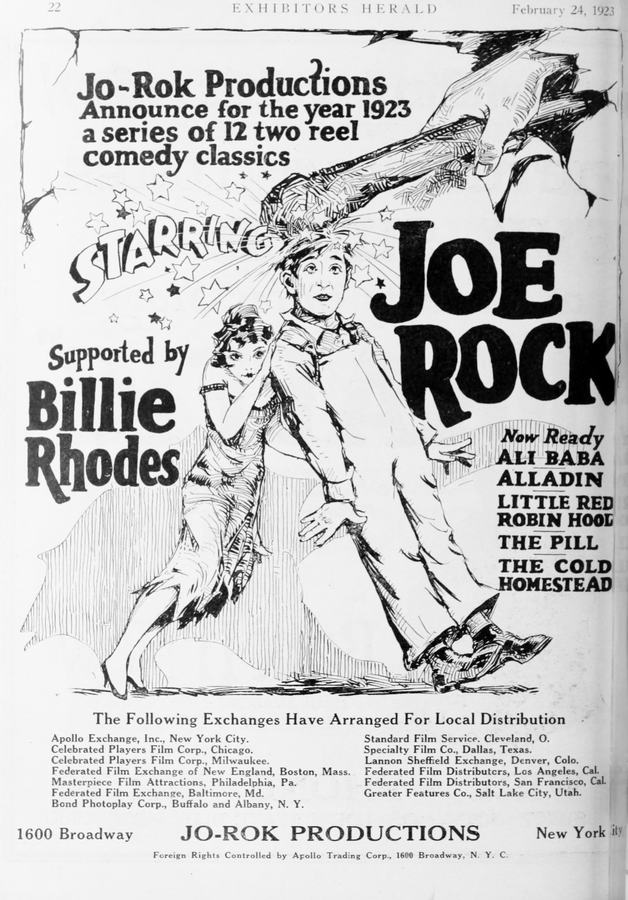
The year 1922 stands as a monumental pillar in the history of the moving image, a period where the grammar of cinema was being rewritten by visionaries and vaudevillians alike. Amidst the high-budget spectacles and the burgeoning German Expressionist movement, the short-form comedy was the lifeblood of the nickelodeon and the neighborhood theater. Joe Rock’s Ali Baba emerges from this fertile ground not merely as a parody of a literary classic, but as a testament to the sheer physical endurance and creative ingenuity of the silent era’s comedic pioneers. To watch Rock is to witness a human form seemingly unbound by the traditional laws of physics, a trait that places him in the same pantheon of kinetic energy as the protagonists in Daredevil Jack.
Slapstick is often unfairly relegated to the basement of intellectual discourse, yet in Ali Baba, the construction of the 'gag' reaches a level of architectural precision. The film does not rely on the sophisticated irony found in contemporary works like The Marriage Blunder; instead, it leans into the visceral impact of the collision. When the secret door to the cave swings open, it is not just a plot point; it is a catalyst for a series of spatial disruptions. Rock’s Ali Baba navigates the hoard of the forty thieves with a mixture of avarice and terror that is conveyed entirely through the twitch of a shoulder or the widening of an eye. This is visual storytelling stripped to its most potent essence.
Contrast this with the more somber, character-driven narratives of the time, such as Her Father's Son. While that film sought to tug at the heartstrings through melodrama, Rock’s objective is the guttural roar of the audience. The scale of the comedy is amplified by the presence of Frank Alexander. Alexander, whose girth was frequently utilized as a comedic prop in itself, provides the gravitational pull that anchors Rock’s orbital antics. Their chemistry is a precursor to the great duos of the talkie era, demonstrating a rhythmic understanding of timing that is as precise as a metronome.
It is impossible to ignore the cultural lens through which Ali Baba was produced. The early 1920s were fascinated with the 'Exotic East,' a trend seen in everything from fashion to the high-brow drama of The Young Diana. However, where big-budget features sought a veneer of authenticity, Rock’s production embraces a delightful, self-aware phoniness. The sets are unapologetically two-dimensional, the costumes are caricatures, and the 'magic' is achieved through simple stop-motion and jump cuts. This lack of pretension is what makes the film endure. It shares a spiritual kinship with Nugget Nell, which similarly skewered the tropes of the Western genre with a playful irreverence.
The film’s pacing is relentless. In an era where some features, like The Soul of Bronze, experimented with slower, more deliberate editing, Ali Baba maintains a percussive speed. This is partly due to the limitations of the short subject format, but it also reflects the burgeoning urban energy of 1922 America. The audience didn't want to linger on the philosophical implications of wealth; they wanted to see the thieves outsmarted in increasingly ridiculous ways. The 'Open Sesame' sequence is handled with a comedic bravado that turns a moment of wonder into a chaotic logistical nightmare of entering and exiting a revolving door of sorts.
While Rock and Alexander dominate the physical space, Billie Rhodes provides the film’s necessary spark of wit. In many silent comedies, the female lead was a passive observer, but Rhodes—much like the protagonists in Cinders—possesses an expressive autonomy. Her reactions to Ali’s newfound wealth provide a grounded reality to the absurdity. She isn't just a wife; she is a co-conspirator in the survival of the household. Her performance style is less exaggerated than Rock’s, offering a tonal balance that prevents the film from becoming a monotonous barrage of pratfalls.
Consider the scene where the bandits arrive at the house. The tension is palpable, yet it is undercut by the sheer domesticity of the setting. This juxtaposition of the mythic and the mundane is a hallmark of the best parodies. It reminds one of the tonal shifts in You Know What I Mean, where the expectations of the audience are constantly subverted by the reality of the characters' ineptitude.
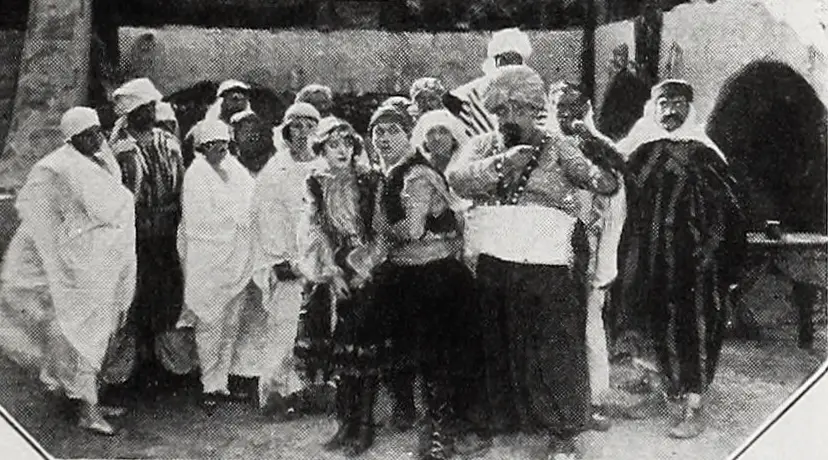
Visually, Ali Baba is a fascinating specimen of early independent lighting. While it lacks the brooding shadows of European imports like Nachtgestalten, it utilizes high-key lighting to ensure that every micro-expression is visible. The clarity of the print (where preserved) reveals a surprising amount of detail in the cavern sets. The use of depth is rudimentary, yet effective; the bandits often emerge from the background in a way that creates a sense of encroaching doom, only to have that doom dissipated by a well-timed trip or a misplaced prop.
The film’s relationship with its audience is one of direct engagement. There is no fourth wall; there is only the shared recognition of the absurdity of the human condition. This is a far cry from the more detached, observational style of Robinson Crusoe, which attempted a more literal translation of its source material. Rock’s Ali Baba knows it is a movie, and it revels in its own artifice. This self-awareness is what keeps it fresh a century later.
When examining Ali Baba within the broader spectrum of 1920s cinema, its significance as a 'transitional' work becomes clear. It bridges the gap between the primitive shorts of the 1910s, like Checkers, and the sophisticated feature-length comedies of the mid-to-late twenties. The film’s obsession with hidden treasure and the 'get rich quick' scheme also reflects the post-war American psyche, a theme explored through a more dramatic lens in The Gold Cure or the high-stakes world of The Highest Bid.
Even in its most ridiculous moments—such as the sequence involving the oil jars—there is a level of technical craft that demands respect. The timing required to coordinate forty actors in a confined space, while maintaining the comedic rhythm, is no small feat. It lacks the political bite of a film like ME, der Kaiser!, but it compensates with a universal appeal. Laughter, after all, requires no translation, and the sight of a man desperately trying to remember a password while a group of cutthroats approaches is a trope that remains as effective today as it was in 1922.
Ultimately, Ali Baba is a triumph of personality over production value. Joe Rock’s charisma is the engine that drives the film, transforming a simple fairy tale into a showcase for his unique brand of athletic humor. It is a reminder that before the advent of CGI and multi-million dollar budgets, the power of cinema rested on the shoulders of performers who were willing to risk life and limb for a laugh. While it may not have the haunting atmosphere of The Pale Pack Train, it possesses a joyful vitality that is often missing from more 'serious' art.
For the modern viewer, watching Ali Baba is an exercise in historical excavation. We are looking back at a time when the world was changing at a dizzying pace, and cinema was the primary medium through which people processed that change. In the antics of Ali Baba, we see the echoes of the vaudeville stage, the promise of the Hollywood future, and the timeless appeal of the underdog outwitting the powerful. It is a short film that casts a long shadow, proving that even a simple 'Open Sesame' can unlock a world of cinematic wonder.
In the pantheon of 1922 releases, Ali Baba holds its own by refusing to be anything other than what it is: a riotous, unpretentious, and brilliantly executed slice of slapstick. It invites us to leave our cynicism at the door and enter a cave where the only currency that matters is the laugh. In a world of complex narratives and digital artifice, there is something profoundly refreshing about Joe Rock’s simple, physical truth.
IMDb —
1934
Community
Log in to comment.