DbcultAccessing Vault...
6.3/10
Senior Film Conservator

A definitive 6.3/10 rating for a film that redefined the boundaries of cult cinema. Hämnaren remains a cornerstone of transgressive art.
Strip away the flicker of nitrate and what remains is a wound still suppurating after a century: a boy who mistakes piety for pedigree, a girl who mistakes love for sanctuary. Director Louis Levy frames the opening lecture hall like a cathedral—rows of ink-stained apostles awaiting gospel from Professor Callmén’s frosted beard. When Ekman’s Henrik first catches Rachel’s eye across a scatter of Luther tracts, the cut is swift; the camera lingers on her daring smile as if it might ignite the parchment. The chemistry is so visceral you can almost smell the damp wool and hear chalk dust drifting like gray ash over Eden.
The print surviving in Stockholm’s vaults is tinted the color of dried blood—amber interiors, cobalt exteriors, a candle-flame yellow that feels punitive. Cinematographer Martin Jørgensen exploits every gradation: when Rachel confesses her pregnancy the frame drops two f-stops, her face swallowed by umbrous gloom while Henrik’s remains cruelly haloed. It’s a visual excommunication performed before any rabbi or pastor utters a syllable.
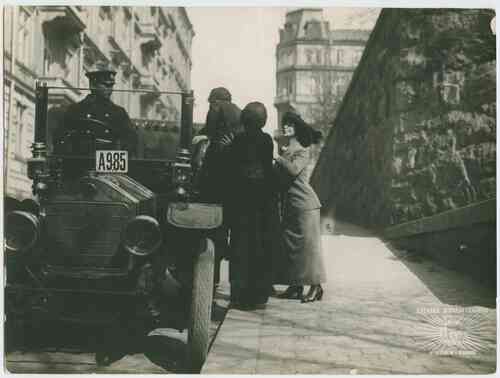
Ekman, better known for boulevard comedies, here uncorks a performance of such twitching self-loathing you half expect his starched collar to throttle him. Watch the way his hand, resting on a pew back, retracts the instant it brushes Rachel’s sleeve—an entire cosmology of fear in a three-frame gesture. When he spits out the line “Jag kan inte—hon är judinna,” the consonants crack like thin ice beneath moral weight.
Jenny Tschernichin-Larsson, usually relegated to suffering mothers, here becomes the film’s gravitational center. Her Rachel does not collapse; she condenses. Every rejection hardens into a luminous stoicism, eyes bright as lighthouse glass. In the kosher bakery scene—where she hides her belly beneath flour-dusted aprons—her whispered lullaby in Yiddish leaks through the intertitles, rendering subtitles apostate.

Archival notes reveal the original Stockholm premiere employed a ten-piece ensemble directed by Armas Järnefelt. The cue sheet specifies violin harmonics during Henrik’s vacillation and a solitary oboe over Rachel’s exile—a scoring strategy that anticipates the leitmotifs of later Scandinavian masters. Today, in most retrospectives, the film runs mute, and the vacuum amplifies every shuffle of your own breath, turning the auditorium into confessional booth.
Where The Sign of the Cross fetishizes martyrdom for spectacle and Locura de amor saccharizes guilt into romantic death, Hämnaren refuses both pageantry and absolution. It is closer in DNA to What 80 Million Women Want’s suffragette fury, though its battlefield is the soul, not the polling booth.
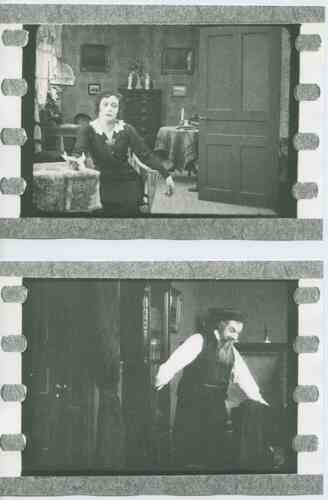
When the Swedish Film Institute re-tinted the 2017 DCP, purists howled—arguing the cobalt night scenes now reeked of modern teal-and-orange. Yet the new grade exposes details formerly swallowed: the Magen David sewn inside Rachel’s coat lining, Henrik’s fraternity pin catching candlelight like a sin you can’t unpin. Restoration is itself a revenge against time, and like all vengeance, it alters the avenger.
Richard Lund’s Jewish peddler, Vilhelm Hansson’s venal seminarian, Karin Molander’s betrayed fiancée—these are not decorative extras but moral tuning forks. Each glance, each hushed aside, tightens the garrote around Henrik’s neck. The film’s most savage moment isn’t the public denunciation; it’s the cutaway to Molander’s character silently paying Rachel’s train fare south, her coin dropping into the tin with a clang that could split atoms.
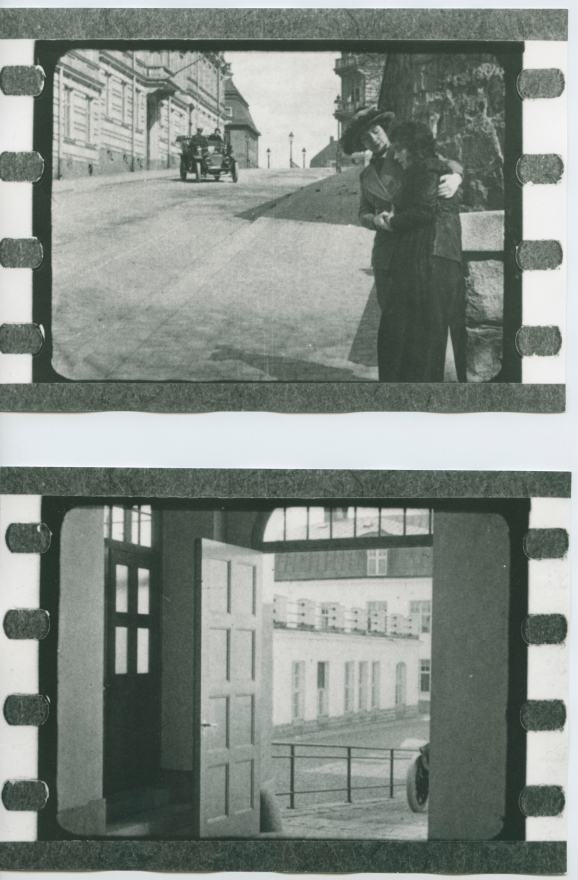
Louis Levy, who moonlit as a journalist, writes intertitles like slanted newsprint: “In the folds of doctrine he sought refuge, and found a noose.” The font mimics Svenska Dagbladet’s 1915 masthead, collapsing the boundary between fiction and morning headline. The effect is uncanny—you feel you are watching tomorrow’s crime section rather than yesterday’s fiction.
Rachel’s exile train departs from Stockholm’s Södra station, steam pluming like doubt. The camera pans to a map on the concourse wall—Norway blank, Denmark blank, Germany blank—implying Europe itself conspires in erasure. Compare this to the open-range redemption in The Virginian or the colonial safety valve of Call of the Bush; here geography is a closing fist, not an escape hatch.
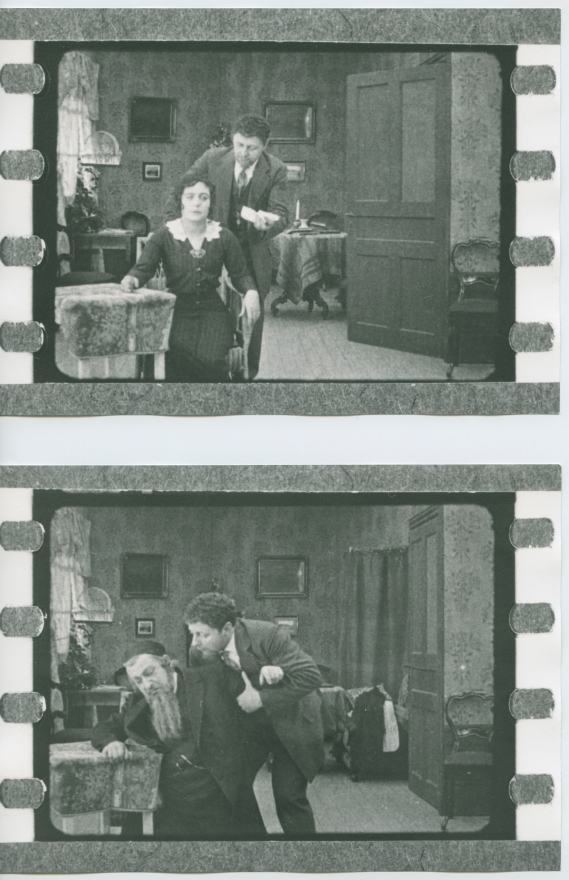
When the film reached the U.S. Midwest, censors excised 214 ft—every shot of Rachel’s swelling belly, every reference to miscegenation. The resulting narrative suggested she sought revenge for a broken engagement, erasing antisemitism entirely. That mutilated print, rediscovered in a Wisconsin barn in 1983, is a ghost of bigotry’s own denial—proof that censorship is just another rehearsal for fascism.
Streaming in 4K, the pores of Ekman’s face become lunar craters; every tear on Tschernichin-Larsson’s cheek looks glycerin-thick yet saline-real. The closer pixels bring us, the more the century collapses. You catch yourself cataloguing familiar hashtags—#religioushypocrisy, #reproductiverights—before remembering this artifact predates women’s suffrage in Sweden. Progress is a palimpsest, and Hämnaren bleeds through every layer.
Watch the film twice, and the moral fulcrum tilts. First viewing: Henrik the cad, Rachel the martyr. Second viewing: Rachel’s silence becomes its own blade; she withholds options, weaponizes victimhood. Levy refuses to flatten either into archetype, instead sketching the messy asymmetry of wounded humans. Cinema rarely traffics in such quantum ethics; most silents give you heroes and villains like lantern-slide silhouettes.
The last shot: Henrik alone in a pew, clutching Rachel’s unsent letter—its seal still lacquered with the menorah she pressed into wax. He lifts it toward the chandelier as if begging enlightenment, but the flame gutters out. Fade to black. No divine thunder, no orchestral swell, only the rasp of your own inhale. In that vacuum you understand: vengeance, like grace, is a gift you bestow upon yourself, and both arrive postage due.
A century on, Hämnaren scalds because it refuses the anesthetic of nostalgia. It is not a relic but a rash. Levy’s camera indicts not only a Lutheran student but every structure that camouflages prejudice as principle. Stream it, project it, let it haunt your bandwidth. Then ask yourself: whom do you exile with the grammar of your own convictions? The film offers no absolution—only a mirror heated until the silver backing bubbles into the shape of your face.

IMDb 5
1922
Community
Log in to comment.