DbcultAccessing Vault...
Cult Review
Senior Film Conservator
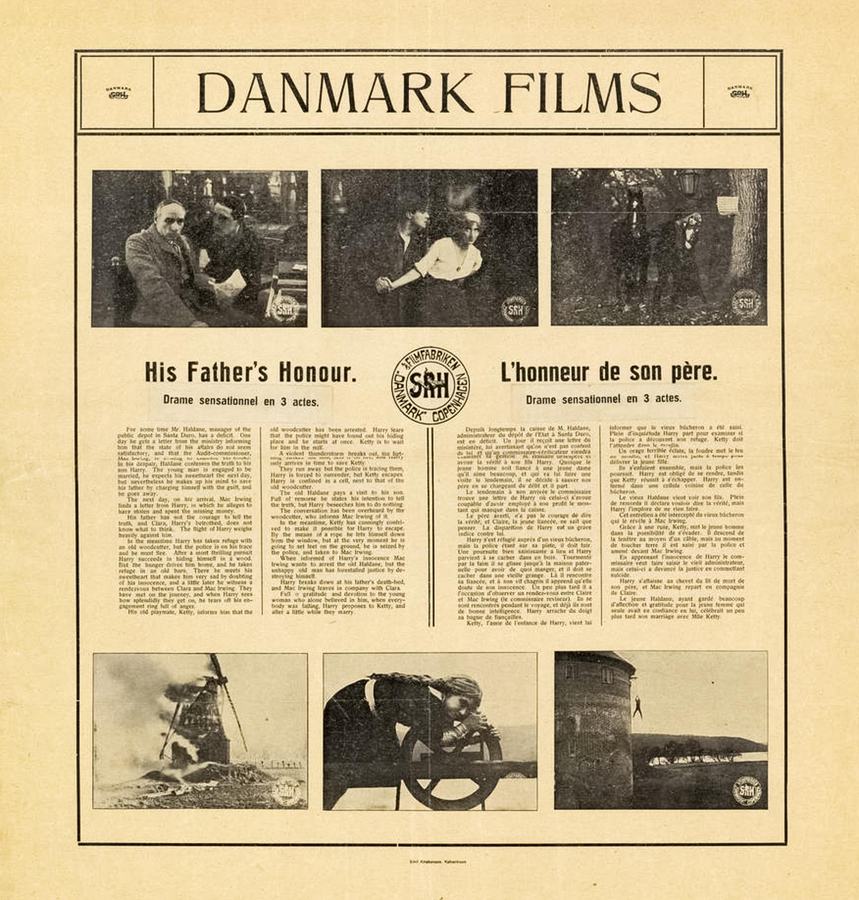
Stepping back into the nascent days of cinematic storytelling, one occasionally stumbles upon a work of such profound emotional resonance and narrative ambition that it transcends its historical constraints. Such is the case with Hans Faders Ære (Hans Father's Honor), a Danish silent film that, despite the passage of a century, still pulses with an undeniable vitality. More than just a historical artifact, this picture offers a poignant exploration of themes – honor, legacy, truth, and the relentless grip of past injustices – that remain acutely relevant. It’s a testament to the power of early filmmakers to craft narratives that, even without spoken dialogue, speak volumes to the human condition.
At its core, Hans Faders Ære is a melodrama of the highest order, weaving a intricate tapestry of familial duty and personal sacrifice. The narrative centers on young Hans Gregersen, brought to life with a compelling blend of youthful idealism and simmering determination by Emanuel Gregers. His father, the esteemed Captain Henrik Gregersen, met an untimely end years prior, his name posthumously sullied by accusations of cowardice during a critical naval engagement. This ignominy casts a long, suffocating shadow over the Gregersen household, particularly affecting Hans's mother, Else, portrayed with heart-wrenching fragility by Emilie Sannom. Her silent suffering is a constant, powerful undercurrent, fueling Hans's burgeoning suspicion that the official story is a meticulously constructed fabrication.
Hans's journey from a young man burdened by inherited shame to a relentless seeker of justice forms the film’s compelling spine. His initial investigations are fraught with peril and skepticism, as he navigates a society that has long accepted the official narrative. The film masterfully builds tension as Hans uncovers a trail of inconsistencies and suppressed testimonies, each revelation chipping away at the edifice of lies. It’s a classic arc of the underdog challenging the established order, a trope that, when handled with such sincerity, never fails to captivate. The stakes are profoundly personal, yet the implications for truth and justice resonate universally.
The antagonist, Commander Vinter, embodied with sinister gravitas by Peter S. Andersen, is a figure of chilling ambition and calculated cruelty. Vinter's past animosity towards Henrik Gregersen is revealed to be the true catalyst for the captain's downfall, his machinations extending to the deliberate sabotage of the fateful mission itself. Andersen's portrayal of Vinter is a masterclass in silent-era villainy, his subtle sneers and imposing physicality conveying a deep-seated malice that needs no dialogue. He is a truly formidable obstacle, representing the corrupting influence of power and envy, a stark contrast to Hans's earnest pursuit of rectitude.
Into this brewing storm steps Margrethe, the spirited and intelligent daughter of one of Captain Gregersen's loyal former shipmates, played with captivating grace by Zanny Petersen. Petersen, a fixture of early Danish cinema, brings a luminous presence to Margrethe, making her far more than a mere romantic interest. She is an active participant in Hans's quest, a resourceful ally who possesses crucial hidden documents – perhaps a diary or letters – that provide the missing pieces of the puzzle. Their blossoming romance is not a distraction but an integral part of the narrative's emotional fabric, their shared purpose forging a bond that is both tender and resilient. This dynamic interplay between Hans and Margrethe elevates the film beyond a simple revenge tale, infusing it with hope and genuine human connection. The chemistry between Gregers and Petersen is palpable, a silent dialogue of glances and gestures that speaks volumes.
The supporting cast, including Rasmus Ottesen, likely in a role that adds further layers to the conspiracy – perhaps a conflicted former crew member torn between loyalty and fear, or another pawn in Vinter's grand scheme – contribute significantly to the film's rich texture. Each character, through nuanced performance, helps to paint a vivid picture of a society grappling with secrets and the elusive nature of truth. The film's ability to maintain such a tight focus on character motivations while simultaneously propelling a complex plot forward is a testament to its masterful direction.
One cannot discuss Hans Faders Ære without acknowledging its remarkable visual language. As a product of the silent era, the film relies heavily on evocative cinematography and meticulous staging to convey emotion and advance the plot. The use of light and shadow is particularly striking, often mirroring the moral ambiguities within the story. Dark, oppressive shadows frequently envelop Vinter and his machinations, while Hans and Margrethe are often bathed in a more hopeful, if sometimes fleeting, illumination. The careful composition of each shot, from grand naval vistas to intimate domestic scenes, speaks to a sophisticated understanding of visual rhetoric.
The pacing, a crucial element in silent film, is expertly handled. The narrative unfolds with a deliberate yet compelling rhythm, allowing moments of quiet introspection to breathe before accelerating into sequences of high drama and suspense. This careful modulation ensures that the audience remains fully invested, feeling every twist and turn of Hans's arduous quest. The intertitles are succinct and impactful, serving to clarify plot points without ever feeling intrusive or overly didactic, a common pitfall in less accomplished silent features. The film truly demonstrates the nascent art form's capacity for complex, nuanced storytelling through purely visual means.
In its exploration of justice and retribution, Hans Faders Ære finds kinship with other notable films of its time. One might draw parallels to the moral fervor seen in A Victim of the Mormons, another early Danish production that tackled societal condemnation, albeit from a different angle. The relentless pursuit of a clear conscience and the fight against systemic corruption also echo the thematic underpinnings of works like The Sea Wolf, where individual fortitude is pitted against overwhelming odds. While not directly comparable in genre, the sheer dramatic weight and the focus on individual agency against powerful adversaries found in a film like Jane Eyre, even in its early cinematic adaptations, share a similar spirit of enduring human struggle.
The film’s climax, a public confrontation where Hans, armed with undeniable proof, exposes Vinter's perfidy, is a masterclass in dramatic resolution. It’s a cathartic moment, meticulously built through the preceding reels, where the scales of justice finally tip. The restoration of Captain Gregersen's honor is not just a personal triumph for Hans but a symbolic victory for truth over deception, for integrity over malice. This profound sense of closure, coupled with the promise of a future for Hans and Margrethe, imbues the ending with a deeply satisfying emotional resonance.
The enduring appeal of films like Hans Faders Ære lies in their ability to tap into universal human experiences. The yearning for justice, the desire to protect one's family, the courage to stand against falsehoods – these are timeless themes that transcend the limitations of silent cinema. Watching this film today is not merely an academic exercise in film history; it's an immersion into a compelling human drama that still holds considerable sway. It reminds us that even in the earliest forms of cinematic expression, the foundational elements of powerful storytelling were already being honed to near perfection.
In an era when cinema was still finding its voice, Hans Faders Ære stands as a powerful testament to the artistry and storytelling prowess of early Danish filmmakers. It is a film that demands to be seen, not just for its historical significance, but for its rich characterizations, its intricate plot, and its profound emotional depth. The performances by Zanny Petersen and Emanuel Gregers are particularly noteworthy, anchoring the film with their expressive portrayals. Emilie Sannom's quiet dignity and Peter S. Andersen's chilling villainy provide powerful dramatic counterpoints, creating a truly memorable ensemble.
The film's exploration of honor – its loss, its defense, and its ultimate restoration – resonates deeply. It’s a narrative that speaks to the innate human need for truth and accountability, a desire that remains as potent today as it was a century ago. The way the film handles the delicate balance between personal vengeance and the pursuit of justice is particularly commendable, ensuring that Hans's actions are driven by a noble purpose rather than mere spite. This moral compass is what elevates the film from a simple melodrama to a profound meditation on ethics and legacy.
For enthusiasts of classic cinema, or anyone interested in the foundational narratives that shaped the medium, Hans Faders Ære offers a captivating glimpse into a bygone era of cinematic excellence. Its legacy is not just in its pioneering techniques but in its timeless ability to move, to provoke thought, and to remind us of the enduring power of a story well told. It’s a film that quietly asserts its place among the essential works of early European cinema, deserving of far wider recognition and appreciation today.
IMDb 6.5
1919
Community
Log in to comment.