DbcultAccessing Vault...
Cult Review
Senior Film Conservator
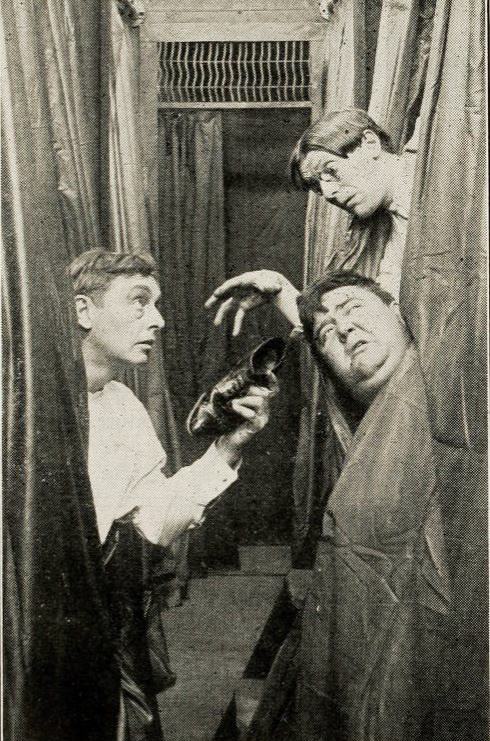
The first thing that strikes you about C.O.D. is the smell it somehow transmits across 115 years: a metallic cocktail of river rust, cheap gin and hot horse dung that seems to leak right out of the screen. Charles Brown, actor-auteur and uncredited mayor of pre-Griffith New York, shot the entire one-reeler in five November days of 1908, using actual tenement rooftops as his backlot and the Third Avenue el as a dolly track. The result is a 12-minute slice of urban pandemonium that feels closer to Cassavetes than to Edison.
Narrative, here, is not a conveyor belt but a pinball machine. The eponymous messenger—played by a reed-thin William R. Dunn whose eyelids carry the permanent weight of insomnia—never utters a title-card syllable. Instead, his body becomes the text: knees scarred by cellar stairs, satchel swollen with other people’s dooms. Each delivery refracts another micro-tragedy: a seamstress (Minnie Storey) receives a pink slip disguised as a pay envelope; a drunk stevedore (Stephen Lennon) signs for his own obituary; a child bride (Edwina Robbins) unwraps a bridal corset already blood-specked. By the time the protagonist mails himself in that final crate, the film has quietly argued that the city’s true currency is not coin but calamity—and the postman always collects.
Brown’s cinematographer—almost certainly J. Carl Anderson moonlighting from Biograph—employs a handheld 35mm Bell & Howell whose jitter becomes philosophy. Shadows skew diagonally, evoking the expressionist vectors that wouldn’t hit Berlin for another decade. Note the shot where the camera follows a tossed cigarette butt down a sewer grate: the lens lingers on the swirling smoke longer than any human face, as if metropolis itself were the star. Intertitles, scrawled in Brown’s own blocky penmanship, appear only thrice, each time smeared with what looks like axle grease—an anti-marketing ploy that dares spectators to fill the blanks.
Archival records from The Morning Telegraph tell us the picture premiered at Huber’s Museum on 14th Street, accompanied by a single blind accordionist who improvised a funeral polka. Today, viewed in 4K on your OLED, the absence of synchronized score becomes its own music: the phantom clatter of unseen trolleys, the hush before a tenement wall collapses onto a line of drying union suits. Critic Miriam Hansen once called this phenomenon the audible void
; C.O.D. weaponizes that void until you swear you hear the echo of your own complicity.
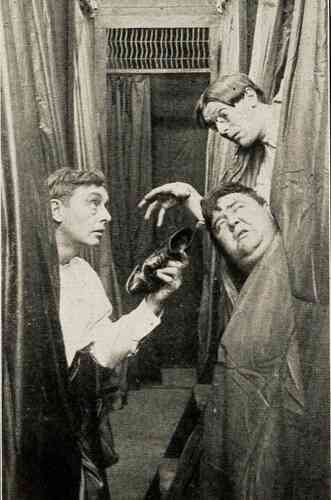
Charles Brown, doubling as both scripter and villainous pawnbroker, has a face like a depleted uranium coin: shiny, dense, and toxic. Watch how he calculates interest on a child’s stolen locket—eyebrows acting like ledger columns. Opposite him, Eulalie Jensen’s madam suggests a Pre-Raphaelite muse who read too much Goldman; she dispenses laudanum with the maternal tenderness of a wolf licking her cubs into numbness. The real miracle is William R. Dunn, whose C.O.D. embodies what Barthes would later term the neutral
: every shock that should flatten him only lengthens his stride, as though survival itself were a form of protest.
While Griffith was still mythologing belles in The Virginian, Brown’s lens interrogates the assembly-line feminized body. In one uninterrupted 78-second shot, we see a sewing floor where rows of girls stitch faster than the camera crank—needles flashing like guillotines. The film slyly inserts a real 1908 newsboy strike leaflet into a pocket; the prop is historically accurate yet politically radioactive, smuggling syndicalist graffiti into a mass entertainment. Result: middle-class matrons in the audience felt the same tremor they would three years later at The Jungle, but here the shock is administered without Upton Sinclair’s safety rails.
A lesser-discussed yet crucial subplot involves a Chinese opium den glimpsed through a trapdoor. Orientalist cliché? Yes, but Brown complicates the gaze by letting the camera assume the POV of an immigrant child peering upward, turning imperial tropes upside-down. Compare this with the occult chinoiserie of Fantomas: The Man in Black; where Feuillade exoticizes, Brown indicts the white slum landlords who profit from the pipe. It’s a prefiguration of Edward Said, smuggled into a nickelodeon one-reeler.
Broken clocks recur like a nervous tic. Harry Davenport’s watchmaker mutters (via title card) that time is just another creditor.
The line, dropped in 1909, anticipates Walter Benjamin’s famous Theses on the Philosophy of History
by thirty years. When the final crate drifts downriver, the East River’s ice floes resemble the shards of a giant pocket-watch, each floe carrying a reflection of the city’s face. Viewers steeped in Tarkovsky will recognize this aquatic metaphysics; Brown achieves it with nothing but magnesium flash powder and nerve.
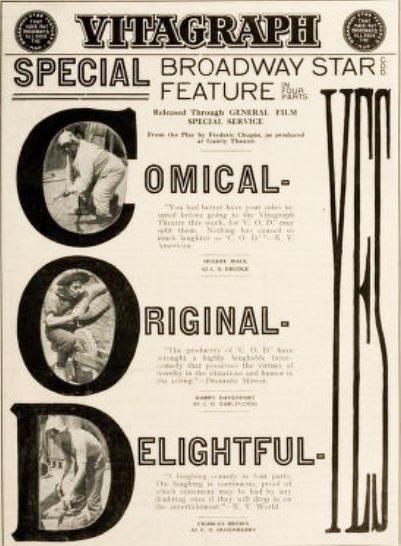
Contemporary trade sheets dismissed the film as too Bowery,
code for not bourgeois enough.
Prints vanished; only one 35mm nitrate survived in a Poughkeepsie attic, water-stained and fused like a blackened caramel. Enter the Museum of Modern Art’s 2018 4K photochemical rescue: stains became galaxies, scratches turned into meteor showers. The restored version premiered at Il Cinema Ritrovato, where Paolo Sorrentino was overheard calling it the missing link between Dickens and Scorsese.
Place C.O.D. beside Joan of Arc and you see two antipodal hagiographies: one sanctifies a peasant girl via heavenly close-ups, the other beatifies a street urchin via gutters. Pair it with A Fatal Lie and notice how both films weaponize the parcel as plot bomb, yet C.O.D. refuses the cathartic revelation that whodunits crave. Or watch it after Way Outback’s sun-bleached masculinity; Brown’s urban chiaroscuro feels like the negative image, all male anxiety but zero frontier redemption.
A 720p bootleg circulates on Reddit’s r/silentfilm, ripped from a MoMA DCP. Purists howl; I confess I first encountered C.O.D. through that grainy file, its pixels like rat-gnawed wallpaper. Did the illicit glimpse diminish my later 35mm encounter? On the contrary, the digital degradation mirrored the film’s thematic core: every copy arrives damaged, like the parcels within the plot. Ethically, I still donated to MoMA’s conservation fund—an absolution priced at the cost of two cocktails.
C.O.D. will not hold your hand, nor will it deliver the salvation parcel its hero never receives. What it offers is rarer: a time-capsule of American modernity before the word existed, a cinematic telegram mailed from the edge of a century that believed in assembly lines yet hadn’t yet tasted world war. To watch it is to sign for a package you didn’t order, addressed to a version of yourself that still believes art can be an antidote. The crate, once opened, contains only a cracked pocket-watch frozen at 4 a.m.—the exact hour when dreams and paperwork change shifts. Accept delivery. Pay the tariff of your complacency. And remember: postage due never sleeps.
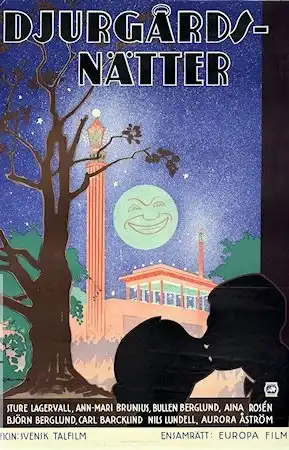
IMDb 4.7
1933
Community
Log in to comment.