DbcultAccessing Vault...
Cult Review
Senior Film Conservator
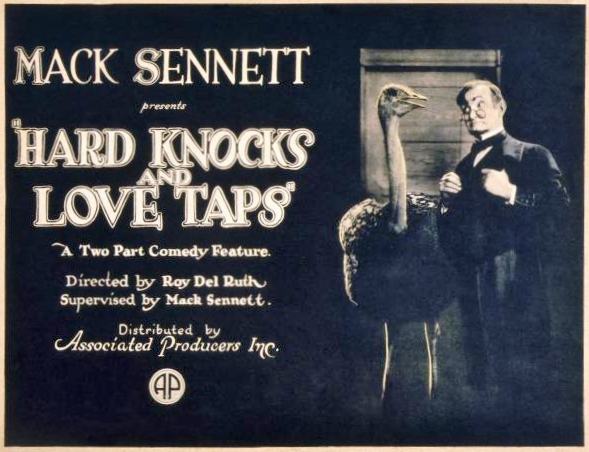
Hard Knocks and Love Taps arrives like a rusty Model T at a county fair—clunky in places, but with enough grease-dirty charm to make you overlook the mechanical hiccups. This 1920s silent film, nestled in the shadow of The Butterfly Girl and Too Wise Wives, is a curious cocktail of romantic comedy, boxing spectacle, and rural satire. It’s the kind of film where every scene feels like a vaudeville act, with characters playing to the rafters in a way that’s both endearing and occasionally grating.
At its core, the film hinges on the age-old clash between urban and rural sensibilities—a theme that, while not groundbreaking, is given a peculiar twist here. The protagonist, portrayed by Patrick Kelly, is a man of means whose city-bred manners are woefully inadequate in a town where charm is measured in grit and calloused hands. His pursuit of a wealthy widow (likely played by Kathryn McGuire) is thwarted not only by a grizzled local rival but by the town itself, which seems determined to test his mettle through a series of increasingly absurd obstacles. The Model T ride to his destination is less a car journey and more a slapstick ballet of mechanical failure, with the vehicle wheezing and lurching as if it’s as much a character in the story as the actors themselves.
The film’s visual language is steeped in contrasts. The city man’s tailored suits hang like awkward exiles among the patchwork quilts of the hotel where he’s forced to stay. The fairgrounds, with their garish lights and carnival barkers, become a battleground for social status, where the protagonist’s wealth is rendered irrelevant by the brute physicality of a local boxer (Al Cooke, whose mustache seems to sneer as he throws punches). These visual contrasts are not just aesthetic flourishes; they underscore the film’s central thesis: that in this particular world, strength and cunning, not money, dictate power.
Where Hard Knocks and Love Taps truly finds its rhythm is in the boxing match climax. This sequence, while predictably staged, is elevated by the actors’ commitment to physical comedy. The ring becomes a metaphorical space where social hierarchies are inverted, and the city man’s polished veneer cracks under the weight of rural pragmatism. It’s reminiscent of the confrontational dynamics in Greater Than Love, though here the stakes are far less existential and far more literal. The punches land with a satisfying thud, and the crowd’s reactions are captured with a grainy, almost documentary-like realism that grounds the spectacle in something resembling authenticity.
Yet, for all its kinetic energy, the film falters in its secondary characters. The taxi driver, played with gruff relish by Ford West, is a highlight, his grumpy mutterations providing a running commentary on the absurdity of the protagonist’s plight. However, the supporting cast—particularly the widow and her household—felt underdeveloped, serving more as plot devices than fully realized people. This is a common pitfall of the era’s romantic comedies, where women are often relegated to prizes in a game of male posturing. That said, Charlotte Mineau’s brief appearance as the widow’s confidante hints at a more nuanced narrative buried beneath the surface, a missed opportunity that could have elevated the film from diverting to profound.
Technically, the film is a mixed bag. The cinematography, while occasionally inventive—such as the use of deep focus during the fair scene—leans heavily on static setups that make the pacing feel sluggish in comparison to the more dynamic sequences. The score, if any, is absent from the surviving reels, leaving the emotional beats to rest entirely on the actors’ expressions and the exaggerated physicality of the stunts. This lack of auditory texture is both a limitation and a strength; it forces the viewer to lean into the visual storytelling, which, in the hands of a lesser director, could have been disastrous. Here, it’s a testament to the performers’ ability to convey nuance without dialogue.
Comparisons are inevitable. The film’s rural setting and class-based conflict echo The Carpet from Bagdad, though with a far less fantastical approach. Similarly, the boxing subplot shares DNA with Rio Grande, albeit with a comically reduced budget and stakes. These parallels are not to diminish Hard Knocks and Love Taps, but to place it within a broader cinematic lineage of films that use physical comedy to explore societal tensions. It’s a niche that, while not groundbreaking, has a certain nostalgic appeal.
What lingers most after the final reel is the film’s unapologetic embrace of its own silliness. There’s a self-awareness in the way the Model T sputters to a stop at precisely the wrong moment, or the way the fairground lights flicker to signal a shift in tone. These moments, while clearly stagebound, are delivered with such conviction that they transcend their limitations. It’s a reminder that not all art needs to be profound to be enjoyable—that sometimes, a well-thrown punchline and a satisfying roundhouse kick are all that’s required.
In the grand tapestry of silent cinema, Hard Knocks and Love Taps is a thread that’s easy to overlook but rich with texture when examined closely. It’s a film that leans into its flaws, using them as a springboard for humor and heart. While it may not stand among the pantheon of greats like Teufelchen or Facing Death on the Blumlisalp, it occupies a unique space in the history of film—a period piece that’s as much about the era in which it was made as it is about the story it tells.
IMDb 6.2
1927
Community
Log in to comment.