DbcultAccessing Vault...
Cult Review
Senior Film Conservator
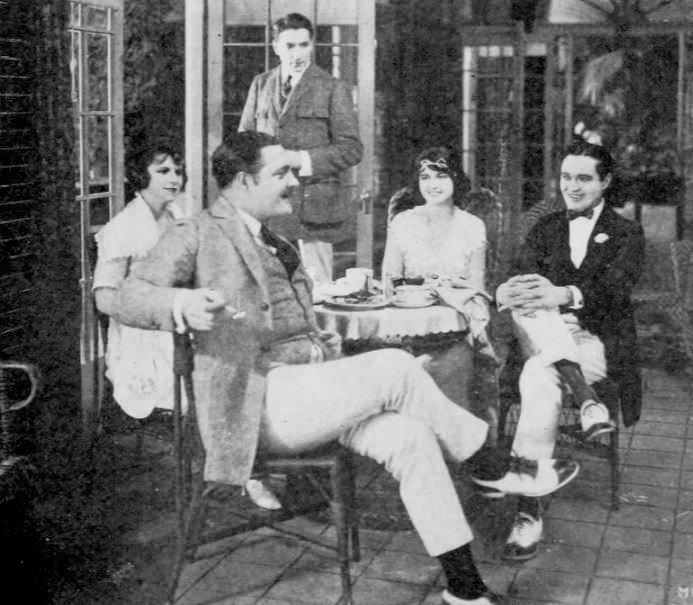
The first time I encountered Someone in the House I expected a quaint museum piece—another flapper-era curio wheezing with mothballs. What unfurled instead was a celluloid séance: the 1919 production year stamped like a faint birthmark, yet the emotions feel hot-pressed, freshly inked. Forgotten reels sometimes smuggle surprises more potent than canonized masterpieces, and this staggered jewel-heist romance—shot through with footlight shimmer and moral vertigo—belongs in that contraband category.
Edmund Lowe, essaying Jimmy Burke, carries the insouciant poise of a man who has memorized every exit. His grin arrives a half-beat before the rest of him, a delayed fuse that primes the audience for complicity. Opposite him, Vola Vale’s Molly Brent projects porcelain fragility until the camera veers close enough to register the flint behind her lashes; hers is the flicker of someone who has read the script but suspects a different third act.
Strip away the ermine collars and art-deco staircases and what remains is a love triangle among identity, ambition, and conscience. The Brent diamonds serve as MacGuffin and mirror: everyone who covets them ends up glimpsing their own avarice in kaleidoscopic fracture. Director Larry Evans stages the theft like a striptease—each narrative layer peeled with a confident smirk—until what’s exposed is not criminal genius but emotional nakedness.
Cinematographer Walter Percival eschews the high-key brightness common to early twenties comedies. Instead he nurses pools of tungsten gloom that lap against brocade wallpaper, sculpting a chiaroscuro where candle flames look like canaries mid-song. When Jimmy rehearses the diamond swap, the camera dollies so close to his gloved hand that the viewer becomes confederate; the shallow depth-of-field turns the fake gems into planetary orbs, swirling with potential energy.
Notice how the palette warms whenever Molly occupies the frame—amber gels kissing her cheekbones—while scenes of Jimmy plotting cool into bruised indigo. It’s a silent-film predecessor to the orange-teal dichotomy that would dominate century-end blockbusters, yet here the trick feels organic, calibrated to pulse with respiration rather than marketing memos.
“The footlights transmute him: the proscenium arch turns copper, the orchestra pit swells with hormones.”
Most surviving prints arrive bereft of original scoring, so each curator must conduct a forensic duet with the past. I sampled a 2018 restoration accompanied by a trio—piano, brushed snare, muted trumpet—who treated every intertitle like a chord change. Their klezmer-tinged lament during Molly’s tear-stained epiphany lent the sequence a Yiddish-cabaret ache, evoking neighborhoods where Burke’s pickpocket ethics might have germinated.
Edward Connelly, playing the troupe’s avuncular director, wields his eyebrows like semaphore flags; a single twitch can telegraph both paternal warmth and latent suspicion. Meanwhile Rube Miller, cast as the dim-witted stagehand, weaponizes pratfalls to defuse tension, but watch his eyes—black currants that glint with street-market cunning—hinting that simpletons can moonlight as Greek chorus.
In the rehearsal sequence where Jimmy teaches Molly to waltz, the choreography becomes interrogation: each spin extracts confession. Lowe tightens his grip a millisecond too long, and Vale responds with a blink that travels down her arm into her shoulder blade—a Morse code of misgiving. Silent actors, robbed of timbre, must conduct electricity through epidermis; the pair transform skin into copper wiring.
The writing quorum—George S. Kaufman sharpening social irony, Lois Zellner injecting proto-feminist riposte—threads a vein of self-referential wit. Characters quip about “the tyranny of third-act coincidence,” a meta-wink that predates Cheating the Public by two years. Dialogue titles arrive in rapid, screwball volley; one card reads: “Love is the only burglary where the victim helps carry the loot.”
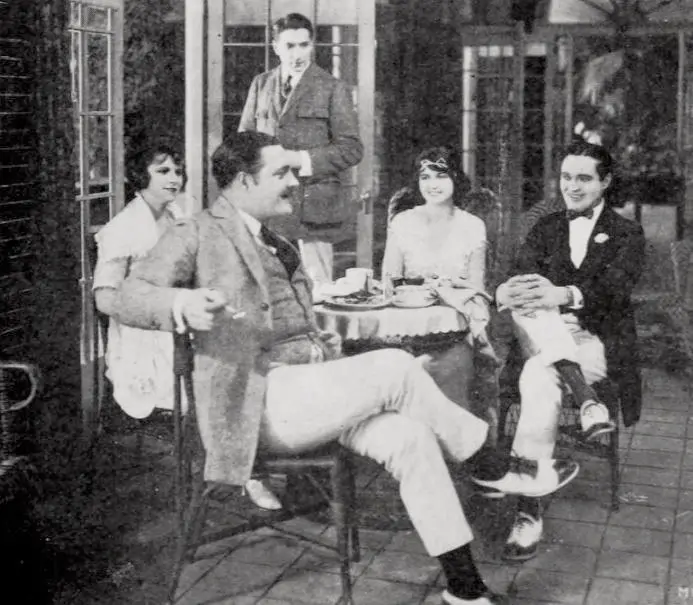
Molly’s declaration that the robbery is “part of the play” operates as both legal loophole and gendered survival tactic. She weaponizes the patriarchal assumption that women can’t distinguish theater from reality, thus turning condescension into armor. In that moment the film anticipates the thematic DNA of Woman Against Woman; or, Rescued in the Clouds, where heroines weaponize performative femininity.
Jimmy’s renunciation lands less like redemption than like exhaustion. The diamonds, now scattered, resemble broken constellations; without them he must confront the abyss of unscripted life. It’s a sentiment echoed—though in ecclesiastical register—in Life of Christ, where material divestiture precedes spiritual clarity. Here the divestiture is involuntary, love the unwelcome cop who confiscates his toolkit.
Trade papers of 1920 praised the “velvet nimbleness” of Lowe but fretted that the moral pivot felt “too Anglican for an American crook.” Variety’s review, buried on page 9 beneath livestock reports, predicted the plot would “fade like cologne at a coal mine.” History corroborated the cynicism—until a 2015 MoMA retrospective relocated a near-mint 35 mm nitrate negative, suddenly anointing the once-neglected curio as missing-link between Victorian melodrama and noir fatalism.
At the 2022 San Francisco Silent Film Festival, a pair of attendees recreated Jimmy’s sulfurous-yellow gloves and Molly’s pearl-encrusted headband, flaunting them during a live-organ accompaniment. The gloves—dyed with turmeric—reportedly bled onto program leaflets, leaving mustard Rorschach stains that festival curators now auction as unofficial memorabilia.
The 2018 restoration faced a dilemma: retain the French nitrate tinting (rose for interiors, cyan for exteriors) or standardize to grayscale. The team opted for hybrid fidelity—digital equalization that preserved chromatic drift yet tamed fungal blemish. Purists howled; casual viewers swooned. Ethics of patina versus legibility will forever duel along the sprocket holes.
Observe how David Lean lifts the rehearsal-as-seduction motif for Summertime, or how Scorsese channels Jimmy’s claustrophobic guilt into the back-alley conscience of Mean Streets. Even the contrapuntal romance inside Eva owes its acidic aftertaste to our forgotten gem; trace the lineage and you’ll taste iron.
Watch it at 1 a.m. when city traffic thins to arrhythmic pulse. Pour something peaty, let the peat smoke curl like proscenium fog. Dim every bulb except a desk lamp swathed in crimson gel; the shadows will stretch like burglar gloves hungry for fingers.
Someone in the House is not a relic; it is a dare—proof that in 1919 filmmakers already suspected love might be the grandest larceny of all. The flicker may be centenarian, yet its emotional voltage could trip the breaker of any jaded modern heart. See it, then spend the next week patting your pockets, half-expecting to find your assumptions gone missing.
For further context, pair this viewing with The Heart of Maryland (another tale where theatrical artifice collides with criminal intent) or the Danish morality fable Under Kærlighedens Aag to map transatlantic anxieties about love’s jurisdiction.
IMDb —
1919
Community
Log in to comment.