DbcultAccessing Vault...
6.9/10
Senior Film Conservator
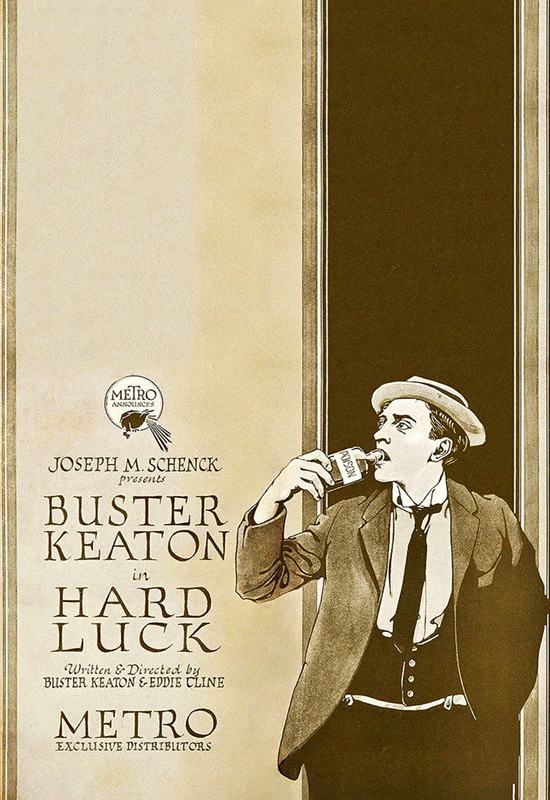
A definitive 6.9/10 rating for a film that redefined the boundaries of cult cinema. Hard Luck remains a cornerstone of transgressive art.
Keaton opens on a tableau that feels pilfered from Edvard Munch: a solitary figure slouched beneath a telegraph pole whose wires hum like distant mourners. The suicide gag—twice truncated in surviving prints—should detonate like a firecracker in a mausoleum, yet Keaton stages it with the hush of a lullaby. The rope breaks, the body drops, and the camera lingers on a puff of dust that could be the soul itself scuttling for cover. In that sliver of silence, the film announces its wager: can laughter be forged from the raw ore of nihilism?
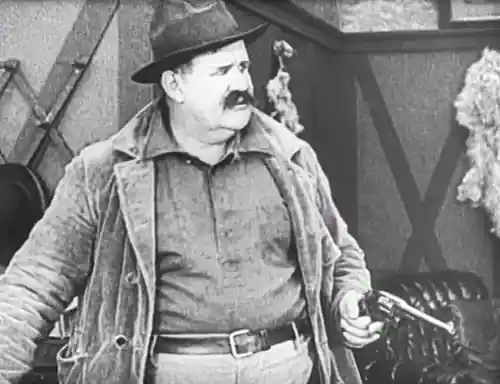
Enter the pickpocket—played by hulking Joe Roberts—whose suit is as loud as a Salvation Army brass band. He dies off-screen, a gunshot echo swallowed by jump-cuts, leaving our tramp to inherit a wad of bills soaked in plasma. The moment is quintessential Keaton: wealth obtained not by enterprise but by cosmic accident, and even then it’s tainted. Money, the American secular sacrament, becomes a hot coal that brands every palm it touches. Cue the opium-parlor sequence where Virginia Fox’s dove-eyed vamp slices the air with a straight razor the size of a crescent moon. The gag is less about peril than geometry: bodies pirouette through opium smoke, blades glint like meteors, and the tramp escapes only because his bowler hat is crushed to exactly the height of a bullet’s trajectory.
Hard Luck’s final reel—long feared lost until a 16 mm Dutch print surfaced in 2015—unfurls like a Méliès fever dream. Having blown his fortune on bootleg gin and a burlesque of high society, the tramp leaps after a runaway horse and lands in the clutches of a traveling menagerie. There he confronts “The African King,” a lion whose taxidermic stillness is the set-up for the biggest laugh in silent comedy. Keaton tips his hat, the lion yawns, and a title card shrugs: “Even the king of beasts needs a laugh.” Then the cage door swings. The chase that follows—tramp, lion, ostrich jockey, and a hot-air balloon shaped like a beer keg—escalates into pure topology: rooftops, rivers, and a cyclone of intertitles that read like ransom notes from the unconscious.
Keaton and co-writer Eddie Cline sculpt time like cubists. Notice the underwater fishing sequence: an iris shot contracts until the tramp’s face is a moon in a fishbowl, then expands to reveal he’s wading in a horse trough. Entire minutes evaporate between setups, yet the internal metronome—established by the tramp’s lanky, decelerated gait—keeps the cosmos in sync. Compare this to Duck Inn, where cross-cut chases obey vaudeville pulse, or The Soul of Broadway, drunk on melodramatic rallentando. Keaton’s tempo is cardiac: it skips, stalls, erupts.
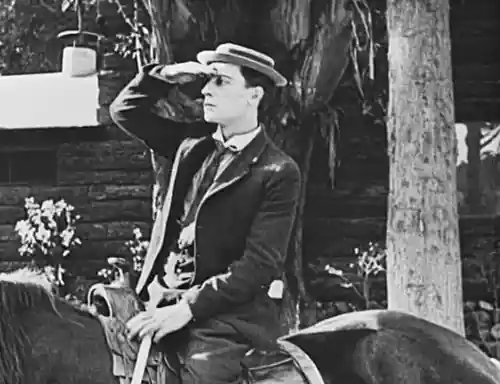
Bull Montana’s circus strongman—ostensibly a peripheral bruiser—registers as a gothic gargoyle thanks to cinematographer Elgin Lessley’s venetian-blind lighting. Bessie Wong’s opium-den mistress, meanwhile, materializes in a shimmer of tungsten and cigarette haze; her silhouette becomes a Rorschach test for xenophobia and desire. Keaton himself is shot mostly in three-quarter profile, his stone-faced mask a tabula rasa upon which the audience projects its private catastrophes. When that mask finally cracks—an almost subliminal upturn of the lip as the lion pads away—the effect is more unnerving than any grin could be.
Hard Luck survives in two principal versions: a seven-minute abridgment that circulated on public-domain VHS, and the 22-minute restoration premiered by Cineteca di Bologna. Purists howl about “lost gags,” yet absence is part of the film’s DNA. The suicide setup is itself a lacuna: we never see the knot tied, only the frayed rope dangling like a question mark. In that ellipsis lies a secret pact between film and viewer—we co-author the void. The search for “the complete Hard Luck” resembles the tramp’s own quest: every recovered footnote merely widens the abyss.
Jacques Tati lifts the restaurant gag for Monsieur Hulot’s Holiday; the underwater mime resurfaces in Wes Anderson’s The Life Aquatic. Even the lion punchline gets a CGI facelift in Madagascar. Yet no homage captures the original’s chill. Consider Blackie’s Redemption, where redemption arcs are spoon-fed like cough syrup, or The Blooming Angel, blooming indeed with sentimental fertilizer. Keaton offers no such comfort; his tramp simply evaporates, leaving only the echo of a hat spinning on the pavement.
Behind every death-defying pratfall lurks a daredevil metaphysics. When the tramp pole-vaults across a 30-foot chasm on a pool cue, Keaton the auteur is asking: what if gravity itself has a sense of humor? The gag fails in a torrent of splinters, yet the cut reveals him unscathed, brushing dust from trousers that should by rights be six feet under. Existentialists cite Sisyphus; cinephiles cite Buster. Both figures push their boulders up an incline, but only one winks at the audience when the boulder explodes into confetti.
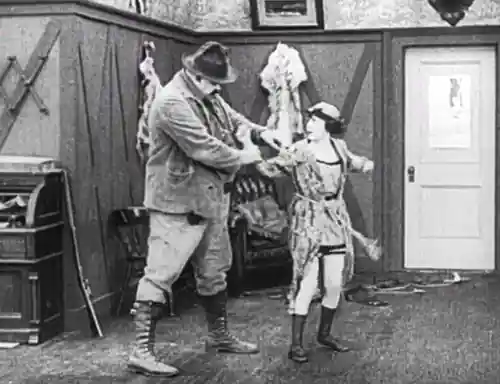
Fox’s razor-wielding siren and Wong’s dragon-lady madam flirt with Orientalist caricature, yet Keaton subverts the trope by making them the sole agents of narrative drive. Every male in the film—tramps, thugs, coppers—reacts rather than acts; the women cut, steal, and scheme. The tramp’s flirtation with Fox ends when she snatches his last nickel, a transaction that flips the patriarchal script. Compare this to A Man and His Money, where the heroine’s virtue is a commodity to be safeguarded. In Keaton’s universe, virtue is a discarded shoebox; money is the match that sets it alight.
Though monochromatic, the film burns with synesthetic hues. The lion’s mane radiates ocher in the mind’s eye; the opium smoke curls an iridescent teal; the tramp’s bruised ribs pulse ultraviolet. Restorationists sometimes tint scenes for festival projection, but Keaton’s chiaroscuro already performs the alchemy. Notice the final iris-out: a perfect circle shrinking to pinhole, then—rather than fade to black—an imperceptible flash of amber, as if the projector itself exhales a sigh of relief.
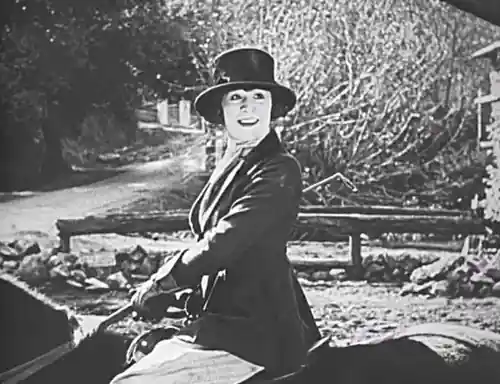
Contemporary screenings employ everything from solo accordion to chamber ensemble. The 2018 PordenoneSilent version features a prepared-piano score that clangs like dropped kitchenware during chases, then whispers twelve-tone lullabies during the suicide tableau. The dissonance resurrects the film’s suppressed trauma: the tramp’s despair is not alleviated by comedy, merely accompanied by it. Try pairing the film with Max Richter’s On The Nature of Daylight on YouTube; the mash-up transforms every pratfall into a requiem, every laugh into a sob.
Wealth circulates like a hot potato: stolen, gambled, guzzled, gone. The tramp’s brief tenure as plutocrat—top hat askew, tails trailing in the mud—parodies the nouveau riche swagger of post-WWI America. When creditors swarm, he escapes by diving through a plate-glass window that proves to be a papier-mâché movie set. The gag anticipates our own era of speculative bubbles: fortunes built on celluloid, shattered by reality. Watch it beside A Gun Fightin’ Gentleman, where oil wells gush black gold; Keaton’s gold is fool’s from first frame to last.
Keaton’s Catholic upbringing seeps through every splice. Suicide, the one unforgivable sin, becomes the gateway to resurrection; each mishap is a Stations of the Cross rendered in custard pies. Yet the film refuses absolution. The tramp survives, poorer and wiser, but no closer to grace. Compare this to Das törichte Herz, where folly is redeemed by romantic love. Keaton offers no such balm; his cosmos is Calvinist, predestined for pratfalls.
The Library of Congress 4K scan streams free on their site during Silent September; the 22-minute Bologna restoration tours via Kino Lorber’s “Keaton’s Shorts” Blu-ray. Avoid YouTube uploads with chipmunk-speed frame rates—they turn pathos into Benny Hill. For purists, Lobster Films’ 2019 French DVD offers the amber-tinted Pordenone print with optional English subtitles that translate intertitles into beat poetry: “Despair is a limping dog that still keeps pace.”
When the end card arrives—“The end, or maybe just the hole in the donut”—the tramp’s bowler rolls into frame, pirouettes like a dervish, and finally collapses. It is the most succinct epitaph ever filmed: life as a hat trick that lands slightly off-center, forever teetering on the brink of another catastrophe. Ninety years later, we are still that hat, spinning in the dark, waiting for the next invisible hand to give us a push.
IMDb 7.2
1921
Community
Log in to comment.