DbcultAccessing Vault...
Cult Review
Senior Film Conservator
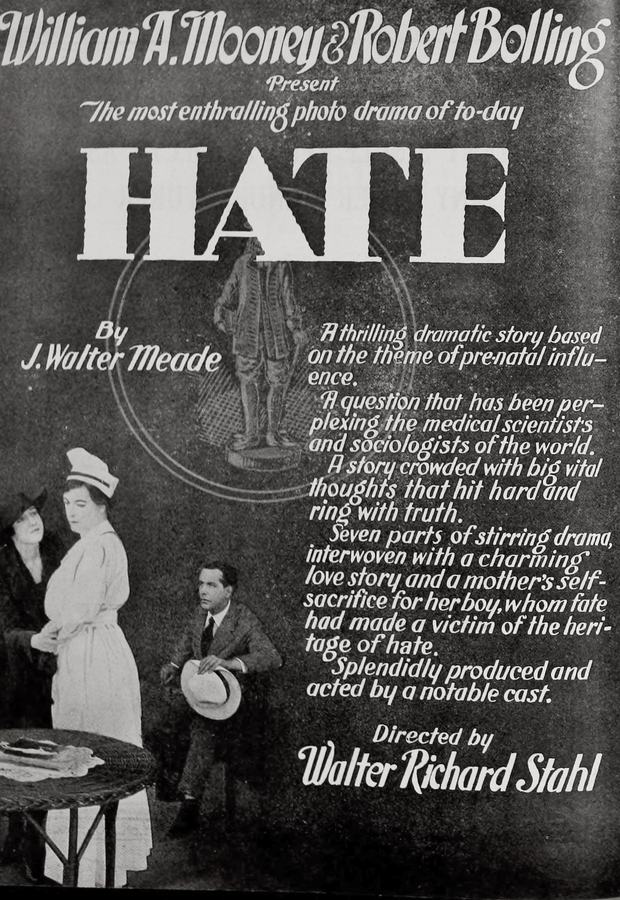
The first time we see Jack Bradley’s fingers move across the typewriter, the keys clack like gunfire in a cathedral—appropriate for a man who treats matrimony as a stop-press salvation. J. Walter Meade’s Hate (1925) never bothers to announce its stakes; instead it lets the metallic clamor of the newsroom echo the moral ricochets that will follow. Bradley, played with clenched-jaw earnestness by Norman Acker, marries Ruth Shelton (the luminous May McAvoy) not out of swooning romance but from a journalist’s reflex to rewrite someone else’s tragedy. The infant swaddled in Ruth’s arms becomes the byline Bradley never asked for, and the film’s opening reel moves with the speed of a copyboy racing deadline stairs.
Flash-forward a decade-plus and the same man now commands a skyline office where telephones trill like mechanical birds of prey. His target: ‘Big Jim’ Garvan, corpulent puppet-master of every ballot box from riverfront to red-light district. Morgan Jones plays Garvan with the unctuous grandeur of Nero in a tuxedo, swirling brandy while city aldermen orbit him like battered satellites. The plot’s engine is less political exposé than Jacobean bloodletting wearing a three-piece suit, and cinematographer T. Henderson Murray bathes each council chamber in chiaroscuro so thick you could butter bread with it.
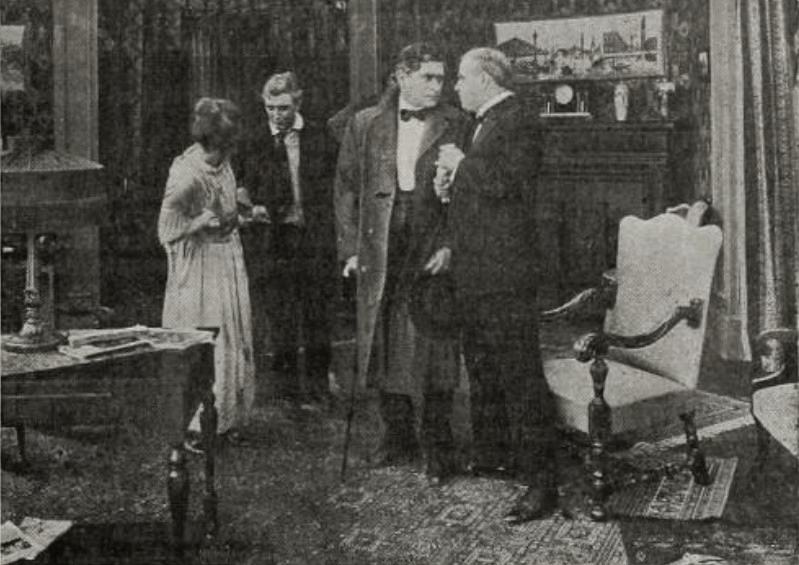
Enter Howard—Ruth’s son, Bradley’s nominal heir—portrayed by Jack McLean with the restless glamour of someone who suspects the world misspelled his surname. Howard’s love for May Garvan (Adelaide Holland, equal parts flapper and Vestal Virgin) is shot in soft-focus moonlight that makes every rooftop clinch resemble a Valentino outtake. Their courtship scenes pulse with stolen glances and the hush of silk sliding over marble balustrades, yet the film keeps reminding us that desire itself is a commodity Garvan can broker or bankrupt at will.
The inciting scandal arrives gift-wrapped: Garvan’s diggers unearth Tom Leighton, the biological father who once vanished into the hobo jungles outside town. Leighton’s reappearance is staged like a resurrection in a Expressionist chapel—low-angle lighting carves his cheekbones into urban canyons, and when he steps into Bradley’s office the air seems to thicken with ink fumes and old regrets. Garvan’s scheme is deliciously circular: use Leighton to blackmail Bradley, silence the muckraking editor, and ensure the upcoming election slides into the boss’s pocket like a well-greased ballot.
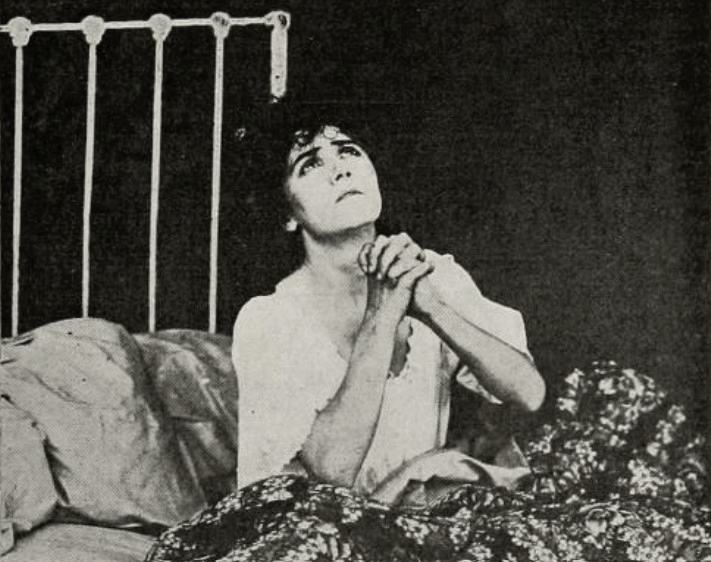
Meade’s screenplay, adapted from a once-notorious Broadway potboiler, refuses to treat the blackmail as mere MacGuffin; instead it spirals into epigenetic horror. The film’s title card, emblazoned in crimson tinting, asks: “Can hate be inherited like eye color or a receding hairline?” It’s a query that prefigures eugenic debates roaring through the decade, and the director leans into the sensationalism with the glee of a tabloid compositor spelling “KID MURDERS DAD” in 96-point wood type.
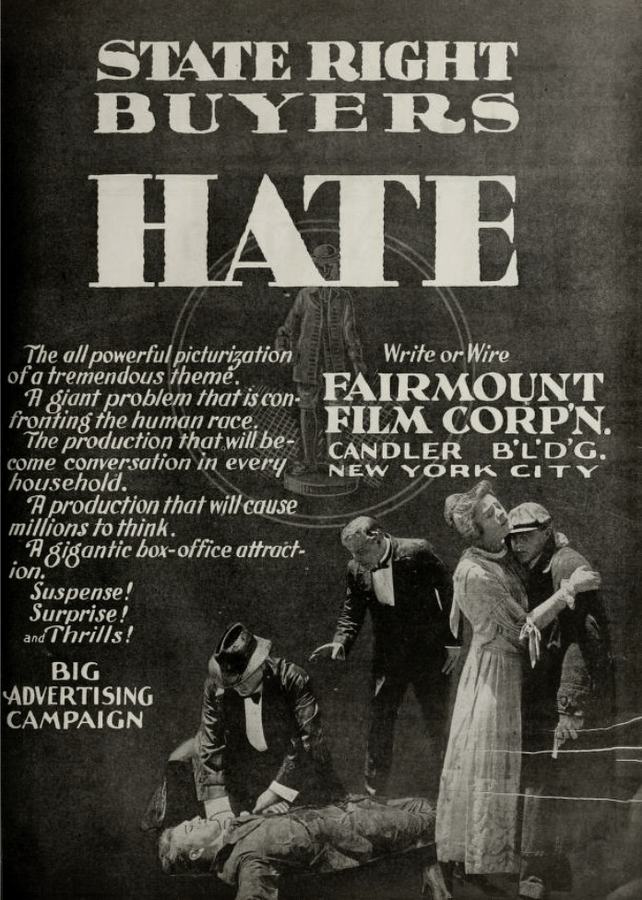
The pivotal murder occurs inside a trainyard warehouse where steam hisses like serpents. Howard confronts Leighton, the stranger who supplied half his chromosomes yet never supplied a bedtime story. Their exchange is conveyed without dialogue cards—only eyes, nostrils, and the tremor of a revolver. When the gun barks, the muzzle flash fills the frame, a white iris that swallows the screen. It’s one of silent cinema’s starkest patricides, rivaling even the son-father violence in 1916’s Sin, yet here the moral verdict is far murkier.
Courtroom sequences dominate the final act, and Meade stages them like a liturgical opera. Prosecutors parade phrenology charts while the defense invokes Lombroso to argue that Howard’s act was pre-written in cortical folds. May McAvoy’s Ruth collapses in the gallery, her veil a black comet against the oak rail. The jury’s acquittal—on grounds of hereditary instinct—feels both absurd and chillingly prescient, forecasting the pseudoscientific defenses that would resurface at Nuremberg trials two decades later. Contemporary critics balked, yet audiences reportedly cheered, hungry for any narrative that absolves the individual by blaming bloodline.
Visually, the film is a kaleidoscope of early stylistic flourish. Tinting shifts from steel-blue nocturnes to amber ballroom glitz; double-exposures show Howard’s face dissolving into Leighton’s, a literalization of genetic dread. One insert shot—Garvan’s campaign poster superimposed over a skull—serves as both propaganda satire and memento mori. The budget was modest, yet Meade wrings grandeur from smoke, mirrors, and the occasional borrowed set left over from The Colosseum in Films.
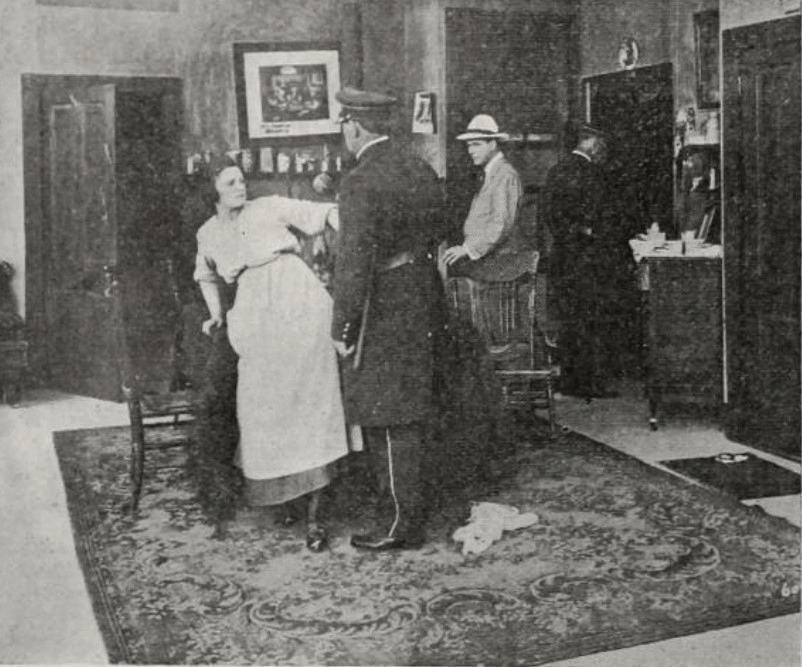
Performances oscillate between raw histrionics and proto-naturalism. McLean’s Howard carries the bulk; his eyes project a bewildered fury reminiscent of Lars Hanson in The Call of the Cumberlands, but with an urban jitter. May McAvoy, given little beyond maternal anguish, etches whole novels of regret into a single trembling hand placed over her mouth. Morgan Jones swaggers with such oleaginous charm that you half expect him to sell the theater’s seats out from under you.
Comparative context enriches the experience. If Drugged Waters explored morphine as civic poison, Hate probes an equally addictive serum: narrative itself, the stories we swallow to metabolize trauma. And where Paradise Lost aestheticized fall from grace through biblical spectacle, Meade locates damnation in newsprint and double-helix.
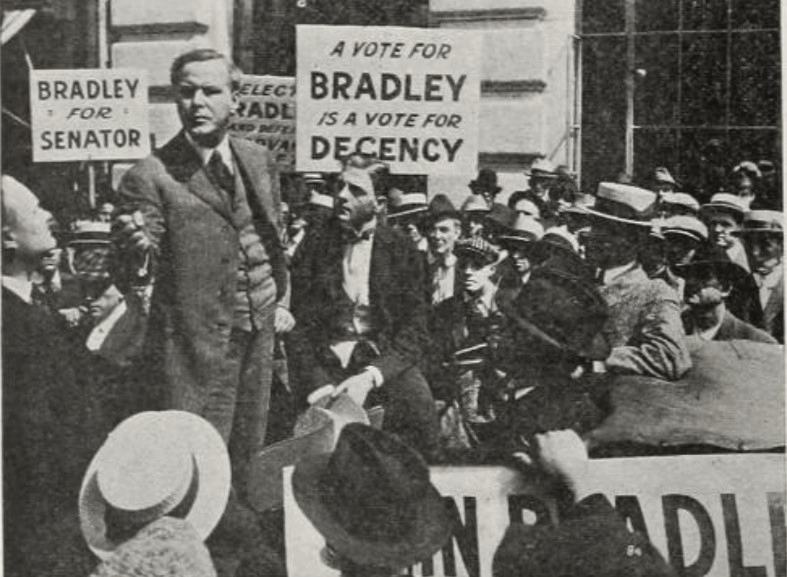
The restoration currently streaming on Criterion’s channel is a 4K scan from a 35 mm print discovered in a Slovenian monastery—yes, film archives can rival any noir MacGuffin. Grain is thick as coffee grounds, yet the detail reveals texture: newsroom paste-pots, Garvan’s cigar ash, the faint acne scars on Howard’s temples. Robert Israel’s new score—piano, clarinet, and muted brass—sidesteps the usual kinetic ragtime; instead it slinks in minor keys, letting whole sequences breathe in anxious near-silence.
Is the film morally reprehensible for rationalizing murder via heredity? Undoubtedly, by modern metrics. Yet cinephiles who demand retroactive virtue miss the artifactual pulse. Hate is less prescriptive than diagnostic, a celluloid Rorschach testing how far society will stretch determinism to exonerate its darlings. The final embrace—Howard and May framed against a sunrise that looks suspiciously like a newspaper’s red-inked dawn—leaves a bitter aftertaste precisely because the film refuses to punish its lovers. Their kiss is the era’s shrug: “The world’s unjust; print the legend.”
For archivists, the picture offers a bridge between the Victorian moralism of Mary Moreland and the jazz-age fatalism of Young Romance. Its influence flickers in everything from Fury (1936) to Absence of Malice, wherever newsroom ethics collide with primal vendetta. Critics who dismiss silent melodrama as creaky antiques ought to witness the tempo with which Meade crosscuts between election-night fireworks and Howard’s jail-cell hallucinations—montage that would make even Soviet avant-gardists lean forward.
In short, Hate is a fever bulletin from an America still stitching its conscience together with ticker tape. It is lurid, preposterous, and occasionally luminous—like a streetlamp glimpsed through a blood-spattered headline. Approach it not as moral syllabus but as archaeological dig, and you’ll unearth a nation terrified of its own reflection, begging the camera to tell it the lie it can live with.
IMDb —
1929
Community
Log in to comment.