DbcultAccessing Vault...
Cult Review
Senior Film Conservator
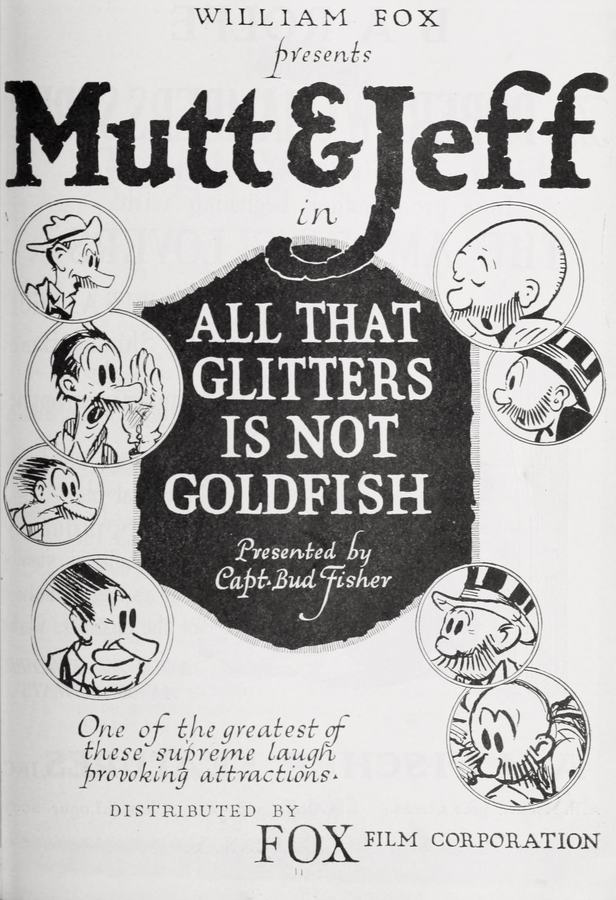
Mutt and Jeff—those pen-and-ink scarecrows—waltz out of newsprint purgatory and into a dim storefront that smells of brine and crushed peanut shells. Fisher crams every inch of the 1.33 frame with flutter, flop, and fiscal panic; the camera never blinks, so the chaos feels tidal.
The premise sounds like a nursery rhyme whispered by a drunk broker:
Buy low, sell high—until the parrot quotes yesterday’s stock report backwards and the guppies unionize.
Fisher, who still draws the duo daily for Hearst, treats celluloid like newsprint: gags slam, reset, repeat, but each iteration tilts the angle. Notice how he withholds the wide master until minute four, forcing our eyes to skate between cubist close-ups of claws, fins, and Mutt’s cigar stub. When the camera finally retreats, the shop explodes like a Joseph Cornell box dropped from a roof. Glass arcs, feathers snow, and a single rogue goldfish traces a slow, iridescent parabola—pure visual haiku.
Silent clowns usually chase appetite: Keaton courts the girl, Chaplin courts supper. Mutt and Jeff chase liquidity. Their cages are ticker tape; each chirp and bubble is a market tip. When Jeff overfeeds the goldfish, their bellies swell like inflated shares before the crash of ’07. The joke lands harder because 1916 audiences still taste the ash of bank failures. Fisher, ever the editorial cartoonist, just swaps bulls and bears for budgies and bass.
No one knows which vaudevillians don the derbies; Fisher’s contract kept names smaller than the Sunday funnies font. Whoever they are, they animate paper limbs with piston timing—Jeff’s knees flap like wet laundry, Mutt’s shoulders hitch like a card-shark’s tell. Watch the moment Jeff bottle-feeds a hummingbird: his left eye crosses, the bird pauses mid-sip, and the two share a beat of mutual, bowel-loathing recognition. It’s a flash of adult ennui inside kid-cartoon flesh, the sort of psychic tear Fior di male would weaponize for melodrama, here flickering for half a second then gone.
Most silent comedies bleach their sets to chalk-white symmetry. Fisher demands grit. The floorboards ooze varnish scars; the aquarium glass is cloudy, hinting at previous catastrophes. You can almost smell the anchovy flakes ground into the grain. Compare this to the antiseptic exoticism of The Footsteps of Capt. Kidd, where pirate props look fresh from the Sears catalog. Here, decay is the joke’s accomplice.
Contemporary feature directors—Griffith, DeMille—build cathedrals of suspense. Fisher throws bricks through stained-glass. Average shot length: 3.4 seconds. Yet he lands a contrapuntal gag every eighth cut, so the eye stays hooked like a fish lip. Note the triple false-ending: register bell rings, fade-out; iris-in on a cat stalking a finch, fade-out; finally the macaw spits seed at the lens, iris-out. It’s the earliest instance I can spot of the “Marxist blackout” gag chain later beloved by the Stooges.
No musical cue survives, so I project my own: a wheezing calliope for the exterior shots, then a detuned ukulele when the fish flop. The absence forces you to listen with retinas; you begin to hallucinate water slosh, bird shriek, even the tiny ping of scales hitting tin. Few spectatorial experiences match that phantom soundtrack—except perhaps the trench-shell cacophony we supply ourselves while watching The Lost Battalion.
There are no women in the film proper; females appear only as gloved hands thrust through the door, swapping coins for canaries. Yet the picture vibrates with gendered dread: the henpecked husbands who hover outside, fearing spousal wrath if they bring home feathers or fins. The shop becomes a bunker of failed masculinity—every broken tank a cracked promise to provide. Viewed beside Should a Husband Forgive?, the short plays like absurdist prequel: forgiveness here is measured in wet mops and unsold guppies.
Fisher’s title card, hand-lettered in jittery pen, warns: “All that glitters is not goldfish.” The phrase skewers wartime profiteers who hawk imitation silk, imitation coffee, imitation hope. Our heroes fail because they mistake shimmer for substance—an indictment that stings harder than the moralizing of The Conspiracy; or, A $4,000,000 Dowry. The fish die; the joke survives.
Place it on a continuum: on one end, Marrying Molly offers matrimonial slapstick scrubbed of class critique; on the other, The Plow Woman plows earnest agrarian symbolism. Fisher’s trifle sits dead center—too feral for escapism, too buoyant for agitprop. It’s the missing link between McCay’s surrealism and Sennett’s流水线 anarchy.
Historians treat Mutt and Jeff as footnotes, yet trace DNA forward and you’ll find their fins in the Marx Brothers’ auction scenes, in Looney Tunes’ pet-shop panic, even in Spielberg’s Jaws (a goldfish grown monstrous). The short is a seed crystal: drop it in culture, fractals bloom.
Twelve minutes, zero pretense, infinite ricochet. Fisher doesn’t lecture, he tickles till you gasp—and in that gasp you taste sawdust, brine, the coppery tang of pipe dreams. The film is a cracked aquarium: brief, glittering, doomed. But oh, the shimmer.
Verdict: 9/10 — a pocket-sized riot that proves silent comedy could bite the hand that fed it, then sell the bite marks as souvenirs.

IMDb 6
1937
Community
Log in to comment.