DbcultAccessing Vault...
Cult Review
Senior Film Conservator
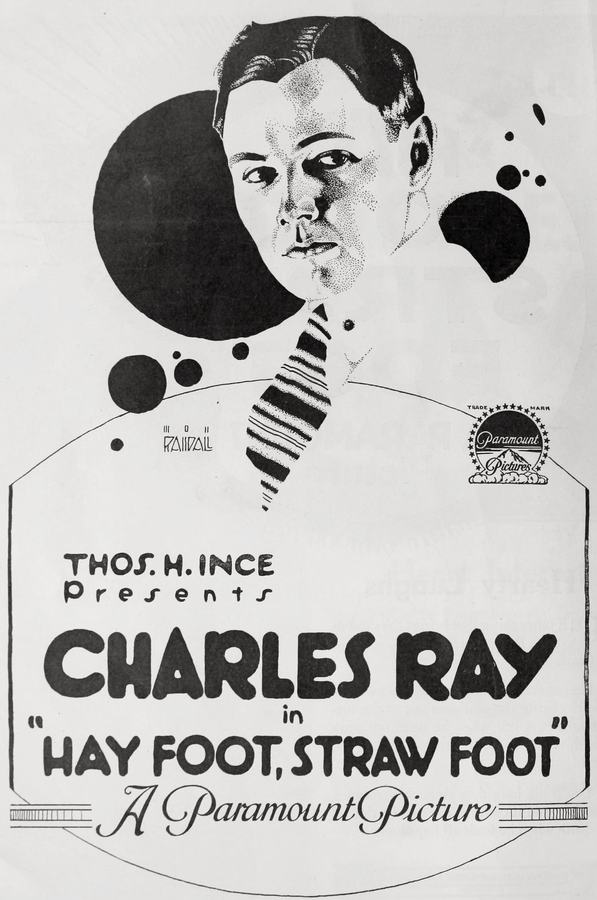
Step into a bygone era of cinematic storytelling, where the flicker of silent film conveyed profound narratives with an eloquence often unmatched by spoken word. Julien Josephson’s 1919 masterpiece, Hay Foot, Straw Foot, stands as a remarkable testament to this artistry, weaving a tale that is as much a historical commentary as it is a deeply personal drama. Released in the immediate aftermath of the Great War, this film captures a pivotal moment in American consciousness, reflecting on national unity, the weight of legacy, and the true essence of valor. It’s a narrative that, despite its period setting, resonates with universal truths about character, duty, and the often-complex interplay between societal expectations and individual integrity. The film doesn't merely recount a story; it invites us to ponder the very fabric of American identity, examining how past divisions can yield to a shared future, all through the lens of one young man's moral crucible.
At the heart of Hay Foot, Straw Foot lies Ulysses S. Grant Briggs, a young man whose very name binds him to a monumental historical figure. Raised by his grandfather, Thaddeus, a Union veteran who served directly under General Grant, Ulysses’s formative years are steeped in the lore of Northern heroism. He is, in essence, a living monument to a bygone war, his identity inextricably linked to the grand narratives of the Civil War. Yet, this singular perspective is constantly challenged by his neighbor, Jeff Hanan, a former Confederate soldier who passionately champions the virtues of General Robert E. Lee. This dynamic creates a fascinating microcosm of post-Civil War America, where the scars of conflict were still visible, but a burgeoning desire for reconciliation simmered beneath the surface. The film masterfully sets up this ideological clash, not as a source of animosity, but as a backdrop against which a new, unified American identity can emerge.
The casting of Charles Ray as Ulysses is particularly inspired. Ray, known for his portrayals of wholesome, earnest, and often naive country boys, imbues Ulysses with an authenticity that makes his journey compelling. His wide-eyed idealism, initially shaped by his grandfather’s unwavering devotion to Grant, slowly evolves as he encounters the complexities of real-world morality. William Conklin, as Thaddeus, delivers a performance that perfectly captures the proud, principled veteran, whose personal history dictates his worldview. His admonitions to Ulysses are not merely parental guidance; they are the distillation of a generation’s experiences and values. J.P. Lockney, as Jeff Hanan, provides a vital counterpoint, his portrayal of the former Confederate soldier being one of dignified conviction, never veering into caricature. The initial friction between Thaddeus and Jeff, rooted in their historical allegiances, serves as a powerful symbolic representation of the national divide that the film ultimately seeks to bridge. Their eventual unity in preparing Ulysses for service is perhaps one of the film's most potent and optimistic messages, signaling a nation ready to move forward, together.
The declaration of war – presumably World War I, given the film's release date – acts as the ultimate catalyst, transforming the personal ideological debates into a shared national imperative. This external threat effectively dissolves the lingering animosities between Thaddeus and Jeff, uniting them in a common cause: preparing Ulysses for military service. This segment of the film beautifully illustrates the healing power of shared purpose, demonstrating how a new generation's call to duty can finally reconcile the deep-seated divisions of the past. The training sequences, while perhaps brief, convey a sense of earnestness and community, highlighting the collective effort to equip young men for the formidable challenges ahead. It is here that Ulysses begins to transition from a boy shaped by historical narratives to a man facing contemporary realities, his personal journey mirroring the nation’s own.
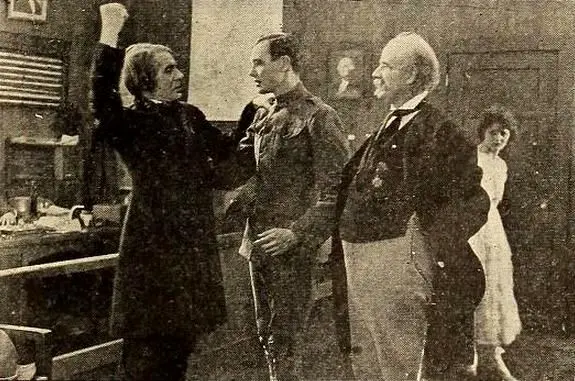
However, it is within the confines of military camp life that Ulysses encounters a different kind of challenge, one that tests his personal code of honor far more intimately than any drill. At an amateur show, he meets Betty Martin, a dancer whose vivacity and charm immediately captivate him. Doris May, as Betty, brings a delicate balance of innocence and professional allure to the role. Yet, Thaddeus's stern warning to “watch out for play actresses” rings in Ulysses's ears, instilling a conflict between his burgeoning affections and his ingrained moral teachings. This trope of the 'fallen woman' or the 'woman of questionable repute' was common in silent cinema, often serving as a catalyst for dramatic tension and moral dilemmas, much like in films such as His Wife's Good Name where a woman's reputation is everything. Ulysses’s subsequent avoidance of Betty, despite his undeniable attraction, underscores his deep respect for his grandfather's wisdom and his own desire to uphold a strict code of conduct. This internal struggle sets the stage for the film’s central conflict, where societal judgment and personal integrity collide.
The narrative takes a sharp turn with the introduction of Harry Weller, the dissolute antagonist, played with appropriate smarminess by Spottiswoode Aitken. Weller's nefarious scheme to lure Betty to a notorious roadhouse becomes the crucible for Ulysses's character. Despite his grandfather’s warnings and the very real threat of court-martial for leaving camp, Ulysses’s innate chivalry compels him to follow. This is the moment where abstract principles of honor transform into concrete action. His decision is not one of calculated risk, but of instinctive moral imperative – a profound demonstration of character that transcends mere obedience to military regulations. The tension builds palpably as Ulysses arrives at the roadhouse, knowing full well the dire consequences should he be discovered.
The ensuing confrontation is a masterclass in silent film drama. Hearing Betty struggle, Ulysses does not hesitate. He engages Weller in a physical altercation, a testament to his burgeoning manhood and his unwavering commitment to protecting the vulnerable. The arrival of military police intensifies the predicament, placing Ulysses in an impossible bind: expose Betty to public shame and potential ruin, or face severe military punishment himself. His quick thinking to prevent the police from entering, allowing Betty to escape through a window, speaks volumes about his priorities. His honor is not merely about adhering to rules; it's about safeguarding the dignity of another, even at immense personal cost. This selfless act, shrouded in secrecy, leads directly to his incarceration in the guardhouse, a prisoner of his own integrity. This echoes thematic concerns found in other films of the era, where an individual's uprightness is tested against rigid social or institutional codes, sometimes at the expense of their immediate freedom or reputation, much like the moral quandaries explored in On Trial.
In the guardhouse, Ulysses maintains a resolute silence, refusing to explain his actions. This silence is not born of guilt, but of a profound sense of honor, protecting Betty's reputation above his own. His grandfather Thaddeus and Jeff Hanan, united in their concern, attempt to persuade him to speak, but to no avail. This scene is particularly poignant, as it showcases the generational shift in understanding what true honor entails. While the older men might prioritize adherence to military law and self-preservation, Ulysses embodies a more nuanced, chivalrous code. His quiet steadfastness is a powerful statement, elevating his character beyond reproach.
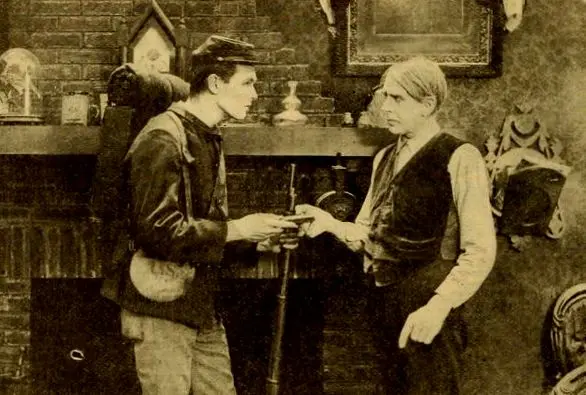
The resolution arrives, not through Ulysses’s words, but through Betty’s confession. Her courage in coming forward to reveal the truth about Weller's villainy and Ulysses's heroic intervention is the final piece of the puzzle. This act of honesty from Betty not only vindicates Ulysses but also challenges Thaddeus's initial prejudice against 'play actresses.' It’s a powerful moment of revelation, where appearances are stripped away to reveal genuine character. The commanding officer, Thaddeus, and Jeff Hanan, in a truly remarkable display of cross-generational and cross-sectional consensus, agree that Ulysses did what both General Grant and General Lee, in their respective legacies of honor and duty, would have done. This conclusion is the film's most striking message: that true heroism and honor transcend specific historical figures or allegiances. It’s about the intrinsic moral fiber of an individual, a universal truth that unites even former adversaries. This reconciliation of North and South, not through political decree but through shared recognition of a young man’s moral rectitude, is a beautiful and enduring theme, showcasing a nation eager to heal its wounds and define a new, unified identity.
Hay Foot, Straw Foot is more than just a period drama; it’s a meticulously crafted piece of early American cinema. Julien Josephson’s screenplay demonstrates a keen understanding of character development and dramatic pacing, building tension effectively through intertitles and visual storytelling. The performances, particularly from Charles Ray, are exemplary of silent film acting, relying on expressive gestures, nuanced facial expressions, and physical comedy to convey emotion and intent. Ray's ability to portray Ulysses's earnestness and later his stoic resolve is a testament to his talent, cementing his status as a beloved actor of the era. The direction, though uncredited for a specific director in the provided information, skillfully guides the narrative, using framing and editing to emphasize key emotional beats and character interactions.
The film's themes of reconciliation, honor, and duty hold a timeless appeal. In an era still grappling with the aftermath of the Civil War and facing the new challenges of World War I, Hay Foot, Straw Foot offered a comforting and inspiring message. It posited that despite historical differences, a shared national character, rooted in integrity and courage, could bind people together. The idea that both Grant and Lee, figures often seen in opposition, would approve of Ulysses's actions is a powerful metaphor for national healing and unity. This narrative sophistication, combined with strong performances and a compelling plot, ensures its continued relevance for film historians and enthusiasts alike. It reminds us that the fundamental human virtues transcend time, conflict, and even the medium through which they are expressed. Much like the enduring tales of moral rectitude in films like The Apple-Tree Girl, which also explored the journey of a young, morally upright protagonist navigating a complex world, Hay Foot, Straw Foot stands as a classic example of how early cinema could both entertain and profoundly reflect the societal aspirations of its time.
In conclusion, Hay Foot, Straw Foot is a cinematic gem that deserves renewed appreciation. It’s a film that speaks to the heart of what it means to be honorable, not just in the grand theater of war, but in the intimate battles of personal morality. Through the journey of Ulysses S. Grant Briggs, we witness a powerful narrative of growth, self-discovery, and the ultimate triumph of character. The film skillfully navigates the complexities of historical legacy, the urgency of national unity, and the timeless struggle between societal judgment and individual truth. It’s a poignant reminder that while the uniforms and conflicts may change, the essence of courage, integrity, and the human spirit remains eternally compelling. This silent masterpiece offers a resonant commentary on how a nation, much like an individual, finds its truest strength not in forgetting its past, but in reconciling its divisions and embracing a shared future built on universal virtues. It’s a film that, even a century later, continues to march to the beat of a truly honorable drum.
IMDb —
1923
Community
Log in to comment.