DbcultAccessing Vault...
6.4/10
Senior Film Conservator
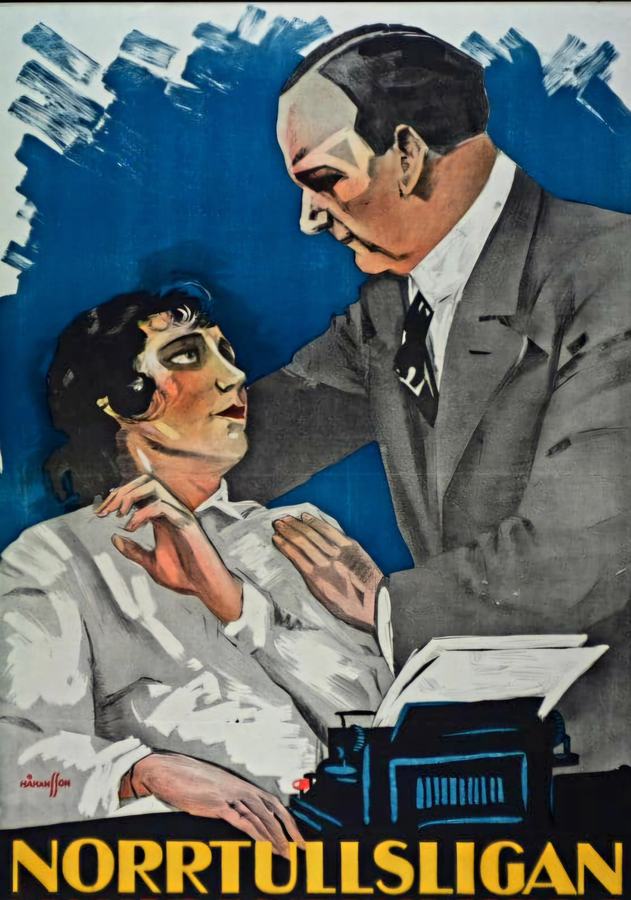
A definitive 6.4/10 rating for a film that redefined the boundaries of cult cinema. The Nortull Gang remains a cornerstone of transgressive art.
In the pantheon of early 20th-century cinema, few works possess the jagged, unvarnished honesty of The Nortull Gang. Directed by Per Lindberg and adapted from the seminal novel by Elin Wägner, this 1923 Swedish gem transports us back to 1907, a time when the ink-stained fingers of office girls were the first tremors of a seismic shift in the European social order. Unlike the grand, sweeping tragedies found in Das Spiel vom Tode, Lindberg’s film finds its power in the claustrophobic reality of the mundane.
The film opens not with a flourish, but with the rhythmic, almost mechanical drudgery of the workspace. Stockholm is presented as a city of stone and shadow, where the light of progress barely reaches the desks of the working woman. We are introduced to our quartet of protagonists—Peggy (the indomitable Tora Teje), Magnhild, Baby, and Eva—who share a cramped living space that serves as both a sanctuary and a pressure cooker. The set design is masterfully oppressive; the apartment feels lived-in, cluttered with the remnants of meager meals and the laundry of four distinct lives. This domestic sphere is a stark contrast to the sterile, male-dominated offices where they spend their daylight hours. While The Fringe of Society deals with the moral decay of the elite, The Nortull Gang focuses on the moral resilience of the disenfranchised.

Tora Teje delivers a performance of startling modernity. As Peggy, she is the emotional anchor of the group, her face a canvas of suppressed indignation and fierce loyalty. There is a specific scene—a quiet moment in the office—where she stares down a superior who has overstepped his bounds. In that gaze, one sees the entire history of the suffragette movement. It is a quiet rebellion, far removed from the mythological grandiosity of Mohini Bhasmasur, yet it carries an equal weight of cosmic justice.
The screenplay, co-written by Hjalmar Bergman and the novelist Elin Wägner herself, preserves the epistolary and diary-like intimacy of the source material. The dialogue (conveyed through intertitles) is sharp, avoiding the flowery sentimentality that often plagued silent-era dramas like The Rainbow Princess. Instead, we get a discourse on wages, the cost of rent, and the psychological toll of being viewed as a decorative auxiliary to the male workforce. The conflict between love and work is handled with a cynical, yet empathetic touch. When one of the girls contemplates marriage as an escape from the office, the film doesn't present it as a fairytale ending, but as a trade-off—a different kind of service. This nuanced approach to domesticity mirrors the dilemmas explored in Should a Wife Forgive?, though with a much more grounded, proletarian perspective.

“We are not just a gang; we are a union of souls in a world that only sees us as assets,”
This sentiment echoes throughout the film’s second act. The cinematography by Hugo Edlund captures the flickering gaslight of the era, creating an atmosphere that feels both historical and hauntingly immediate. The use of deep focus in the office scenes allows the viewer to see the layers of hierarchy—the boss in the background, the male clerks in the middle, and the women in the foreground, literally and figuratively at the bottom of the frame.

What sets The Nortull Gang apart from contemporary films like Jinx or Heart Strings is its insistence on the collective over the individual. Most silent films of this period followed a singular heroine’s journey toward redemption or ruin. Here, the protagonist is the group itself. Their shared hardships—the lack of heating, the meager portions of food, the shared secrets—forge a bond that is more potent than any romantic subplot. This is a film about the birth of female solidarity as a political force.
Consider the sequence where the girls decide to confront their employer about their stagnant wages. The tension is palpable, not because of a threat of violence, but because of the threat of starvation. Their vulnerability is their strength. This thematic exploration of labor rights predates many of the more famous social realist films of the 1930s. It shares a certain DNA with Krigsmillionæren, which also examined the moral complexities of wealth and class, though Lindberg’s focus remains steadfastly on the gendered aspect of the struggle.
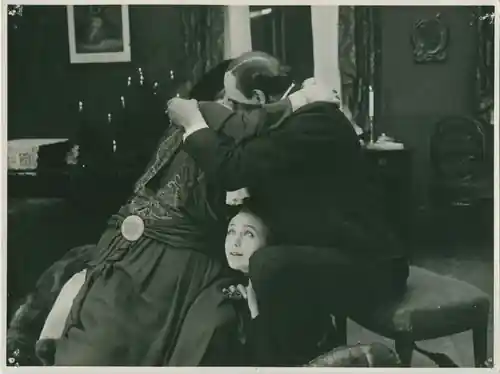
The film’s pacing is deliberate, allowing the viewer to soak in the textures of 1907. The fashion, the technology (the clacking typewriters, the early telephones), and the social etiquette are all rendered with meticulous accuracy. However, this isn't just a museum piece. Lindberg uses the camera to express the internal states of his characters. When Peggy feels overwhelmed, the camera lingers on her, isolating her in the frame, a technique that would later become a staple of Scandinavian cinema. This stylistic choice is far more sophisticated than the theatrical staging of The Jucklins.
The supporting cast, featuring stalwarts like Inga Tidblad and Nils Asther, provides a rich tapestry of archetypes. Asther, in particular, embodies the suave yet ultimately hollow promise of the upper-class male, a figure that Peggy must navigate with both caution and a degree of longing. This dynamic highlights the central conflict: can a woman truly love someone who benefits from the system that oppresses her? This is a much more complex question than the ones posed in The Reckless Sex, which dealt with female rebellion in a more sensationalized, less intellectually rigorous fashion.
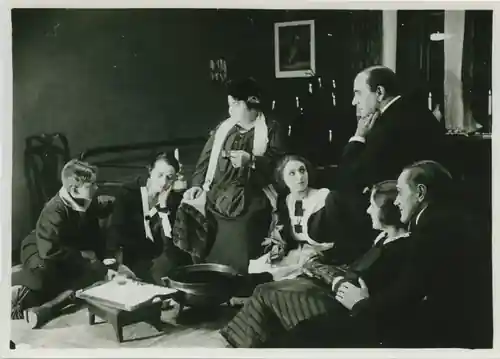
Rewatching The Nortull Gang today, one is struck by how little has changed in the fundamental dynamics of the workplace. The film’s critique of the "glass ceiling" (though the term didn't exist then) is sharp and uncompromising. It doesn't offer easy answers or a triumphant ending where the girls overthrow the patriarchy. Instead, it offers a realistic portrait of incremental progress and the enduring power of friendship. It is a film about the long game of social change.
In the context of Swedish film history, it stands alongside the works of Victor Sjöström and Mauritz Stiller, yet it carves out its own niche by focusing on the urban, female experience. While Ireland, a Nation sought to define a country's identity through nationalistic fervor, The Nortull Gang defines a gender's identity through the shared experience of labor and life. It is a vital, breathing piece of cinema that demands to be seen by anyone interested in the intersection of art and social justice.
The final scenes, where the gang gathers once more in their apartment, are imbued with a sense of weary triumph. They have survived another day, another week, another month. They have kept their dignity intact. The film ends not with a period, but with an ellipsis, suggesting that the fight continues. It is this refusal to provide a neat resolution that makes the film so hauntingly effective. It is a testament to the fact that for many, the struggle for civil rights is not a single event, but a lifelong commitment.
Ultimately, The Nortull Gang is a triumph of silent storytelling. It manages to convey complex sociological ideas through the simple, poignant interactions of its characters. It is a film that respects its audience's intelligence and its characters' humanity. In an era of often caricatured performances, the cast brings a level of naturalism that is nothing short of revolutionary. Whether compared to the high-stakes espionage of Perils of the Secret Service or the domestic dramas of the time, this film remains a singular achievement—a beacon of feminist cinema that continues to shine over a century later.
IMDb 7.6
1927
Community
Log in to comment.