DbcultAccessing Vault...
Cult Review
Senior Film Conservator
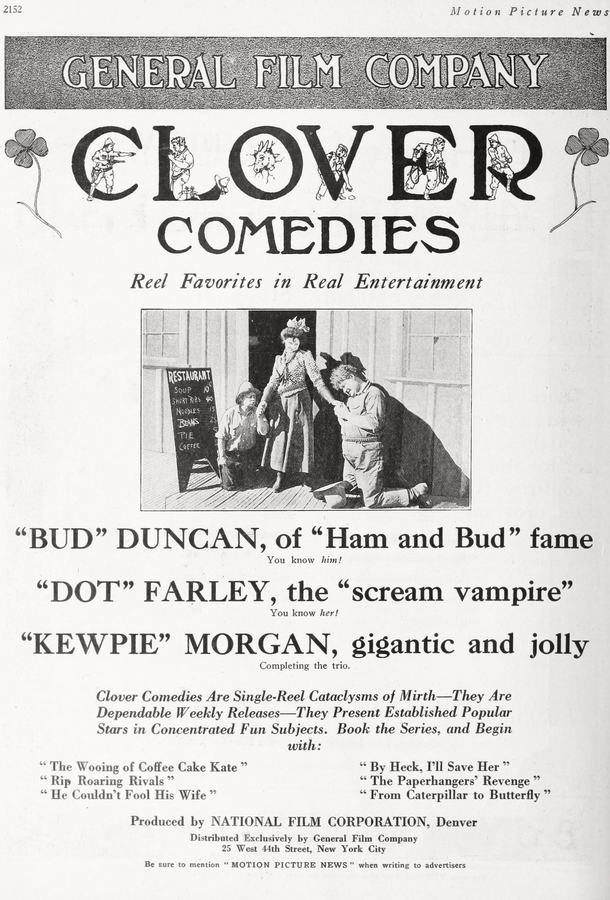
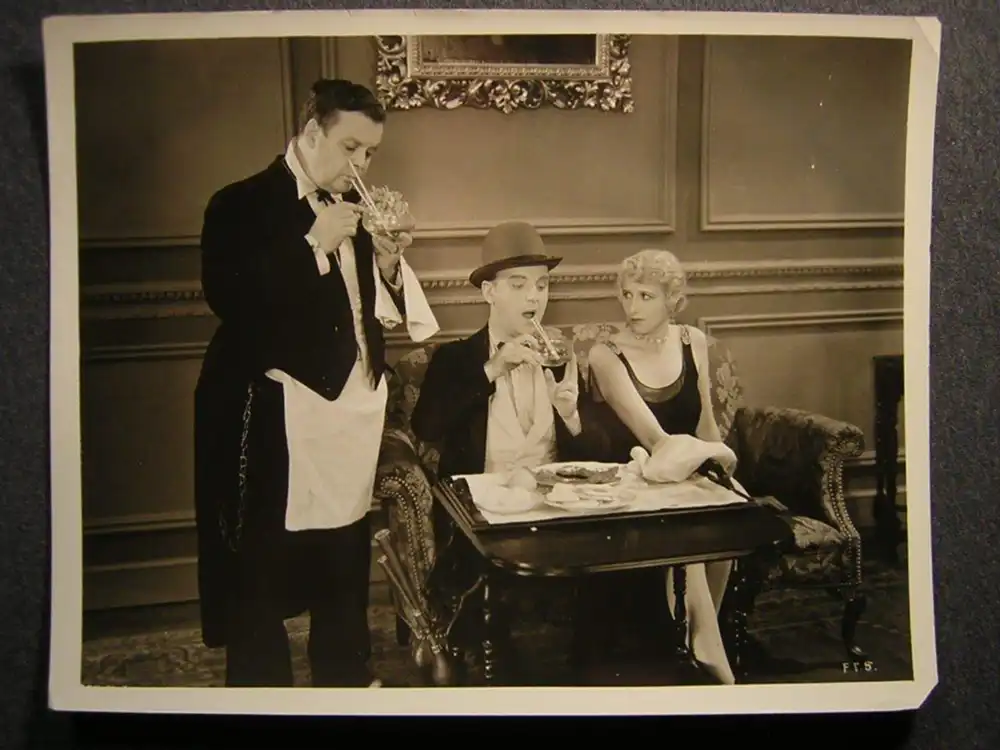
When the title He Couldn't Fool His Wife first flickers across the silver screen, one anticipates a straightforward farce—a husband’s clumsy attempts at deception, a jealous spouse, and a tidy resolution. Yet, beneath the slapstick veneer lies a surprisingly intricate commentary on performance, identity, and the precarious balance of early twentieth‑century marriage.
The film opens with Hen Peck (Bud Duncan), a wiry, earnest clerk whose life revolves around ledgers, punctuality, and the quiet reverence of his wife, Mrs. Peck (Dot Farley). Their domestic tableau is disrupted the moment a troupe of chorus girls, led by the effervescent Kewpie Morgan, arrives to rehearse for a charitable gala. Their entrance is marked by a cascade of sequins and a chorus of giggles that reverberates through the modest living room, turning the space into an impromptu stage.
Hen, ever the opportunist, perceives the girls as a gateway to a coveted promotion at his firm—a connection he hopes to forge through their social network. He volunteers to host their rehearsals, a decision that sets in motion a cascade of misunderstandings. The girls, oblivious to Hen’s professional motives, treat his home as a sanctuary for artistic expression, scattering sheet music, feathered boas, and a bewildering array of costume jewelry across his meticulously arranged study.
Enter the burglar, a character whose reputation for incompetence is as legendary as his penchant for wearing a battered fedora. He prowls the Peck residence under the mistaken belief that a concealed chest—mistaken for a prop chest—contains a cache of valuable gems. The audience is privy to his clumsy infiltration, complete with squeaky floorboards and an ill‑timed cough that alerts the chorus girls to his presence.
Mistaking his furtive demeanor for a flirtatious suitor, the girls usher him onto the stage, encouraging him to join their choreography. The burglar, bewildered yet eager to impress, attempts a clumsy tap routine that culminates in a pratfall that sends a chandelier crashing into a stack of costume trunks. The chaos is amplified when Hen, attempting to hide the intruder from his increasingly suspicious wife, concocts a series of alibis that only serve to deepen the intrigue.
Mrs. Peck’s patience wears thin as she discovers mismatched shoes, stray feathers, and a lingering scent of perfume in the hallway. Her inquiries are met with Hen’s increasingly elaborate fabrications—each more implausible than the last. The film masterfully uses timing; a door slams just as Hen begins to speak, a curtain falls just as a crucial confession is about to be uttered, reinforcing the sense that the universe itself conspires to keep the truth concealed.
The interplay between the domestic sphere and the theatrical realm is reminiscent of the visual wit found in The Goddess of Lost Lake, where the boundary between reality and performance blurs. However, where that film leans toward the ethereal, He Couldn't Fool His Wife grounds its absurdity in the mundane anxieties of a middle‑class marriage.
Director Kewpie Morgan employs a series of rapid cuts during the attic showdown, juxtaposing close‑ups of frantic faces with wide shots of the chaotic environment. The use of chiaroscuro lighting—deep shadows punctuated by bright, almost theatrical spotlights—creates a visual metaphor for the dual lives the characters lead. The film’s monochrome palette is occasionally punctuated by a splash of red in the form of a stray costume scarf, a subtle nod to the emotional heat simmering beneath the comedy.
The physical comedy owes a debt to the slapstick traditions of The Dumb Girl of Portici, yet it diverges by embedding the humor within relational stakes rather than pure spectacle. The burglar’s clumsy attempts at dance are not merely for laughs; they underscore his desperation to belong, mirroring Hen’s own yearning for professional validation.
Bud Duncan’s portrayal of Hen is a study in restrained panic. He oscillates between the stiff posture of a clerk and the exaggerated gestures required by the chorus girls’ rehearsals, creating a visual dissonance that fuels the comedy. Dot Farley, as the ever‑observant Mrs. Peck, balances exasperation with a sly, knowing smile, hinting at an inner resilience that ultimately dissolves the conflict.
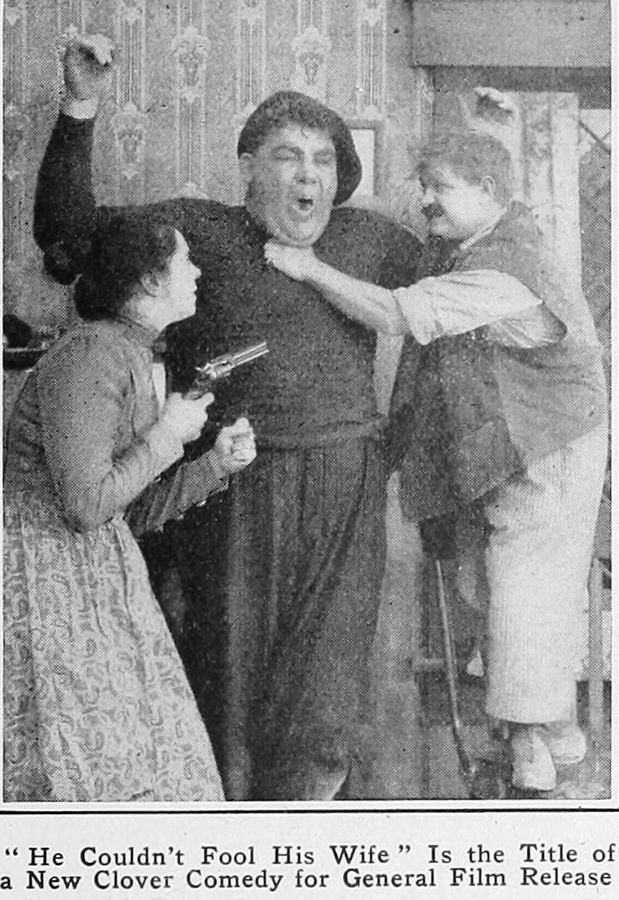
Kewpie Morgan’s direction of the chorus girls imbues them with agency; they are not mere plot devices but performers with distinct personalities. Their synchronized movements, often filmed in a single, sweeping take, demonstrate a choreographic precision that elevates the film beyond a simple farce.
At its core, the narrative interrogates the performative aspects of marriage. Hen’s attempts to curate an image for his wife mirror the chorus girls’ rehearsals—both are exercises in presenting a curated version of self. The burglar, an outsider, inadvertently reveals the fragility of these façades when he stumbles into the performance, exposing the seams.
This thematic thread aligns with the moral ambiguity explored in Sündige Liebe, where characters grapple with the dichotomy between public persona and private desire. In He Couldn't Fool His Wife, the resolution—Mrs. Peck’s forgiving yet sardonic acknowledgment—suggests that authenticity, however messy, ultimately triumphs over contrived perfection.
While the film shares the comedic sensibility of Ivanhoe—particularly in its use of physical humor to underscore narrative tension—it diverges by focusing on domestic rather than heroic stakes. The subtle satire present in The Impostor (1918) also finds a counterpart here, as Hen’s self‑deception mirrors the titular impostor’s elaborate masquerade.
Released in the early 1920s, the film captures a transitional moment in American cinema, where silent narratives began to embrace more sophisticated character studies alongside broad physical comedy. Its depiction of chorus girls reflects the era’s fascination with the burgeoning entertainment industry, while the burglar’s incompetence offers a subtle critique of the mythologized criminal archetype.
The film’s preservation status is uncertain, yet its influence can be traced in later works that blend domestic drama with theatrical spectacle, such as The Reward of Patience. Scholars often cite it when discussing the evolution of marital narratives in silent cinema.
Contemporary audiences lauded the film for its brisk pacing and the chemistry between Duncan and Farley. Critics of the era praised the “delightful interplay of misdirection and revelation,” a sentiment echoed in modern retrospectives that highlight its relevance to discussions about gender dynamics and performative identity.
Though not as widely known as some of its contemporaries, the film enjoys a cult following among silent film aficionados. Its inclusion in curated screenings of early comedic cinema underscores its enduring appeal.
The film’s strength lies in its ability to weave a complex tapestry of farce, pathos, and social observation within a concise runtime. The meticulous set design—particularly the attic set, where the climax erupts—demonstrates a commitment to visual storytelling that rivals the more lavish productions of the period.
Every gag, from the burglar’s ill‑timed tap to the chandelier’s dramatic descent, serves a dual purpose: eliciting laughter while advancing the narrative tension. This economy of storytelling is a hallmark of masterful silent cinema.
In sum, He Couldn't Fool His Wife offers a richly layered viewing experience that rewards repeated watchings. Its blend of slapstick vigor, nuanced performances, and thematic depth ensures that it remains a noteworthy entry in the annals of early film comedy.

IMDb 6.1
1931
Community
Log in to comment.