DbcultAccessing Vault...
Cult Review
Senior Film Conservator
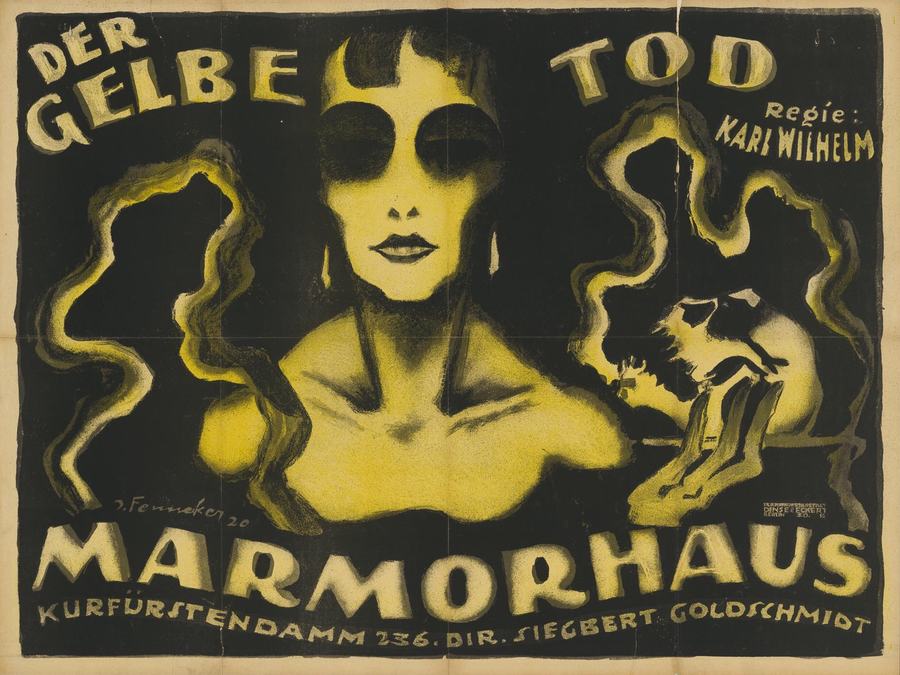
The first thing that strikes you in Der gelbe Tod, 2. Teil is the color yellow—not the cheery daffodil sort, but the bile-tinged hue of old medical textbooks left to molder. Directors of photography Rudolf Klein-Rhoden and Fred Juncker saturate every frame with it: gaslight halos, cocaine granules, even the sickly moon that hovers above the Brandenburg Gate like a voyeuristic coin. This isn’t merely a sequel; it’s a symphonic relapse, a city-state’s collective comedown rendered in stark monochrome that somehow feels prismatic.
Set in the same cinematic universe as the seldom-seen His Golden Romance yet tonally closer to the opiated nihilism of The Lifted Veil, the film reimagines Weimar Berlin as an open-air pharmacology experiment. Streets exhale ether; tram bells clang with the frequency of a shaken pill bottle. The screenplay—credited to Hans Gaus, though whispers persist of clandestine rewrites by Esther Hagan herself—dispenses with exposition like a cautious dealer: information is cut, snorted, or injected, never spoon-fed.
Semler’s von Rohn ambles through this labyrinth with the stoic fatigue of a man who has read the last page of his own case file. His overcoat flares like a confession every time he pivots, and the actor’s penchant for micro-gestures—an eyelid flutter, a jaw muscle tic—turns close-ups into polygraphs. When he confronts Lebius’ Korff in the zeppelin’s ribcage, the villain taunts him: “Detective, the only difference between us is that I sell the nightmare you pretend to wake people from.” The line lands like a suture being torn.
Across the cast, addiction manifests as a series of exquisite breakdowns. Ernst Deutsch’s secretary flips a pocket watch open so often it becomes a metronome for paranoia; each click coincides with a cutaway to a new crime scene, a trick foreshadowing Soviet montage but steeped in Berliner decadence. Hagan’s morphine-aristocrat reclines in her wheelchair whispering “I’m only traveling first-class to the abyss” while her pupils eclipse irises, transforming her face into a solar eclipse shot on 35 mm.
Meanwhile, Brinkmann delivers the film’s bruised heart. Her torch song—half Marlene, all wound—plays over a stroboscopic montage of users collapsing, veins rising like topographical maps. The lyrics are nothing but molecular notation, yet the crowd sings along as if reciting psalms. It’s the most chilling indictment of modernity this side of The Merry-Go-Round’s mechanical nihilism.
Production designer Wilhelm Prager—also moonlighting as the coked-up parliamentarian—creates sets that feel scavenged rather than built. A ballroom is painted arsenic-green but lit with orange sodium lamps, so dancers resemble corpses in an advanced state of petrifaction. Mirrors are cracked, then daubed with petroleum jelly, resulting in reflections that smear across the screen like wet oil paint. The titular yellow death is frequently glimpsed in extreme insert shots: granules cascading like Saharan sand, yet each frame is hand-tinted so the powder fluoresces, a toxic sunrise in miniature.
Compare this resourcefulness to the relatively plush tableaux of The Bargain, and you’ll appreciate how constraint fertilized artistry. Budgetary limitations forced cinematographers to repurpose war-surplus searchlights, casting shadows sharp enough to slice dialogue in half. Textures—velvet, rust, wet asphalt—acquire a hyper-tactility that contemporary digital palettes still fail to replicate.
Though silent, the film generates its own hallucinatory soundtrack via visual rhythm. Intertitles appear irregularly, sometimes upside-down or back-to-front, compelling the viewer to physically tilt the head—an embodied reminder that perspective is negotiable. During the zeppelin sequence, the frame rate subtly accelerates; the resulting dissonance simulates tachycardia, so your own heart races in sympathy. It’s a proto-psychedelic sleight-of-hand that predates Manden med de ni Fingre III’s synesthetic experiments by a good decade.
Unlike many Weimar thrillers that relegate women to fallen Madonna or consumptive waif, Der gelbe Tod grants its female ensemble narrative propulsion. Margarete Schön plays a reformist councilwoman whose public crusade against the drug is undercut by private dependence; her final speech—delivered while clutching a lectern to steady tremoring hands—mirrors the hypocrisy of Powers That Prey’s moralizing plutocrats. Rosa Valetti’s medium, meanwhile, commodifies the afterlife the same way Korff commodifies euphoria, suggesting spirituality itself is a substance to be weighed, cut, and sold.
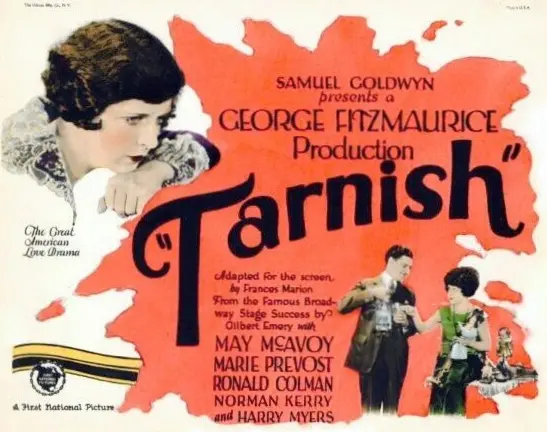
The male characters fare worse, their authority eroded by the very narcotic they seek to police. Semler’s detective ultimately confesses he can’t distinguish the law from the high, a line that echoes the fatalistic romanticism of Tarnished Reputations but swaps erotic fatalism for chemical determinism.
Viewed today, the film feels less like antiquated pulp and more like a premonition. Replace cocaine with fentanyl and the zeppelin with a drone; the mechanics of contagion remain identical. The aerial shot of yellow snow settling on children’s hair could be a still from any opioid-ravaged suburb, only rendered in Expressionist chiaroscuro. Its warning—that capital and craving will always find new alloys—resonates louder in our era of algorithmically targeted addictions than it possibly could in 1921.
A 4K restoration premiered last year at the Deutsche Kinemathek, scanned from two incomplete nitrate prints (one in São Paulo, the other in Kyiv). The tints—hand-painted cobalt blues, arsenic greens, and of course that infernal yellow—were matched via photochemical analysis of surviving rental receipts that listed dye lots. Streaming rights are fragmented, but Mubi currently hosts an unrestored 2K transfer for North America, while ARTE cycles the restored version seasonally. Physical media aficionados should keep an eye on the AbsolutMedien Weimar set slated for late 2025, which promises an audio commentary by narcoculture historian Dr. Liesl Ott.
Great cinema distills the moment it was made and the moment it’s watched into a volatile compound; Der gelbe Tod, 2. Teil is that rare film whose dosage increases with time. Each re-view deposits another grain of dread under the fingernails. It leaves you shivering, not because you fear the past, but because you recognize the present wafting down as chemical snow. Seek it out, but be warned: its aftertaste lingers far longer than the closing iris-in, and no antidote yet exists for its particular shade of yellow.
IMDb —
1927
Community
Log in to comment.