A definitive 6.9/10 rating for a film that redefined the boundaries of cult cinema. He Done His Best remains a cornerstone of transgressive art.
Is 'He Done His Best' worth watching in the cacophony of modern entertainment? Short answer: absolutely, if you possess a fondness for the ingenious, often anarchic spirit of silent-era mechanical comedy, but it's certainly not for those seeking narrative depth or contemporary pacing. This film is a delightful, if somewhat niche, experience best suited for silent film enthusiasts, Rube Goldberg aficionados, and those curious about the unique comedic voice of Charles R. Bowers.
It will likely alienate viewers accustomed to rapid-fire dialogue, complex character arcs, or sophisticated storytelling. This is pure, unadulterated visual gag, a testament to a bygone era of cinematic invention, and its appeal is deeply rooted in that historical context.
The Mechanical Maestro: Charles R. Bowers' Unique Vision
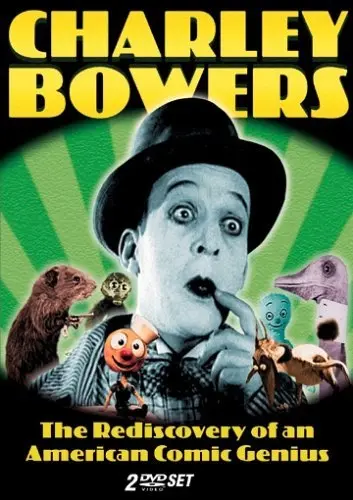
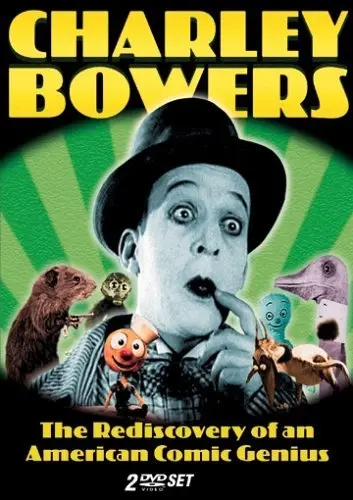
Charles R. Bowers was a singular talent in the silent era, a cartoonist turned filmmaker whose comedic sensibility leaned heavily into the absurd and the mechanical. Unlike the more character-driven pathos of Chaplin or the acrobatic grace of Keaton, Bowers built his humor around intricate, often disastrous contraptions. 'He Done His Best' is a quintessential example of this style, a film that places its protagonist, also played by Bowers, at the mercy of his own over-engineered ambition.
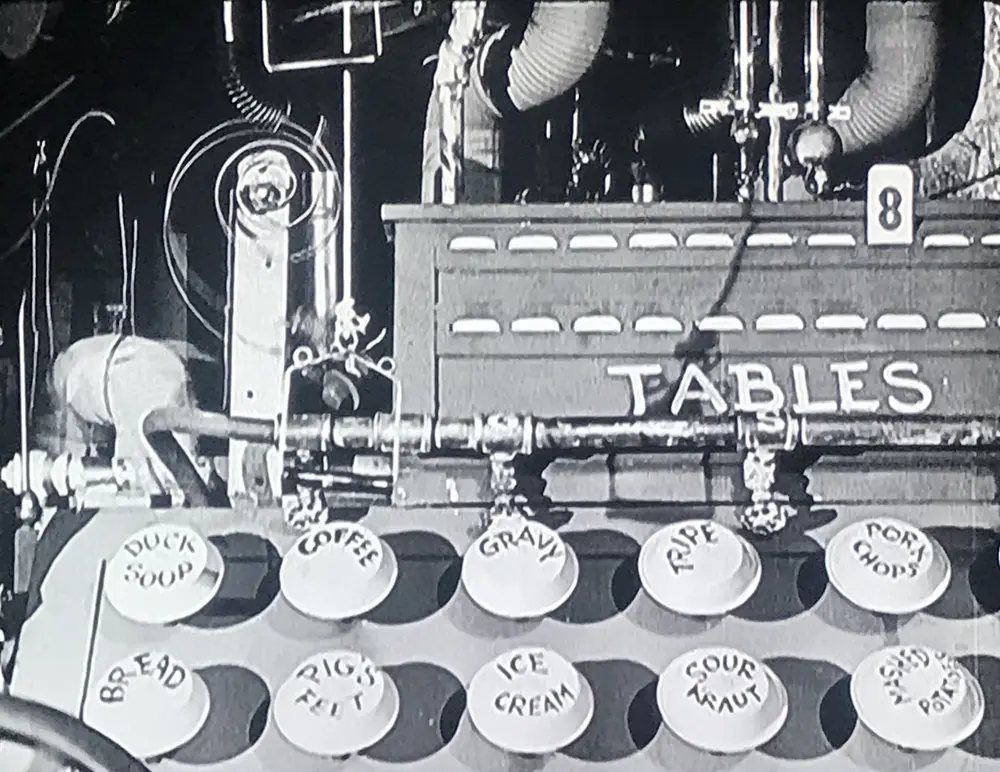
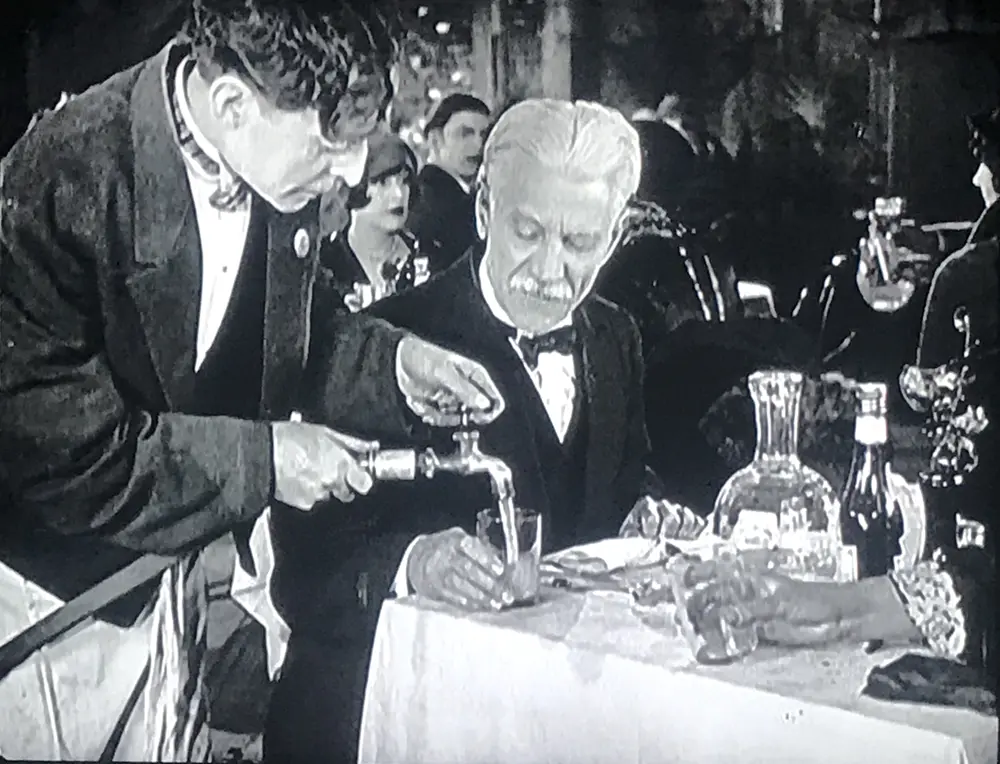
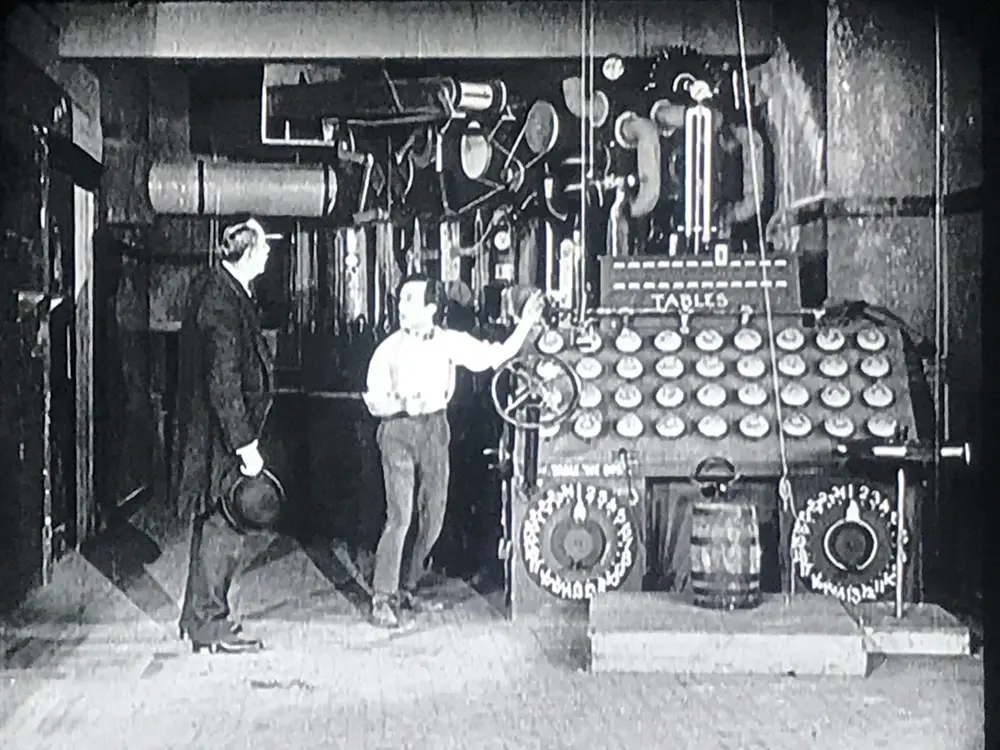
The plot, as thin as a chef's hat, serves merely as a scaffold for a series of increasingly elaborate and destructive inventions. Charley, eager to impress his girlfriend's father and modernize his restaurant, unleashes a torrent of automation. We're talking self-stirring soup tureens, automated dishwashers that double as fire hoses, and perhaps most memorably, a pancake flipper that launches breakfast items with the force of a trebuchet. Each device, designed for efficiency, predictably spirals into catastrophic inefficiency.
Scene from He Done His Best
Cinematic perspective: Exploring the visual vocabulary of He Done His Best (1926) through its definitive frames.
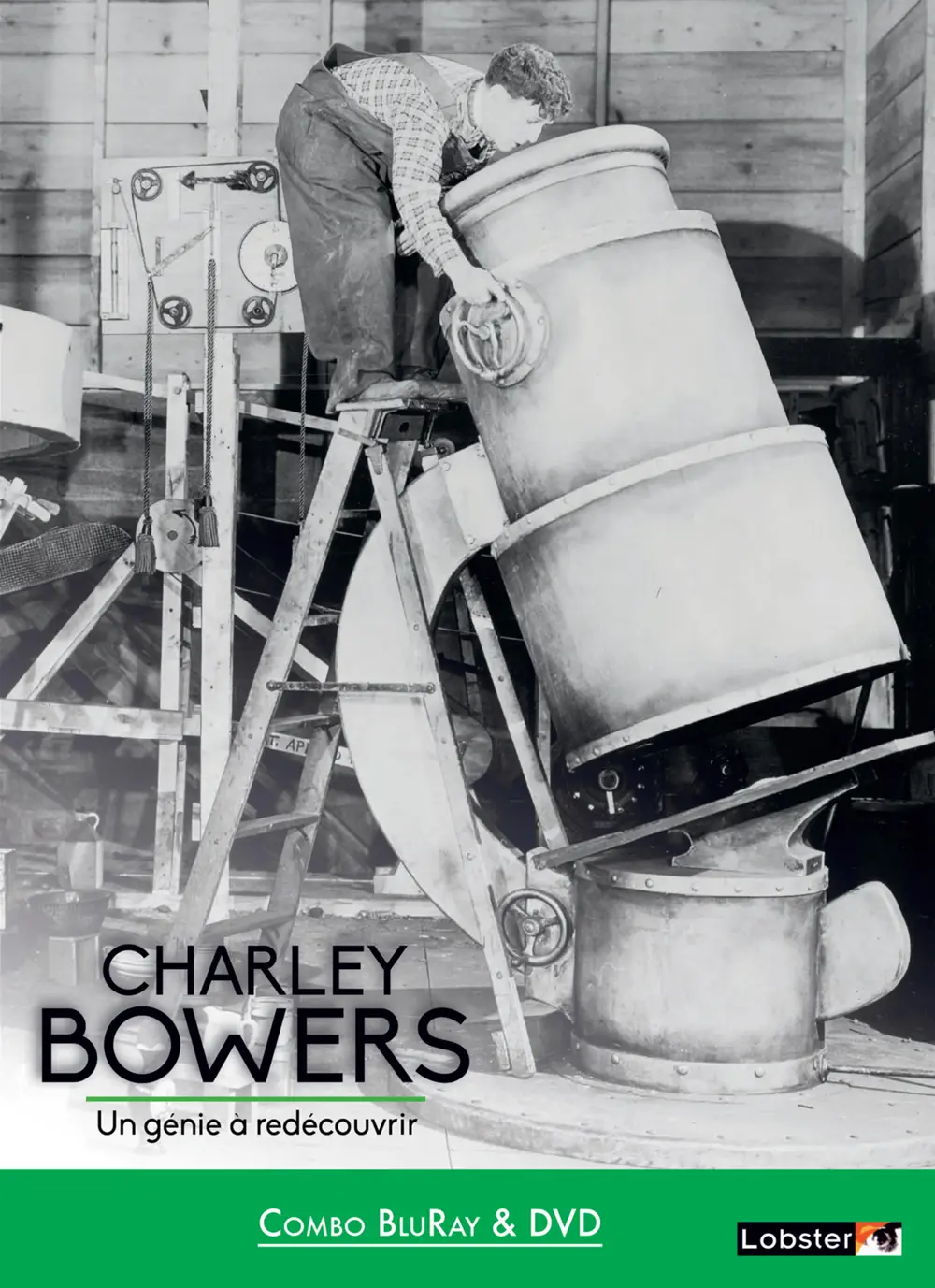
Bowers' genius lies in the meticulous construction and subsequent deconstruction of these mechanical marvels. The audience isn't just watching a gag; they're watching a carefully orchestrated chain reaction of cause and effect, where every spring, lever, and pulley contributes to the ultimate, inevitable mess. It's a comedy of errors on an industrial scale, and it’s surprisingly captivating.
Is This Film Worth Watching?
Yes. For a specific audience, 'He Done His Best' is absolutely worth watching. It offers a fascinating glimpse into a niche corner of silent film comedy that remains distinct even today. If you appreciate the artistry of silent-era visual storytelling and have a soft spot for the intricate mechanics of Rube Goldberg, this film will be a delightful discovery.
However, if your primary interest lies in fast-paced narratives, deep character development, or sophisticated humor, you might find its repetitive nature and reliance on physical gags a bit trying. It’s a historical artifact that still entertains, but its entertainment value is deeply tied to an appreciation for its unique context.
This film works because...
Its inventive, Rube Goldberg-esque contraptions are genuinely fascinating and often hilarious in their inevitable failures, showcasing Bowers' unique comedic vision and mechanical ingenuity. The sheer creativity behind the devices is the film's undeniable backbone.
Scene from He Done His Best
Cinematic perspective: Exploring the visual vocabulary of He Done His Best (1926) through its definitive frames.
This film fails because...
The narrative is exceptionally thin, serving merely as a vehicle for gags, which can lead to a sense of repetition and a lack of emotional investment over its runtime. The pacing, while typical for the era, can feel sluggish to modern sensibilities.
You should watch it if...
You are a fan of silent comedy, appreciate mechanical ingenuity, enjoy visual slapstick, or are interested in the history of unique comedic voices in cinema. It’s a must-see for anyone curious about the specific brand of chaos that Charles R. Bowers perfected.
Performance and Direction: Bowers at the Helm
Charles R. Bowers not only conceived these elaborate scenarios but also starred in them. His performance as Charley is understated yet effective. He's not the frantic, wide-eyed victim of a Buster Keaton, nor the sentimental everyman of Chaplin. Instead, Bowers portrays Charley with a kind of earnest, almost bewildered determination. He's a man utterly convinced of his own brilliance, even as his inventions crumble around him. His physical comedy is precise, often reacting to the mechanical chaos with a resigned exasperation that is subtly hilarious.
The direction, credited to Bowers, Harold L. Muller, and Ted Sears, is primarily focused on framing the gags. The camera is often static, allowing the audience to fully appreciate the intricate workings and subsequent failures of each device. This approach, while perhaps less dynamic than the innovative camerawork seen in some contemporary films like The Knockout, is perfectly suited to Bowers' specific brand of comedy. It emphasizes the spectacle of the contraptions themselves rather than elaborate cinematic flourishes.
Scene from He Done His Best
Cinematic perspective: Exploring the visual vocabulary of He Done His Best (1926) through its definitive frames.
There's a palpable sense of craftsmanship in the construction of these gags. One can almost imagine the hours spent designing, building, and rehearsing the sequences to ensure the timing of each collapsing tray or exploding coffee urn was just right. This commitment to practical effects, long before CGI, is a marvel in itself and elevates the film beyond mere silliness.
Cinematography and Pacing: A Silent Era Standard
The cinematography in 'He Done His Best' is typical of its era: largely functional, clear, and designed to capture the action without drawing undue attention to itself. The black and white photography, while perhaps lacking the artistic depth of a film like The Forbidden City, effectively highlights the contrast between the pristine machines and the ensuing grime and destruction. Details are clear enough to follow the mechanics of each contraption, which is crucial for the humor to land.
Pacing is where modern viewers might find the film most challenging. Silent comedies often built their gags slowly, allowing the tension and anticipation to build before the inevitable payoff. 'He Done His Best' adheres to this tradition. Each invention is introduced, demonstrated, and then allowed to fail in increasingly spectacular fashion. While this provides ample time to appreciate the ingenuity of the gags, it can feel protracted. There are moments where a judicious edit might have tightened the experience for contemporary audiences.
However, to judge it solely by modern pacing standards would be unfair. The film operates on its own rhythm, a rhythm that invites contemplation of the mechanical process as much as it does laughter at the outcome. It's a slower burn, a patient unraveling of order into chaos, rather than a frantic sprint.
Scene from He Done His Best
Cinematic perspective: Exploring the visual vocabulary of He Done His Best (1926) through its definitive frames.
Tone and Themes: The Absurdity of Progress
The tone of 'He Done His Best' is one of pure, unadulterated absurdity. There’s no underlying social commentary in the vein of Chaplin, nor the existential dread that occasionally surfaces in Keaton’s work. This is comedy for comedy’s sake, a celebration of the ridiculousness inherent in human attempts to overly complicate simple tasks. It revels in the joy of watching things go spectacularly wrong.
One could, perhaps, argue for a subtle thematic undercurrent: a commentary on the perils of unchecked technological enthusiasm. In an era rapidly embracing industrialization and automation, Bowers’ films playfully suggest that not every problem requires a complex mechanical solution, and indeed, sometimes the solution creates more problems than it solves. This isn't a heavy-handed message, but rather a delightful, almost accidental, byproduct of the slapstick.
It’s a film that asks us to laugh at the folly of ambition, particularly when that ambition is coupled with a complete disregard for practical outcomes. The restaurant, initially a place of simple sustenance, becomes a battlefield of gears, sprockets, and exploding condiments. It works. But it’s flawed.
Comparing Bowers to His Peers
It's easy to place Bowers in the pantheon of silent comedians, but his style truly sets him apart. While many silent comedians used props and stunts, Bowers made the contraption itself the star. His films are less about the character's journey through adversity, as seen in His Temporary Wife, and more about the mechanical ballet of destruction. He’s the mad scientist of silent comedy, gleefully unleashing his inventions upon an unsuspecting world.
Scene from He Done His Best
Cinematic perspective: Exploring the visual vocabulary of He Done His Best (1926) through its definitive frames.
This focus on the inanimate object as a source of comedy is an unconventional approach. While Keaton famously used elaborate stunts and sets, they were always in service of his character's resilience. For Bowers, the contraption often feels like a character in itself, possessing its own chaotic will. This makes his films surprisingly fresh, even today, because no one else quite did what he did with such singular dedication.
His work stands as a testament to the diverse and inventive landscape of early cinema, reminding us that comedy wasn't a monolithic entity, but a vibrant ecosystem of unique voices and experimental approaches. It’s a shame he isn't as widely known as some of his contemporaries.
Key Takeaways
Best for: Silent film enthusiasts, fans of Rube Goldberg machines, and those who appreciate visual, mechanical slapstick.
Not for: Viewers seeking complex narratives, character development, or fast-paced modern humor.
Standout element: The ingenious and meticulously crafted Rube Goldberg contraptions and their escalating, hilarious failures.
Biggest flaw: A very thin plot and occasionally repetitive gags that can test the patience of those not fully invested in the comedic premise.
Pros and Cons
Pros:
Unique Comedic Voice: Charles R. Bowers' distinct brand of mechanical humor is unlike any other silent comedian, offering a fresh perspective on the era's slapstick.
Inventive Gags: The film is packed with creative, often elaborate contraptions that are a joy to watch unfold and inevitably malfunction. Each sequence feels carefully planned and executed.
Historical Significance: Provides valuable insight into the broader landscape of silent comedy and the diverse talents that shaped it. It’s an important piece of cinematic history.
Visual Entertainment: For those who appreciate purely visual comedy, the film delivers consistent laughs through its physical gags and the sheer spectacle of mechanical chaos.
Cons:
Limited Narrative Depth: The plot is extremely simplistic, existing solely to facilitate the gags, which can leave some viewers feeling unengaged with the story itself.
Repetitive Structure: The film's reliance on a 'device introduced, device fails' pattern, while its strength, can also become somewhat predictable and monotonous over its runtime.
Pacing Issues for Modern Audiences: The deliberate, slow build-up of gags, typical of silent cinema, might feel too slow for viewers accustomed to contemporary film speeds.
Niche Appeal: Its specific brand of humor and historical context means it won't appeal to everyone, potentially alienating those unfamiliar with or disinclined towards silent films.
Verdict
'He Done His Best' is a delightful, if somewhat niche, entry in the annals of silent comedy. It’s a film that proudly wears its heart on its sleeve, a love letter to the absurdities of invention and the simple joy of watching things spectacularly fall apart. Charles R. Bowers, as both star and creative force, carves out a unique space for himself, distinguishing his mechanical mayhem from the more celebrated works of his peers.
While its narrative is threadbare and its pacing can feel leisurely by today's standards, its strengths lie in its pure, unadulterated visual gags and the sheer ingenuity of its contraptions. It’s a film that demands a certain level of appreciation for its historical context and its specific brand of humor. If you approach it with an open mind and a fondness for the mechanical, you'll find a surprisingly rich and consistently entertaining experience.
This isn't a film that will resonate with everyone, and that's perfectly fine. Its appeal is targeted, its charm specific. But for those it speaks to, 'He Done His Best' offers a wonderfully unique glimpse into the inventive spirit of early cinema, proving that sometimes, doing your best, even when it results in utter chaos, can be profoundly entertaining. Seek it out if you're ready for a dose of charming, mechanical mayhem.