DbcultAccessing Vault...
5/10
Senior Film Conservator
A definitive 5/10 rating for a film that redefined the boundaries of cult cinema. Gas and Air remains a cornerstone of transgressive art.
Step back into the nascent days of cinema, a vibrant epoch where the moving picture was still finding its voice, often through the uproarious language of physical comedy. The early 1920s were a crucible for comedic talent, a fertile ground where legends were forged in the silent, frenetic chaos of the screen. Amidst this burgeoning landscape, short films served as vital laboratories for aspiring stars, and it is within this context that we encounter the charmingly destructive spectacle of 'Gas and Air' (1921). This unassuming cinematic morsel, featuring the nascent genius of Stan Laurel, offers a fascinating glimpse into the foundational elements of slapstick, showcasing a performer already honing the distinctive persona that would, in time, become globally adored.
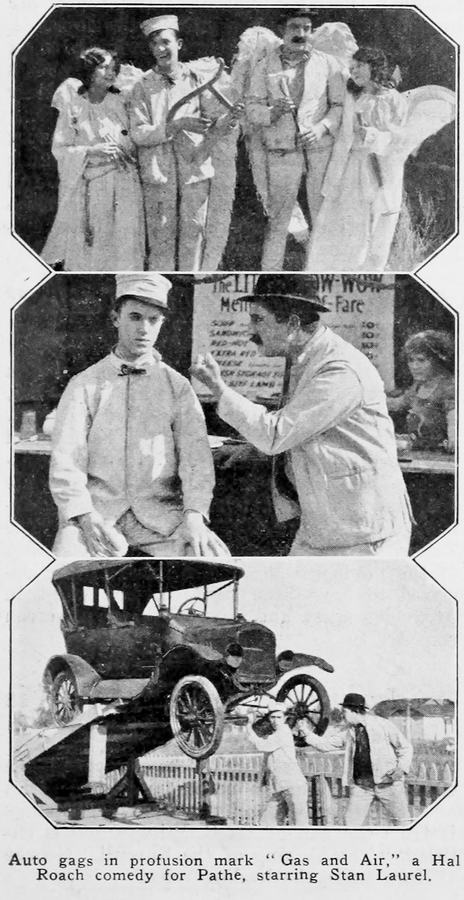
The film’s premise, deceptively simple, pivots around Stan, a handyman whose very designation feels like a cosmic jest. Employed at a local garage, his every action is a masterclass in unintentional sabotage, a ballet of mechanical ineptitude. From the outset, Laurel imbues Stan with a peculiar, almost disarming stoicism. There is no grand pronouncement of his blunders, no exaggerated grimace of concern; merely a persistent, unyielding deadpan that serves as a comedic anchor amidst the escalating pandemonium. This early manifestation of Laurel's signature impassivity is not just a character trait; it is a profound comedic device, amplifying the absurdity of his predicaments by contrasting them with his utterly unperturbed demeanor. It's a precursor to the gentle bewilderedness that would define his later partnership with Oliver Hardy, yet here, it stands alone, a testament to his innate understanding of comedic timing and character.
The central conflict, a gasoline pipe refusing to cease its flow, transforms a mundane garage task into a veritable liquid apocalypse. This is where 'Gas and Air' truly shines as a specimen of early slapstick: its meticulous, yet wildly improbable, escalation of disaster. What begins as a minor inconvenience rapidly spirals into a full-blown crisis, a torrent of fuel threatening to engulf everything in its path. The humor derives not merely from the situation itself, but from Stan's utterly ineffectual attempts to rectify it. His solutions, far from resolving the problem, invariably exacerbate it, each clumsy maneuver adding another layer of chaos to the already precarious situation. This relentless progression towards inevitable catastrophe is a hallmark of the genre, a carefully orchestrated dance of cause and effect where the 'effect' is always disproportionately disastrous and hilariously unexpected.
The climax of this combustible narrative is, quite literally, explosive. The culmination of Stan's blunders, coupled with the relentless gush of gasoline, leads to a spectacular, physics-defying blast. The visual gag of Stan, the garage owner, an unsuspecting customer, and even a small quick-lunch counter being propelled skyward is a quintessential piece of silent film comedy. It's a moment of pure, unadulterated physical farce, relying on visual exaggeration and the universal language of pratfalls to elicit laughter. This kind of over-the-top, almost surrealistic, destruction was a staple of the era, a testament to the filmmakers' ingenuity in creating spectacle without dialogue. One might compare the sheer kinetic energy of this sequence to other high-octane silent shorts, though 'Gas and Air' distinguishes itself through Laurel's unique brand of understated chaos, making him the eye of a very funny storm.
While Stan Laurel undeniably commands the screen, the supporting cast, including Charles Stevenson, Katherine Grant, Roy Brooks, Noah Young, Jack Hill, and Eddie Baker, ably contributes to the comedic tapestry. Though their roles are often reactive—registering shock, exasperation, or bewildered amusement—they serve as crucial foils to Stan's unflappable ineptitude. The garage owner's mounting frustration, the customer's unwitting entanglement, and the quick-lunch counter's unexpected participation all enrich the comedic landscape, turning a simple setting into a stage for communal disaster. These character dynamics, though briefly sketched, provide the necessary context for Stan's actions, grounding the surreal events in a semblance of relatable, if exaggerated, human interaction.
The production values, typical of the era's short comedies, prioritize immediate impact and efficient storytelling. Silent films, particularly shorts like 'Gas and Air,' operated on a different rhythm than the sweeping epics or intricate dramas of the time, such as Anna Karenina or The Way Back. They were designed for quick consumption, offering bursts of entertainment that relied heavily on visual gags, physical performance, and often, a touch of gentle anarchy. The absence of dialogue necessitated a heightened reliance on facial expressions, body language, and intertitles (though sparingly used in action-heavy shorts) to convey narrative and emotion. This constraint, far from being a limitation, often fostered a remarkable creativity in visual storytelling, pushing filmmakers and performers to distill their comedic intentions into pure, kinetic energy.
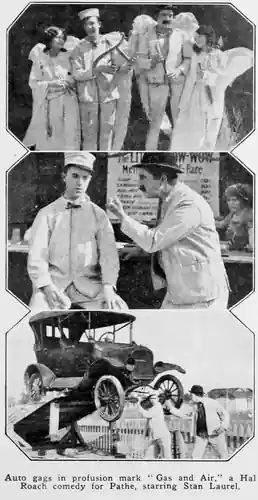
For enthusiasts of classic cinema, 'Gas and Air' serves as a crucial artifact in understanding the evolution of Stan Laurel’s comedic genius. Long before he became half of the world's most beloved comedic duo, Laurel was a prolific silent film actor, director, and writer, meticulously refining his craft. His performance here, characterized by that signature blank stare and a palpable sense of bewildered innocence, is a foundational piece of his artistic development. It hints at the deeper, more nuanced character he would later perfect—a character who, despite his constant failings, somehow retains an endearing, almost childlike vulnerability. This early work demonstrates his innate ability to elicit sympathy and laughter simultaneously, a skill that few comedians have mastered with such effortless grace. One can see echoes of this early persona in other contemporary performers, but Laurel's particular blend of wide-eyed confusion and accidental destruction was uniquely his own.
Comparing 'Gas and Air' to other films of its period, whether comedies like Get Your Man or more dramatic fare like The Daughter Pays, underscores the distinct niche occupied by slapstick. While narrative complexity and character development were paramount in many features, shorts often reveled in the simplicity of a well-executed gag. 'Gas and Air' embodies this philosophy, prioritizing the immediate comedic payoff over intricate plotlines. It’s a testament to the enduring power of physical comedy, demonstrating that laughter often requires no translation, no deep exposition—just a man, a leaky pipe, and a spectacular explosion.
The charm of 'Gas and Air' lies in its unpretentious commitment to laughter. It doesn't aim for profound social commentary or intricate psychological insights, unlike films such as The Man Who Turned White or even the allegorical nature of Pan. Instead, it offers a pure, distilled dose of comedic relief, a reminder of a time when cinema's primary goal was often to simply entertain. The film's enduring appeal, like many silent comedies, rests on its universal humor. The frustrations of mechanical failures, the absurdity of incompetence, and the sheer spectacle of a well-timed pratfall transcend cultural and temporal boundaries. It’s a primal form of humor that continues to resonate, even in our hyper-connected, technologically advanced world.
Furthermore, analyzing 'Gas and Air' provides a valuable lens through which to appreciate the craftsmanship of early filmmakers. Creating convincing physical gags, especially without the aid of sophisticated special effects, required immense creativity and precise execution. The timing of the explosion, the reactions of the actors, and the overall rhythm of the escalating chaos speak volumes about the directorial and performative skill involved. These early shorts, often overlooked in favor of feature-length masterpieces, are the building blocks of cinematic comedy, laying the groundwork for everything that followed. They taught audiences to laugh at the absurdities of life, a lesson that remains perennially relevant.
While 'Gas and Air' might not be as widely celebrated as some of Laurel's later works, or as grand in scope as adventure films like King Solomon's Mines, its significance cannot be understated. It's a delightful, energetic piece of silent cinema that not only showcases Stan Laurel's burgeoning talent but also exemplifies the vibrant, experimental spirit of the era. It’s a film that reminds us of the power of simple, visual storytelling to provoke genuine mirth, a timeless testament to the foundational art of slapstick. It stands as a charming precursor, a comedic stepping stone for a performer who would go on to achieve unparalleled global renown, proving that even in the most chaotic scenarios, a blank stare and a good explosion can yield cinematic gold.
In the vast ocean of early cinema, from the dramatic tension of The Challenge to the intricate narratives of Extravagance, 'Gas and Air' carves out its own niche with its unadulterated commitment to physical comedy. It’s a valuable piece of film history, offering not just laughs but also insights into the development of one of comedy's most enduring figures. Its legacy is not just in its individual gags, but in its contribution to the very lexicon of cinematic humor, a tradition continued and refined by countless artists who followed in the wake of films like this, understanding that sometimes, the biggest laughs come from the biggest, most unexpected bangs.

IMDb 6.2
1931
Community
Log in to comment.