DbcultAccessing Vault...
Cult Review
Senior Film Conservator
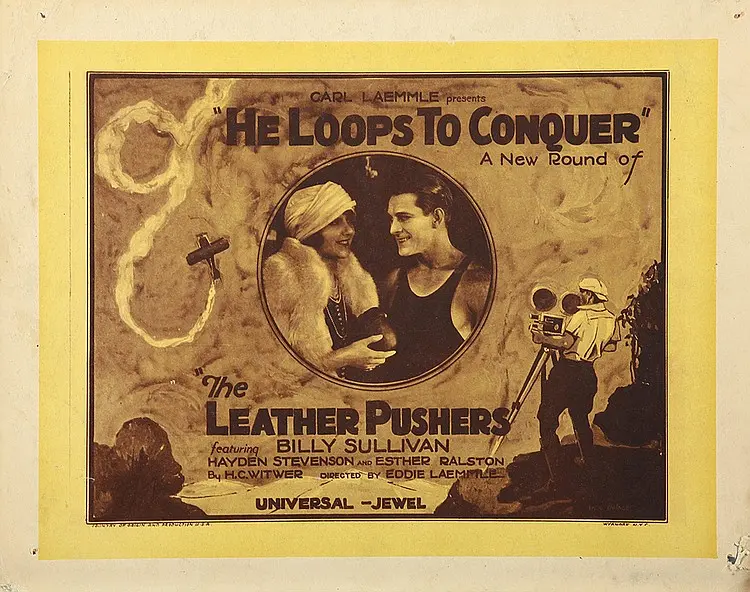
In 'He Loops to Conquer', the narrative is a vibrant tapestry of boxing and Hollywood, interwoven with the personal ambitions and moral dilemmas of its protagonists. Joe Murphy, a seasoned boxing manager, finds himself at a crossroads, his reputation and success hanging in the balance. He takes under his wing a promising protégé, Kid Robertson, who sparks a new chapter in their lives.
Joe's world is further complicated when Kid and his trainer, Ptomaine Tommy, are thrust into the spotlight by a motion-picture unit. The Kid's charm and charisma immediately catch the eye of the star, leading to a whirlwind of sudden fame and a false invitation to appear in her film. However, the close-up shots and harsh Klieg lights take a toll on the Kid's eyes, a small yet poignant detail that hints at the fragility of their newfound stardom.
Amidst the chaos and conflicting loyalties, another character emerges: a rival who seeks to undermine Joe and Kid. This nemesis orchestrates a elaborate scheme, involving a dangerous and seemingly random stunt in the air to disorient the Kid and ensure he loses the big fight. The climax is a tense and heart-wrenching sequence, where the Kid fights against the odds and manages to win by sheer luck. The victory, however, is bittersweet, overshadowed by the manipulations and the personal cost incurred.
The film's visual style is a harmonious blend of gritty realism and dreamy romance. The boxing scenes are meticulously choreographed, capturing the raw intensity and vulnerability of the sport. The cinematography, particularly when transitioning between the boxing ring and the film studio, highlights the stark contrasts between the two worlds. The use of close-ups in the film scenes emphasizes the emotional depth and the isolation felt by the characters.
Performance-wise, Ruth Dwyer and Billy Sullivan deliver standout performances, their chemistry and depth of emotion adding significant weight to their roles. Dwyer's depiction of the star's complex character, torn between professional ambition and genuine affection, is particularly nuanced. Sullivan's portrayal of the Kid, both his resilience and the toll his journey takes, is equally compelling. The supporting cast, including Edgar Kennedy and Hayden Stevenson, also contributes to the rich tapestry of the film, each bringing their unique energy and talent to the story.
The script, penned by H.C. Witwer and Scott Darling, is tightly woven, with a narrative that is both unpredictable and satisfying. The plot is peppered with unexpected twists, such as the film unit's appearance and the rival's scheme. These elements keep the audience engaged and invested in the outcome. However, the pacing occasionally feels uneven, with some scenes lingering longer than necessary, which could have been tightened for a more streamlined narrative.
Themes of redemption, loyalty, and the pursuit of fame are central to 'He Loops to Conquer'. The film explores the moral complexities of pursuing a dream, the sacrifices made in the pursuit of success, and the fragility of relationships. These themes resonate with a broader audience, reflecting the universal human experience of striving for something greater, even at the cost of personal well-being.
Comparatively, 'He Loops to Conquer' shares thematic similarities with films such as 'Breaking Into Society', where the crossover between the film industry and other professions is a key element. 'The Purple Riders' also delves into the world of professional sports, albeit in a different context, offering a parallel to the boxing scenes in 'He Loops to Conquer'. 'Hey, Rube!' brings a comedic element that could have complemented the dramatic tension in certain scenes, while 'An Amateur Orphan' and 'In Honor's Web' both explore similar themes of personal growth and societal expectations.
Despite its flaws, 'He Loops to Conquer' is a captivating and emotionally resonant film that successfully blends the worlds of boxing and Hollywood. It is a testament to the power of storytelling and the ability of a well-crafted script to transport viewers into the shoes of its characters. While it may not be without its quirks, it remains a noteworthy entry in the genre, offering a rich and engaging cinematic experience.
IMDb 6.5
1928
Community
Log in to comment.