DbcultAccessing Vault...
Cult Review
Senior Film Conservator
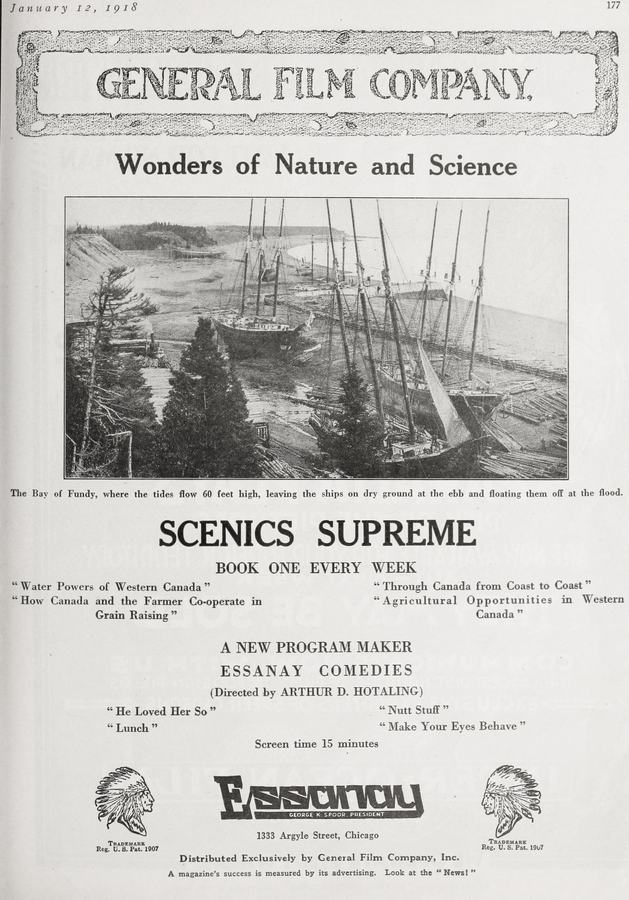
Arthur Hotaling's 1914 vignette unfolds like a Swiss watch mechanism—precise, intricate, and capable of catastrophic malfunction when one gear slips. The husband, portrayed with jaw-clenching rigidity, exists in a perpetual state of emotional siege. Every rustle of his wife's skirt becomes an imagined betrayal, every exchanged glance with the butler a cryptographic message. His tragedy lies not in the letter's contents, but in his inability to imagine love beyond possession. The film's genius manifests in how it weaponizes domestic spaces: the foyer where letters change hands, the bedroom where identities are discarded with clothing, the dining room where shadows conspire to rewrite reality.
Central to this moral fable is the emerald dress—an object imbued with transformative power. When the cook wraps herself in her mistress's garment, she doesn't merely wear fabric; she dons the husband's psychological projection. The gown functions as a cinematic doppelgänger, revealing how easily identity becomes transferable in eyes clouded by jealousy. This sartorial sleight-of-hand predates Hitchcockian wrong-man tropes by decades, yet achieves profound tension through simplicity. The dress's reappearance in the dim dining room—illuminated by a single gas lamp's sulfurous glow—creates a Vermeer painting gone grotesque.
"The revolver's report isn't merely gunfire; it's the sound of patriarchy's scaffolding collapsing. That the bullet strikes nothing but the husband's own dignity makes this the most devastating near-miss in silent cinema."
Uncredited actors weaponize physical vocabulary with astonishing nuance. The butler's obsequious posture melts into conspiratorial grace when alone with the cook—a choreography of class rebellion. Watch how the cook's 'death' scene mocks theatrical conventions: her collapse echoes Sarah Bernhardt's Camille, yet her suppressed smirk telegraphs the farce. This duality reflects silent film's unique capacity for simultaneous tragedy and satire. Their laughter in the denouement isn't cruelty, but the giddy relief of servants witnessing mastery's unraveling.
The film's DNA surfaces in later works exploring jealousy's hall of mirrors. When the cook dons her mistress's identity, we witness an early blueprint for Hoodoo Ann's identity play, though without supernatural pretext. The husband's refusal to read past the salutation finds its grim counterpart in The Lie's fatal miscommunications. Yet Hotaling's approach remains distinct—his climax avoids moralizing, instead bathing in uncomfortable laughter as the servants rise literally and metaphorically from the floor.
Confined almost entirely to the bourgeois townhouse, Hotaling transforms domestic space into a pressure cooker of class anxiety. The servants' storyline isn't subplot but counterpoint—their stolen embrace in the dining room becomes a silent critique of the marriage it mirrors. Notice how the cook's appropriation of the dress parallels the husband's appropriation of his wife's autonomy. Both acts are violations disguised as entitlement. This layering elevates the film beyond farce into sociological vivisection, anticipating the class critiques in A Doll's House.
The patriarch's arrival embodies delicious irony—his presence resolves the plot while exposing generational myopia. That he enters arm-in-arm with his daughter visually echoes the cook-butler embrace, suggesting cyclical patterns of misinterpretation. His genial cluelessness (does he not register his son-in-law's pallor or the revolver's scent?) becomes Hotaling's final skewering of male perception.
Hotaling's visual syntax merits frame-by-frame dissection. The dining room shooting employs Rembrandt lighting not for beauty but obfuscation—shadows swallow faces until identity becomes conjecture. Contrast this with the wife's departure scene: morning light floods the bedroom, illuminating her innocence while the husband retreats into wardrobe shadows to brood. Most revolutionary? The letter's destruction. As paper snowflakes settle on the rug, the camera lingers on a fragment showing "...arriving on the 3:15 train". This unread evidence haunts the frame like Chekhov's unfired gun.
"In a medium without dialogue, the tearing of paper resonates like a scream. That ragged sound—achieved through visual suggestion alone—remains one of silent cinema's most violent moments."
When the husband places the revolver on his desk, Hotaling subverts narrative expectation. The weapon isn't Chekhov's gun—it's Chekhov's red herring. Its actual discharge becomes anti-climax, while the real narrative gun—the unread letter—detonates silently. This structural audacity highlights silent film's unique capacity for visual misdirection. The bullet's trajectory matters less than the trajectory of the husband's shame as he realizes he shot at a phantom of his own creation—a theme later explored in The Bar Sinister's psychological duels.
The cook's giggling confession—"We fooled you proper, sir!"—lands like a live wire. This isn't comic relief but radical class commentary. Their laughter dismantles the household's power structure more effectively than any bullet. Hotaling dares us to laugh at the husband's devastation, implicating viewers in the schadenfreude. This tonal tightrope walk between cringe and comedy predates Lubitsch by a decade, yet shares his fascination with embarrassment as social leveler.
Seen through contemporary eyes, the film's 12-minute runtime feels like a haiku of hysteria. Its economy makes later infidelity dramas like Stormfågeln seem verbose. Within its compressed architecture lies all the grandeur and pettiness of human suspicion—a testament to silent cinema's ability to weaponize gesture. When the husband shreds the letter, fingers trembling in close-up, we witness Method acting avant la lettre.
Hotaling constructs the townhouse as three-ring circus of anxiety: upstairs bedrooms for private despair, main floors for public performance, and the basement kitchen where subversion brews. The staircase becomes a vertical axis of tension—wife descending in innocence, husband ascending with murderous intent. This architectural dramaturgy finds echoes in A School for Husbands, though without Hotaling's claustrophobic precision. Most telling? The absence of children. This is a marriage reduced to its barren essence—possessiveness without progeny.
That crucial missive functions as Rashomon in miniature. For the wife: a daughter's dutiful correspondence. For the husband: erotic manifest. For the audience: tragicomic MacGuffin. Hotaling lingers on the wife's fingers as she reaches for it—not furtively, but with the casual grace of someone expecting utility bills. This mundane expectation makes the husband's interception feel like sacrilege. The torn fragments become the film's true ghosts, whispering alternative narratives from the Persian rug.
"What distinguishes Hotaling from his contemporaries isn't tragedy averted, but dignity obliterated. The revolver's bullet may miss, but the husband's credibility lies fatally wounded."
He Loved Her So resonates through cinematic history like a tuning fork struck in 1914 whose vibrations still hum. The husband's paranoid gait foreshadows Gene Hackman's wiretapper in The Conversation. The cook's survival as performance art prefigures the meta-theatrics of Scream. Even the mistaken identity through clothing finds brutal inversion in Psycho's finale. Yet the film remains stubbornly itself—a darkly sparkling gem from an era when cinema was inventing its language daily. In an age drowning in content, its 12 minutes stand as monument to narrative efficiency: proof that eternity can be captured in a single, unraveling moment.
As the screen fades on the husband's ashen face, the cook's giggles echoing off mahogany panels, we confront silent comedy's radical core. Unlike Chaplin's pathos or Keaton's stoicism, Hotaling offers cringe as catharsis. That laughter—equal parts triumphant and cruel—doesn't resolve the marriage's fractures. It merely papers over them like fresh wallpaper hiding structural cracks. This refusal of easy redemption makes the film feel startlingly modern. A century later, we still inhabit houses where letters go unread, dresses carry dangerous symbolism, and the people we love most remain terrifyingly opaque—even when standing in full light.
IMDb —
1921
Community
Log in to comment.