DbcultAccessing Vault...
Cult Review
Senior Film Conservator
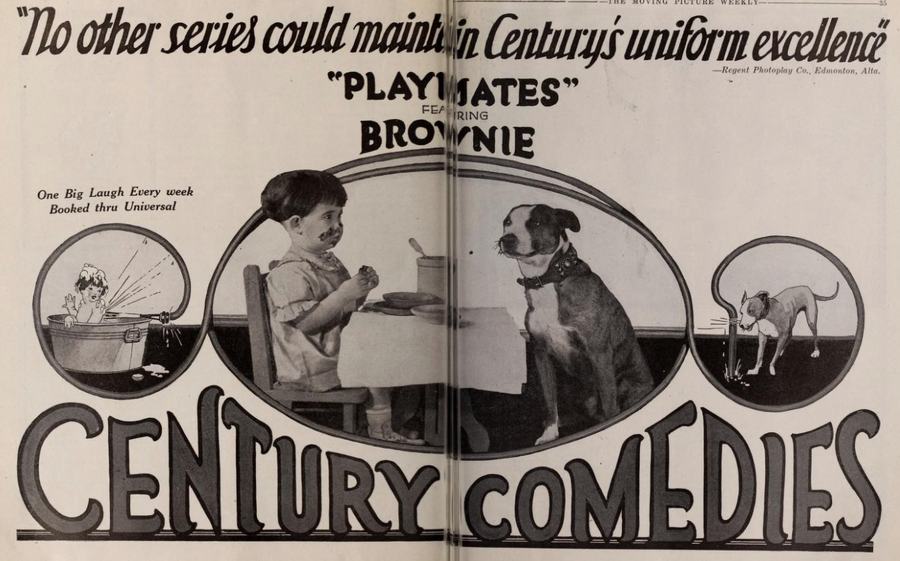
The first time I watched Playmates I was folding my own laundry at 2 a.m., half-asleep, when Baby Peggy’s saucer eyes peered through 102-year-old nitrate and jolted me awake like cold rinse water. Silent shorts rarely survive with their gags intact; here, every pratfall feels freshly inked. Fred Hibbard—veteran of hundreds of one-reel Mack Sennett rampages—trades custard pies for something tender yet anarchic, a hybrid of Dickensian foundling plot and Keystone mayhem, all condensed into a breathless 12 minutes.
Plot-wise we’re in nursery-noir territory. Betty, played by Florence Lee with the stoic grace of a Depression-era Madonna, is the working mother cinema forgot to canonize. Her dilemma—laundry wages versus maternal instinct—unspools without a single intertitle of exposition; we read the calculus of rent and rationed time in the way she smooths her apron before surrendering her child to institutional linoleum halls. The asylum itself is framed like a debtors’ prison: high windows, barred shadows, a matron whose face we never see—only the jangle of her keys. Hibbard refuses melodrama; instead, he lets the camera linger on the empty basket that will soon smuggle a human cargo.
Enter the kid—Baby Peggy Montgomery, four years old and already a veteran of 50 shorts. She doesn’t act; she detonates. Her escape is a masterpiece of spatial comedy: a bedsheet rope, a laundry slide, gravity obeying punch-clock physics. The descent through the chute is shown in one diagonal matte shot that makes the orphanage resemble a cut-away dollhouse. When she plops into the basket, the editing rhythm snaps like a clothespin: we cut to Betty outside, oblivious, yanking her burden uphill while the child—now hidden—becomes contraband hope.
The bachelor’s villa is a mausoleum of bourgeois loneliness. Persian rugs, antlered taxidermy, a gramophone that never plays. His valet is a dog—Brownie, a scruffy mix part-Airedale, part-myth. Canine stardom usually ages poorly; tricks feel exploitative. Yet Brownie’s bath-time sequence is a marvel of empathetic choreography. He drags the tin tub across flagstones, nudges the hot-water kettle with calculated snout-pushes, then circles a four-panel screen like a stagehand setting scenery. When he dunks the baby, the gag isn’t the splash but the privacy screen toppling to reveal the absurd tableau: a dog performing maternal labor while the human adults chase paychecks. Hibbard winks at us—parenthood is learned behavior, species optional.
Street abduction sequences in early cinema often sag under moral panic; here, the tempo accelerates into slapstick fugue. The cop—Zip Monberg, rubber-limbed—is both threat and straight man. Note the geography: the wagon marked “Children’s Society” waits in front of a pharmacy advertising laudanum. A culture that medicates adults and warehouses kids is lampooned in one wide shot. Brownie’s rescue involves a baby-switch so audacious it borders on social commentary: find a double, swap the commodity, game the system. The substitute infant—clearly a boy in lace bonnet—gurgles at the camera, breaking the fourth wall as if to ask, “Which of us is disposable?”
Technically, the film is a lesson in economy. Hibbard shoots interiors with side-light that sculpts faces into Cameo brooches; exteriors are over-exposed California scrub that bleaches the frame like drought. The final shot—triple layer of action: foreground dog tugging trousers, mid-ground child hugging knee, background Betty clutching bachelor’s arm—achieves deep-focus comedy a decade before The Rules of the Game. No iris, no fade, just a hard cut to black that feels like a snapped clothespin on the line of life.
Comparisons? If Pollyanna whispers that optimism is moral victory, Playmates yells that family is whoever shows up with a wet nose and a clean diaper. Where The Blasphemer wrestles with sin and punishment, Hibbard shrugs: salvation arrives via laundry basket. And while A Butterfly on the Wheel indicts marriage as bourgeois cage, here matrimony is accidental, canine-brokered, and weirdly utopian.
Cinephiles hunt lost Griffiths or Murnaus; I mourn the absence of more Hibbard. His career vaporized in 1923 after a contract dispute, leaving Playmates a orphaned relic. Yet contained within its 300-odd seconds is the entire grammar of modern screen comedy: the disruptive child, the pet as plot engine, the bureaucratic mix-up, the last-minute emotional coup. Watch it on any platform daring enough to stream 9.5 mm dupes—preferably while your own laundry spins. You’ll find yourself checking baskets for runaway miracles.
Restoration note: the surviving print, held by EYE Filmmuseum, bears Dutch intertitles that translate the baby’s final plea as “I want the man for my papa.” The American press sheet quotes it differently: “Make him my daddy now.” The ambiguity is perfect; desire outruns language, whether whispered or printed. In that gap lives the enduring magic of silent cinema—an open basket awaiting whatever wild, wriggling future we dare to smuggle through time.
IMDb —
1927
Community
Log in to comment.