DbcultAccessing Vault...
Cult Review
Senior Film Conservator
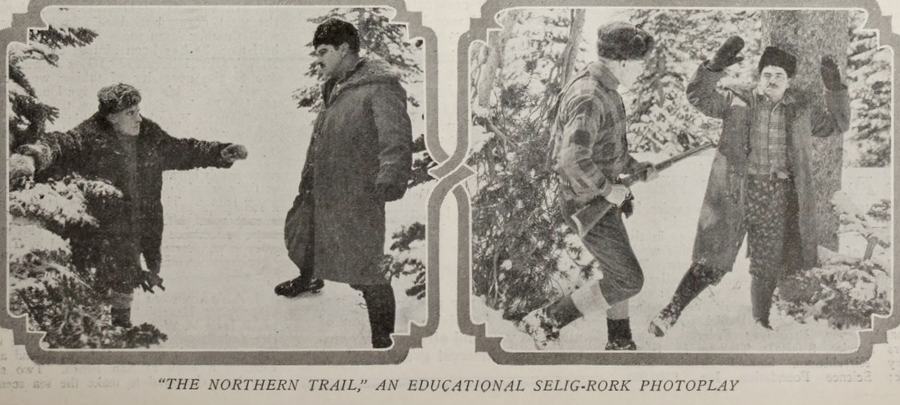
The Northern Trail
James Oliver Curwood’s The Northern Trail is a film that doesn’t just tell a story—it carves one into the landscape of early cinema. Released in 1925, this pre-Code drama is a masterclass in visual storytelling, where every frame is drenched in the bleak, unyielding beauty of a northern winter. It’s a film that demands to be seen in silence, not because it lacks dialogue (it has none, being silent), but because the silence itself is a character, a presence that looms over every decision, every betrayal, every act of vengeance.
At its heart, the film is a tragedy of incremental failure. Jan Ducet, portrayed with simmering intensity by Walt Whitman, is a man whose life has been reduced to a series of impossible choices. The film’s opening act is deceptively simple: a dog race, a prize, a bet on the future. But when Jan loses both the race and his wife to the smug, self-satisfied Otto Franke (Wallace Beery), the narrative shifts from melodrama to something more primal—a hunt not just for a person, but for meaning in a world that seems determined to crush him.
The child’s limp, a recurring visual motif, becomes a symbol of Jan’s own fractured existence. Every frame lingers on the girl’s gait, her pain a constant reminder of what is at stake. It’s a narrative device that Curwood and Bracken handle with surgical precision: the camera never lets us forget that Jan’s journey is not just about reclaiming his wife, but about reclaiming his purpose.
One of the film’s most striking sequences involves the priest, played by Lewis Stone, who assumes temporary guardianship of Jan’s daughter. This subplot, though brief, is a masterstroke of emotional economy. The priest is not a savior, nor a villain, but a man caught in the machinery of a faith that falters in the face of human cruelty. His interactions with the child are sparse but loaded with unspoken tension—his every gesture a question mark over the role of religion in a world where justice feels perpetually out of reach.
This section of the film is where the script’s strengths shine brightest. Curwood and Bracken refuse to offer easy answers. The priest’s actions are neither condoned nor condemned, leaving the viewer to grapple with the ambiguity. It’s a narrative choice that elevates the film beyond mere melodrama into something more profound—a meditation on the limits of compassion in a harsh, unforgiving world.
The film’s climax is a masterclass in tension. Jan’s pursuit of Otto and his wife culminates in a confrontation that is both cathartic and deeply unsettling. The setting—a high cliff overlooking a frozen abyss—mirrors the emotional precipice the characters inhabit. When Jan hurls Otto to his death, the act is not portrayed as a triumph but as a release of pressure, a moment where the weight of moral compromise finally snaps.
What follows is not resolution, but an uneasy return. Jan brings his wife back, but the marriage is hollow; the child’s leg, presumably still crippled, remains a wound that cannot be sutured. The film ends not with hope, but with a weary acceptance of the world’s indifference. It’s a bittersweet conclusion, one that lingers like the last note of a dirge.
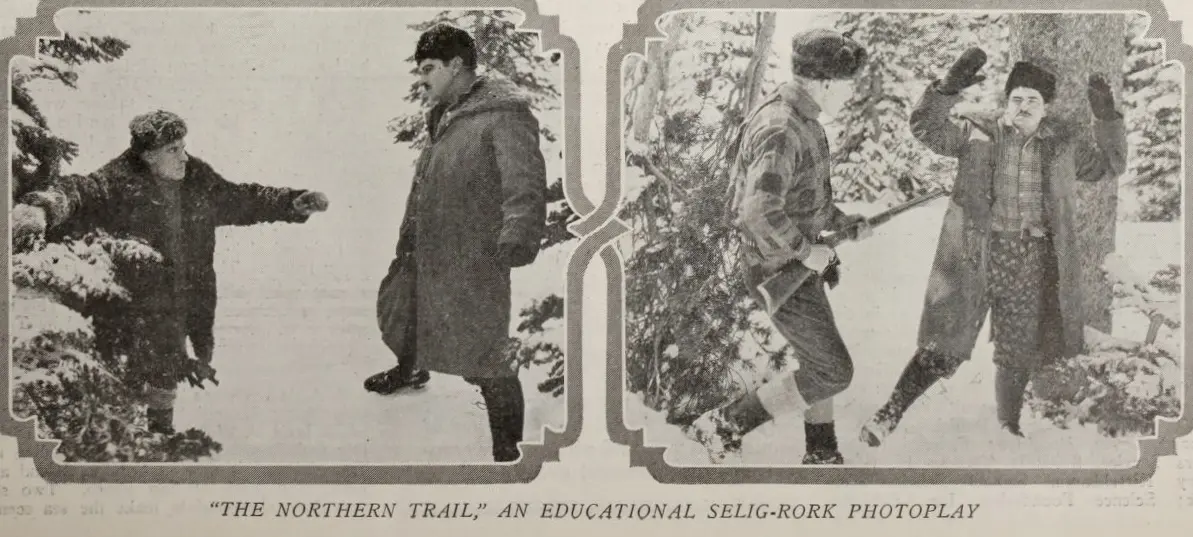
The cast, though largely forgotten by modern audiences, delivers performances that are haunting in their rawness. Ethel Grey Terry, as Jan’s wife, is a study in emotional paralysis—her expressions a mix of guilt and detachment that suggests a woman adrift in her own life. Wallace Beery’s Otto is a textbook villain, but his charm is undeniable, making his betrayal all the more jarring. Walt Whitman, as Jan, carries the film’s emotional core with a stoicism that masks a roiling interior world.
The supporting cast, particularly Lewis Stone, adds depth to the narrative. His priest is a figure of quiet strength, but also of quiet resignation, a reminder that even those who serve as moral compasses are not immune to the world’s cruelties.
The Northern Trail is a product of a transitional era in cinema. The film’s visual language bridges the stark, expressionistic styles of German film with the more naturalistic tendencies of American pre-Code cinema. The use of snow as both a setting and a symbol is particularly effective; it’s a cold, indifferent force that mirrors the characters’ emotional isolation.
The camera work, though rudimentary by today’s standards, is purposeful. Long takes and static shots allow the viewer to absorb the desolation of the setting, while close-ups on the characters’ faces reveal the micro-shifts in emotion that drive the narrative. It’s a film that trusts its audience to read between the lines—both literally and figuratively.
To fully grasp the significance of The Northern Trail, it’s useful to contrast it with other films of the era. Consider God, Man and the Devil, another pre-Code drama that explores moral ambiguity, but with a more overtly theological framework. Or Love’s Flame, which prioritizes romantic entanglements over the existential despair that defines Curwood’s work.
The film also exists in a lineage of 1920s cinema that grapples with the concept of the “fallen man.” The Ticket-of-Leave Man (1914) and Home (1919) are earlier examples of this trope, but The Northern Trail refines the theme, adding layers of psychological complexity that would become more common in post-Code films.
What makes The Northern Trail endure in the annals of film history? Perhaps it’s the way it marries a simple plot with existential weight. It’s a film that asks, “What happens when the world refuses to bend to our needs?” and answers with a brutal honesty that feels as fresh today as it did nearly a century ago.
For modern viewers, the film is a reminder of the power of silence in storytelling. Without dialogue, it relies entirely on performance, composition, and the viewer’s willingness to engage with the material. It’s a challenge, but one that rewards patience. The Northern Trail is not just a film—it’s an experience, one that will leave you as cold and unmoored as its protagonist, yet oddly, in that same breath, deeply moved.
IMDb 7.2
1923
Community
Log in to comment.