DbcultAccessing Vault...
7.6/10
Senior Film Conservator
A definitive 7.6/10 rating for a film that redefined the boundaries of cult cinema. Weber and Fields remains a cornerstone of transgressive art.
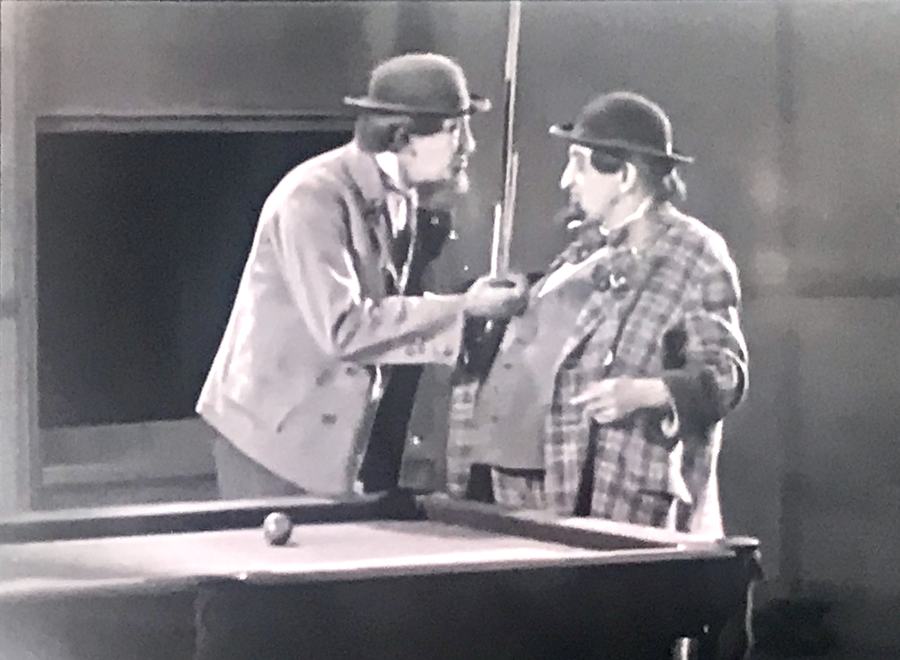
To witness the 1923 short featuring Joe Weber and Lew Fields is to stand at the precipice of a seismic shift in human expression. This isn't merely a film; it is a sonic excavation. Long before the industry succumbed to the monolithic arrival of 'The Jazz Singer', Lee De Forest was tinkering with the very DNA of celluloid, attempting to marry the visual ghost to the auditory spirit. In this specific routine—the legendary pool hall skit—we see the culmination of decades of Vaudeville mastery meeting the nascent, crackling potential of sound-on-film technology. The result is a work that feels both hauntingly ancient and startlingly modern.
The setting is deceptively simple: a billiard room. But within this space, Weber and Fields perform a linguistic ballet that relies entirely on the synchronization of their 'Dutch' dialect with their physical slapstick. Unlike the silent grace of Buster Keaton in The Scarecrow, where the humor is derived from the geometry of the body, Weber and Fields demand that we hear the collision of their words. The Phonofilm process, though rudimentary by today's standards, manages to catch the staccato rhythm of their bickering, a cadence that would have been entirely lost in a silent medium.
In 1923, the cinematic landscape was dominated by visual storytelling. Epics like Severo Torelli or the adventurous serials like The Tiger's Trail pushed the boundaries of what could be seen, but the world remained mute. When Lee De Forest introduced his Phonofilm, he wasn't just adding a soundtrack; he was introducing a new dimension of reality. The pool hall routine serves as the perfect laboratory for this experiment. Because Weber and Fields were already masters of the 'Mike and Meyer' personas, their performance didn't need to change for the camera; the camera simply had to learn how to listen.
The lexical diversity of their banter, filled with malapropisms and phonetic distortions of the English language, provides a rich texture that silent intertitles could never fully replicate. While a film like Wife Number Two relied on dramatic facial expressions to convey domestic strife, Weber and Fields used the tonality of their voices to create a sense of character. You can hear the exasperation in Fields' voice, the confused innocence in Weber's response—it is a humanization that was previously unavailable to the masses who couldn't see them live on Broadway.
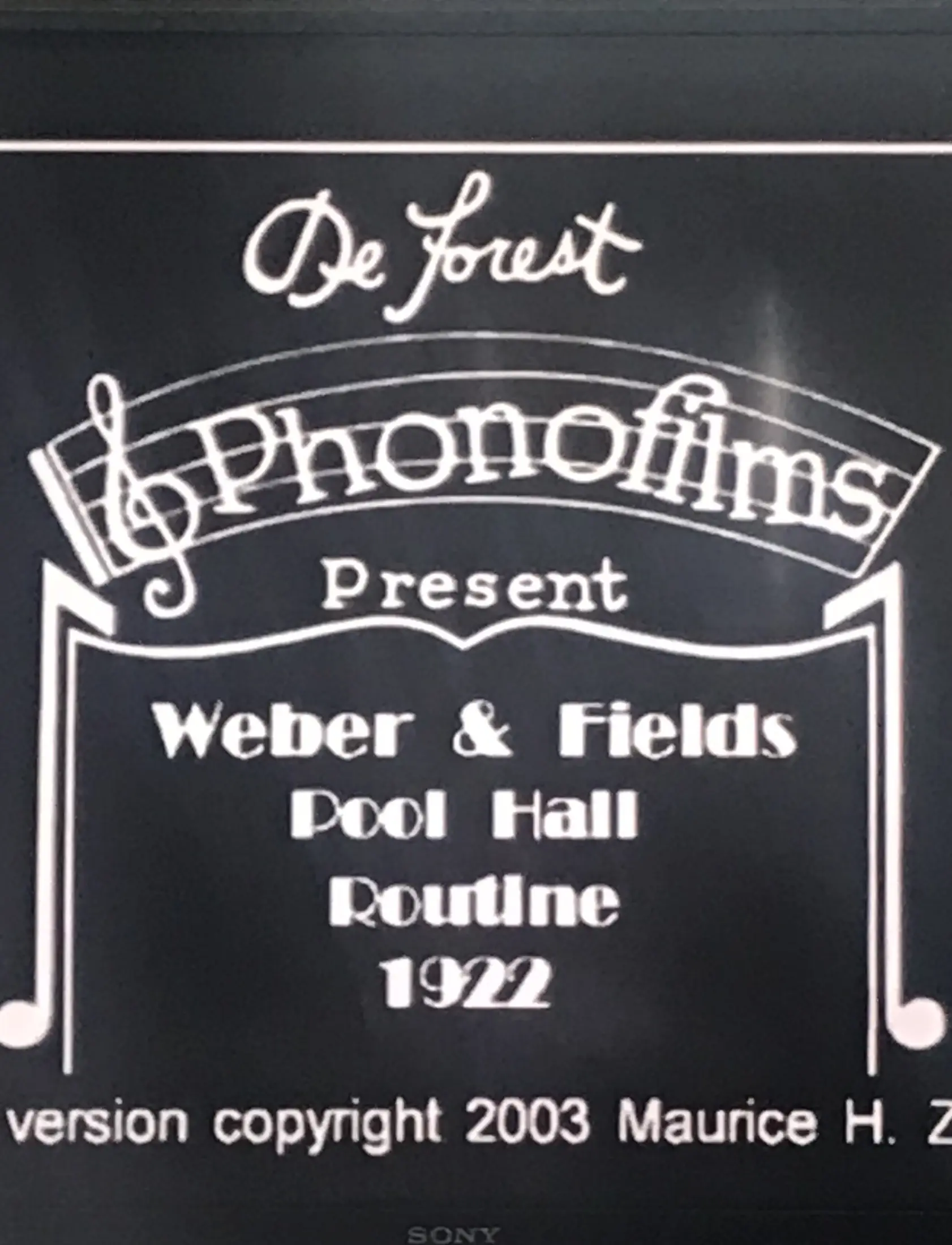
There is a certain raw beauty in the imperfections of this short. The hiss and pop of the early sound recording act as a layer of historical patina, reminding us that we are watching a medium in its infancy. It lacks the polished sheen of The Better Woman or the sophisticated narrative structure of Let's Elope. Instead, it offers an unvarnished look at performance art. The pool hall routine is chaotic, filled with the clacking of billiard balls and the shuffling of feet, all captured with a fidelity that must have seemed like sorcery to a 1923 audience.
Consider the contrast between this and the visual decadence of The Devil's Wheel or the ethereal qualities of La reine Lumière. Those films were perfecting the art of the image. Weber and Fields were perfecting the art of the presence. By capturing their voices, De Forest gave them a form of immortality that transcended the visual. We aren't just watching actors play a part; we are hearing the echoes of a lost era of comedy.
The significance of this film extends beyond its technical achievements. It represents the transition of Vaudeville into the mechanical age. For years, performers like those in Once Over or the international curiosities like Jön a rozson át! had to adapt their acts for different audiences. But with film, the performance became static, a definitive version that could be played anywhere. This changed the nature of comedy itself. The improvisational feel of the pool hall routine is preserved, yet it becomes a script for future generations to study.
When we look at the themes of desire and societal expectations in Youth's Desire, we see a cinema grappling with heavy emotions. Weber and Fields, conversely, deal with the absurdity of the mundane. A game of pool becomes a metaphor for the immigrant experience in America—misunderstandings, physical confrontations, and the eventual, begrudging reconciliation. It is as socially relevant as the satirical bite of A Prohibition Monkey, albeit delivered through the lens of traditional comedy tropes.
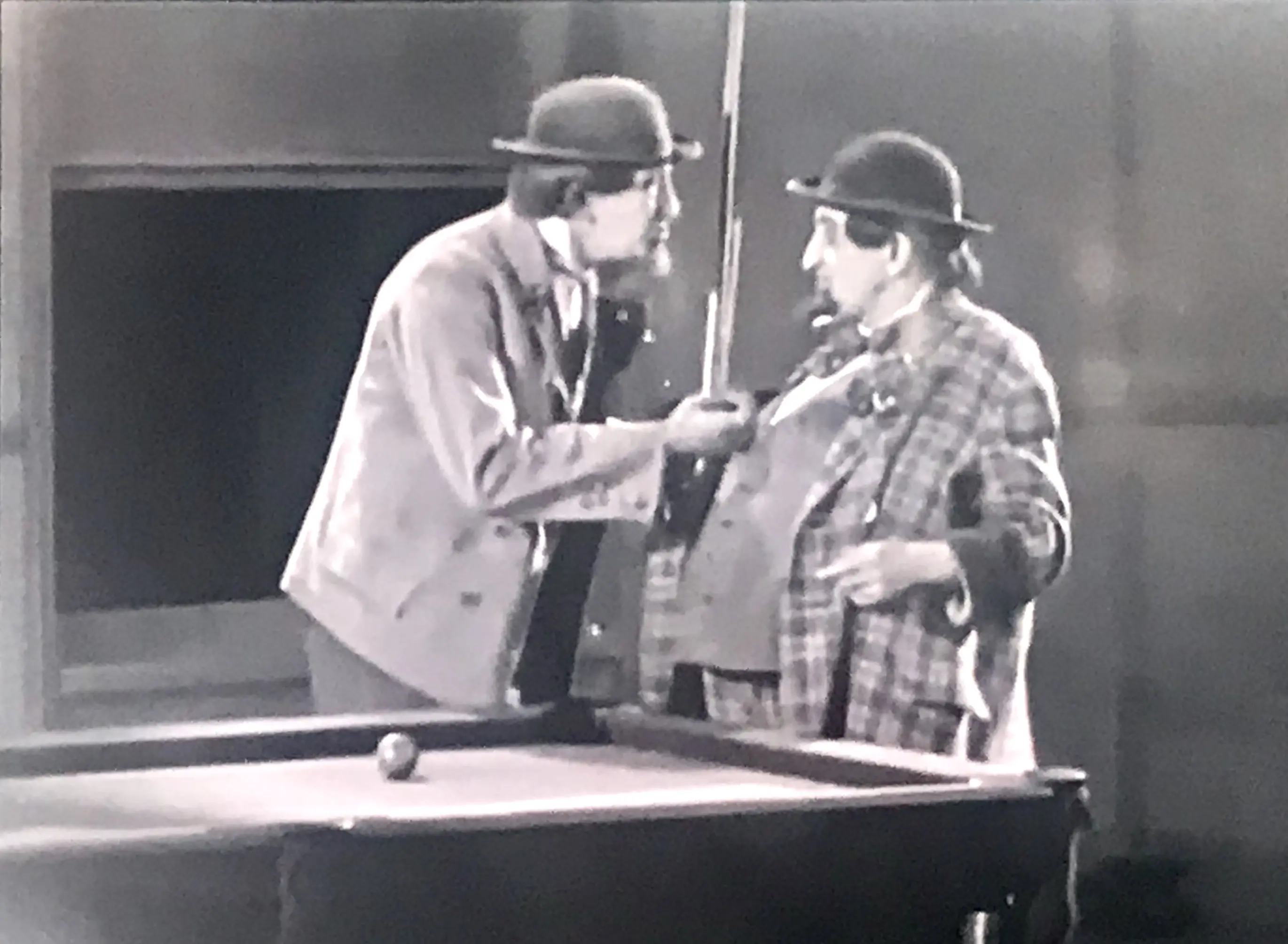
While Lee De Forest is often remembered as an inventor, his role here is essentially that of a documentarian. He doesn't use the camera to tell a story; he uses it to witness one. This is a stark departure from the stylistic flourishes seen in Playing with Fire or the suspenseful pacing of The Midnight Burglar. De Forest’s camera is static, almost reverent, allowing the performers to own the frame. The power of the short comes from this restraint.
He understood that the 'sound' was the star. If he had moved the camera or employed rapid editing, the delicate synchronization might have been lost to the viewer's eye. By keeping the shot wide and the action centralized, he ensures that every word from Weber and Fields lands with the intended impact. It is a masterclass in functional filmmaking—using technology not to overshadow the talent, but to amplify it.
As we contemplate the 'what ifs' of cinema history—much like the existential questioning found in the film If—one cannot help but wonder how the industry would have evolved if De Forest’s process had been adopted more quickly. The Weber and Fields short is a tantalizing glimpse into an alternate 1920s where sound was an integrated part of the artistic palette rather than a late-stage addition. It challenges the notion that silent film was a 'pure' art form that was corrupted by sound; instead, it suggests that sound was always the missing piece of the puzzle.
The pool hall routine remains a cornerstone of comedic history. It influenced the Marx Brothers, Abbott and Costello, and countless other duos who relied on the interplay of voice and body. The high lexical diversity of their dialogue, though rooted in the specific cultural moment of early 20th-century New York, possesses a timeless quality. It is the sound of two people trying to understand each other in a world that is loud, confusing, and inherently funny.
In conclusion, the Weber and Fields Phonofilm is an essential viewing experience for anyone interested in the archaeology of cinema. It is a vibrant, noisy, and utterly charming piece of history that refuses to stay in the past. It demands to be heard. Its importance lies not just in its status as a 'first', but in the sheer joy of the performance it captures. In the hands of Joe Weber and Lew Fields, a simple game of pool becomes a grand exploration of the human condition, punctuated by the crack of a cue ball and the sharp, rhythmic wit of two masters at the height of their powers. This is cinema in its most visceral, auditory, and enduring form.
IMDb —
1927
Community
Log in to comment.