DbcultAccessing Vault...
Cult Review
Senior Film Conservator
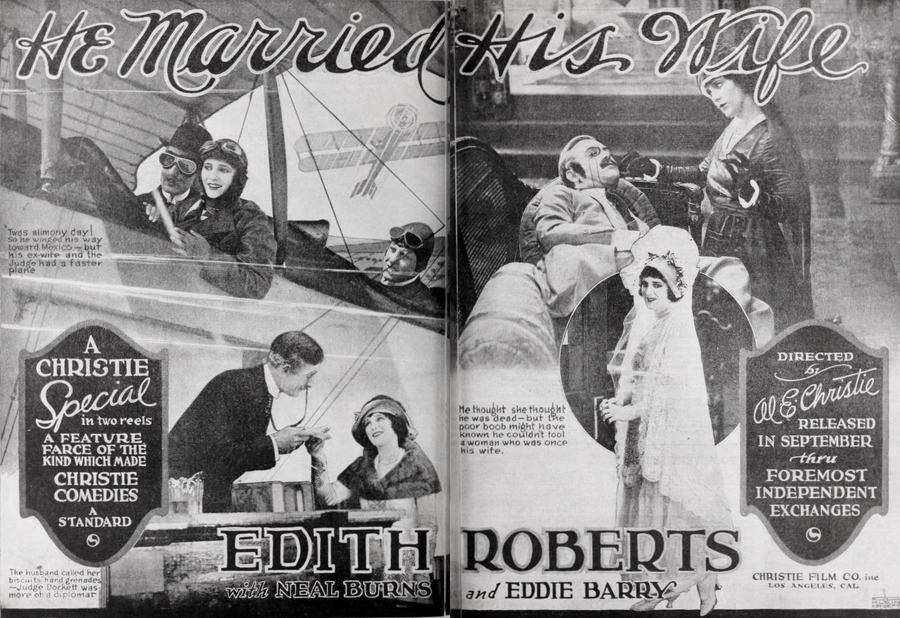
In the bustling landscape of early 20th-century cinema, where the moving picture was still finding its voice and defining its genres, there emerged a delightful, often chaotic, form of storytelling that captivated audiences: the silent comedy. Among these effervescent offerings, He Married His Wife, a 1919 creation featuring the versatile Neal Burns, stands as a testament to the era's ingenuity in crafting intricate farces out of the most relatable human foibles. This isn't merely a film; it's a kaleidoscopic journey through matrimonial mayhem, a legal labyrinth, and an exhibition of preposterous schemes designed to evade the dreaded alimony payment. It underscores the timeless appeal of a good caper, especially when the stakes involve one's entire fortune and, ironically, one's former spouse.
The narrative thrust of He Married His Wife is rooted in a premise as old as divorce itself: a man's desperate attempt to avoid financial obligation. Neal, our protagonist, finds himself saddled with a hefty $300-a-week alimony payment to his newly ex-wife, Edith. This sum, considerable for 1919, propels him into a spiral of increasingly outlandish stratagems. The film opens with a bang, literally, as Neal's initial escape attempt via airplane is thwarted in a spectacular chase sequence. This early display of cinematic daring, a precursor to the grander action spectacles of later decades, immediately sets a tone of high-octane hijinks. It's a marvel to consider the technical challenges of staging such a scene in an era when special effects were rudimentary, relying instead on practical stunts and resourceful filmmaking. While not on the epic scale of a film like The Diamond from the Sky or the historical grandeur of Spartacus, this early aerial stunt demonstrates a nascent ambition to thrill audiences beyond simple comedic set-pieces.
Following this aerial debacle, Neal pivots to a more theatrical approach: faking his own death. Leaving his clothes on a beach, he engineers a convincing scene of suicide, a darkly comedic twist on the classic disappearing act. This elaborate deception, however, backfires spectacularly. The legal system, ever the blunt instrument, declares him officially deceased, and in a cruel twist of fate, Edith, his ex-wife, inherits everything. This central irony forms the bedrock of the film's second act, transforming Neal from a man trying to escape his wife into a man desperate to re-marry her to reclaim his fortune. It’s a brilliant comedic reversal, forcing the instigator of the chaos to become its primary victim. The film, in its own lighthearted way, touches upon the absurdities of legal precedent and the unforeseen consequences of one's own machinations, themes that more dramatic films like Law of the Land might explore with gravitas, but which He Married His Wife imbues with delightful levity.
Neal's subsequent attempt to win Edith back involves a disguise – whiskers, naturally – and a staged heroic rescue from a pair of hired thugs. This classic trope of mistaken identity and manufactured heroism is executed with a flair that keeps the audience chuckling. The physical comedy inherent in the 'sham fight' is quintessential silent film slapstick, relying on exaggerated movements and facial expressions to convey the humor. However, the plan unravels when one of the thugs, in a moment of misplaced empathy, apologizes to Edith for striking her 'husband' so hard, inadvertently 'spilling the beans.' This moment of unexpected honesty from a minor character is a stroke of comedic genius, puncturing Neal's carefully constructed illusion with delightful abruptness. Edith, far from being a passive victim, reveals her own intelligence and agency by playing along, nursing Neal back to health and accepting his proposal, all while being fully aware of his true identity. Her quiet cunning provides a wonderful counterpoint to Neal's boisterous, often clumsy, scheming. This dynamic between the sexes, where the woman often proves to be the more astute player, is a recurring motif in early cinema, seen in various forms from the independent spirit of Miss U.S.A. to the more dramatic narratives of Betsy Ross.
The wedding scene itself is a masterclass in escalating absurdity. With all the 'guests' being detectives and the 'minister' an undercover operative, the tension, though comedic, is palpable. Edith's dramatic 'I don't' at the altar, followed by the grand reveal of Neal's identity, serves as the triumphant climax of her quiet revenge. Just when it seems Neal is utterly defeated, the narrative throws yet another curveball. His lawyer, poring over an old will, discovers a clause stipulating that any family quarrels must be resolved, or the entire inheritance goes to charity. This final, farcical twist forces Neal and Edith back together, their remarriage officiated by the very judge who granted their divorce. It's a cyclical narrative, ending where it began but with a newfound, if reluctant, reconciliation. This kind of convoluted legal loophole and forced resolution speaks volumes about the societal anxieties and legal complexities of the era, albeit filtered through a comedic lens. The ingenuity of the plot, penned by Neal Burns himself, highlights the creative ferment of silent film screenwriting, where visual gags and rapid plot developments were paramount.
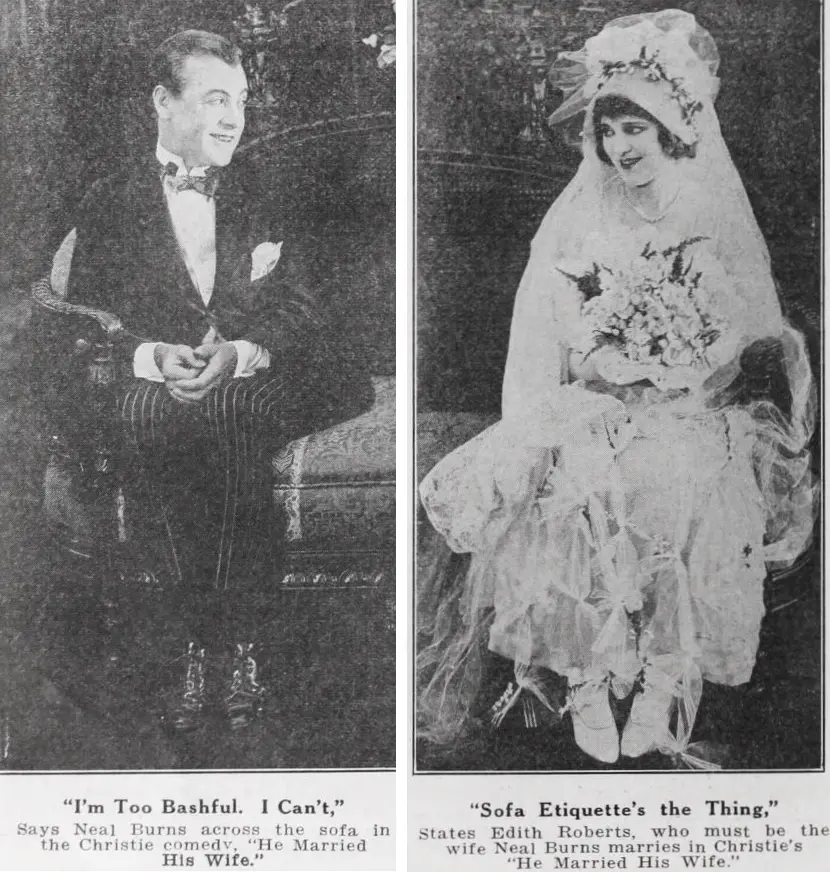
Neal Burns, serving as both writer and star, delivers a performance brimming with kinetic energy and expressive physicality. His ability to convey desperation, cunning, and eventual exasperation without uttering a single word is a testament to the art of silent acting. He embodies the frantic energy of the early comedic protagonists, a tradition that would lead to the likes of Keaton and Chaplin. Burns's comedic timing, evident in every pratfall and exaggerated gesture, is the driving force behind the film's humor. His character, despite his dubious ethics, remains oddly endearing, a testament to Burns's charm.
Edith Roberts, as Edith, provides a crucial anchor to Burns's whirlwind. She portrays a woman of quiet strength and intelligence, her expressions conveying a spectrum of emotions from annoyance to amusement to triumphant satisfaction. Her ability to pivot from playing the victim to subtly manipulating Neal is key to the film's success. She is not merely a foil but an active participant, a character whose evolving understanding of the situation allows her to turn the tables. The chemistry between Burns and Roberts, even in this exaggerated comedic context, is palpable, making their eventual, albeit forced, reconciliation feel earned within the film's farcical logic. Their dynamic offers a glimpse into the evolving portrayal of relationships in early cinema, often more nuanced than given credit for. This kind of character-driven humor and interaction can be seen in other contemporary works like Mr. Goode, Samaritan, which also relied on strong central performances.
He Married His Wife is more than just a forgotten relic; it's a vibrant example of the creative dynamism of 1919 filmmaking. The report from Motion Picture News on November 1, 1919, likely highlighted its comedic value and the engaging performances of its leads, reflecting the contemporary appreciation for such lighthearted fare. The film's reliance on visual storytelling, clear character motivations (even if absurd), and escalating plot points made it accessible and entertaining to a broad audience, transcending language barriers in a way that early cinema uniquely could. It stands in contrast to the more somber or morally didactic films of the era, such as The Hypocrites or The More Excellent Way, demonstrating the diverse range of narratives being explored.
The ingenious plot, filled with twists and turns, showcases a sophisticated understanding of comedic timing and narrative structure, proving that silent films were far from simplistic. The use of intertitles, while necessary for exposition, is sparingly applied, allowing the actors' expressions and actions to carry the bulk of the storytelling. The pacing is brisk, a hallmark of short comedies designed to entertain efficiently. This rapid-fire succession of gags and plot developments keeps the audience engaged, a characteristic shared with other adventure serials of the time, even those with different thematic concerns like Beatrice Fairfax Episode 14: The Hidden Menace, which also relied on quick resolutions and cliffhangers.
While primarily a comedy, He Married His Wife also offers a fascinating, albeit exaggerated, glimpse into the societal anxieties and gender roles of its time. The fear of alimony payments, the legal complexities surrounding divorce and inheritance, and the subtle power dynamics between men and women are all woven into the fabric of the narrative. Edith's transformation from a seemingly naive ex-wife to a cunning player who ultimately outsmarts her former husband speaks to an evolving understanding of female characters in cinema. She is not merely an object of Neal's schemes but a subject with her own agency and wit, a departure from more overtly passive roles sometimes seen in earlier films. This subtle empowerment, even within a comedic framework, is noteworthy and reflects broader cultural shifts of the early 20th century. The film, in its own way, playfully critiques the patriarchal assumptions of the era, where a man's financial control over his ex-wife was challenged by legal provisions and, in this case, by the woman's own cleverness.
The enduring appeal of He Married His Wife lies in its universal themes: the battle of the sexes, the pursuit of wealth, and the often-absurd lengths to which individuals will go to achieve their desires. Its intricate plot, robust performances, and clever comedic execution make it a noteworthy entry in the annals of silent film history. It reminds us that even without spoken dialogue, cinema possessed a powerful ability to tell compelling stories, evoke laughter, and offer a mirror, however distorted, to the human condition. To watch it today is to appreciate not just the technical prowess of early filmmakers but also the timeless nature of well-crafted comedy. It's a delightful romp that proves some marital disputes are so complicated, they can only be resolved by a judge, a forgotten will, and a forced remarriage, all for the sake of charity. A truly unique piece of cinematic history, it invites us to revisit an era where ingenuity and laughter reigned supreme on the silver screen.
IMDb 6.6
1936
Community
Log in to comment.