DbcultAccessing Vault...
5.3/10
Senior Film Conservator
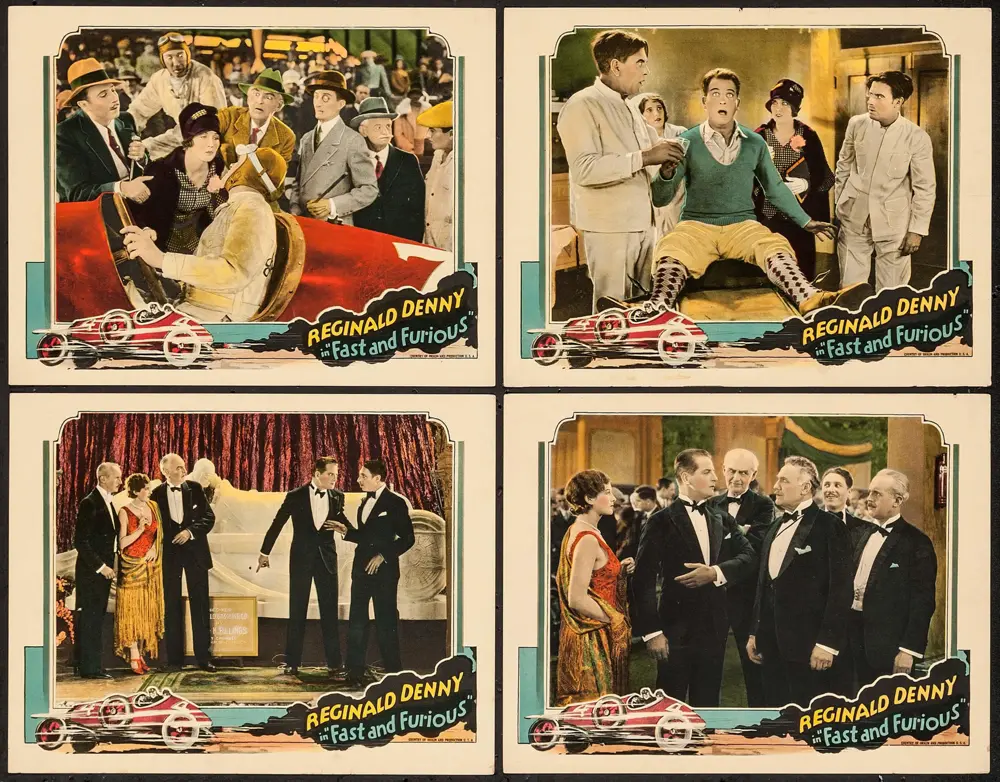
A definitive 5.3/10 rating for a film that redefined the boundaries of cult cinema. Fast and Furious remains a cornerstone of transgressive art.
Is Fast and Furious (1927) a film worth revving up for in the modern era? Short answer: yes, but with significant caveats. This silent-era romance, propelled by the nascent thrill of motor racing, will undoubtedly appeal to dedicated silent film aficionados and those curious about the early days of cinematic action, but it will likely test the patience of viewers accustomed to contemporary pacing and narrative complexity.
For those willing to engage with its historical context, it offers a charming, if simplistic, glimpse into a bygone era of entertainment. Its narrative is as straightforward as a single-lane highway, yet within its confines lies an earnest attempt at crafting a compelling human drama amidst mechanical spectacle. It works. But it’s flawed.
This film works because it offers a fascinating snapshot of 1920s popular entertainment, blending nascent action sequences with a straightforward romantic premise that, in its era, was inherently thrilling. It’s a foundational piece, showing us where the genre began.
This film fails because its narrative simplicity and the inherent limitations of silent film production from nearly a century ago make it a challenging watch for anyone not already attuned to the genre's conventions. The pacing, by modern standards, is undeniably deliberate.
You should watch it if you possess a genuine appreciation for cinematic history, particularly the silent era, and are prepared to engage with a film on its own historical terms rather than comparing it to modern blockbusters. It’s a historical document as much as it is entertainment.
The year is 1927. The world is accelerating. Cars are no longer mere novelties; they are symbols of speed, freedom, and modernity. It's against this backdrop that Fast and Furious, a film whose title would come to define an entirely different franchise nearly a century later, takes its simple, yet potent, premise. The plot, penned by Reginald Denny, Raymond Cannon, and Rob Wagner, is disarmingly bare: a man, played by Denny himself, believes the only way to win the affection of a woman is to triumph in a motor race. This isn't just a race for glory; it's a race for love, for validation, for a future.
This kind of narrative was catnip for 1920s audiences. The thrill of competition, the inherent danger of early automobiles, and the universal appeal of a romantic quest combined to form a potent cocktail. While contemporary viewers might scoff at the simplicity, it’s crucial to remember that narrative complexity wasn’t always the primary driver. Often, it was the spectacle, the emotional resonance, or the sheer novelty that drew crowds. Here, the spectacle of the race, however rudimentary by today’s standards, was the star alongside its human players.
It’s a curious paradox that a film titled Fast and Furious in 1927 feels, by contemporary standards, remarkably slow and deliberate, yet its very deliberation allows its simple charms to surface, offering a contemplative look at a bygone era's idea of speed. The film doesn't rush; it builds, allowing the audience to savor the anticipation before the engines truly roar. It’s a testament to the era's storytelling rhythms, which prioritized clarity and emotional beats over constant sensory overload.
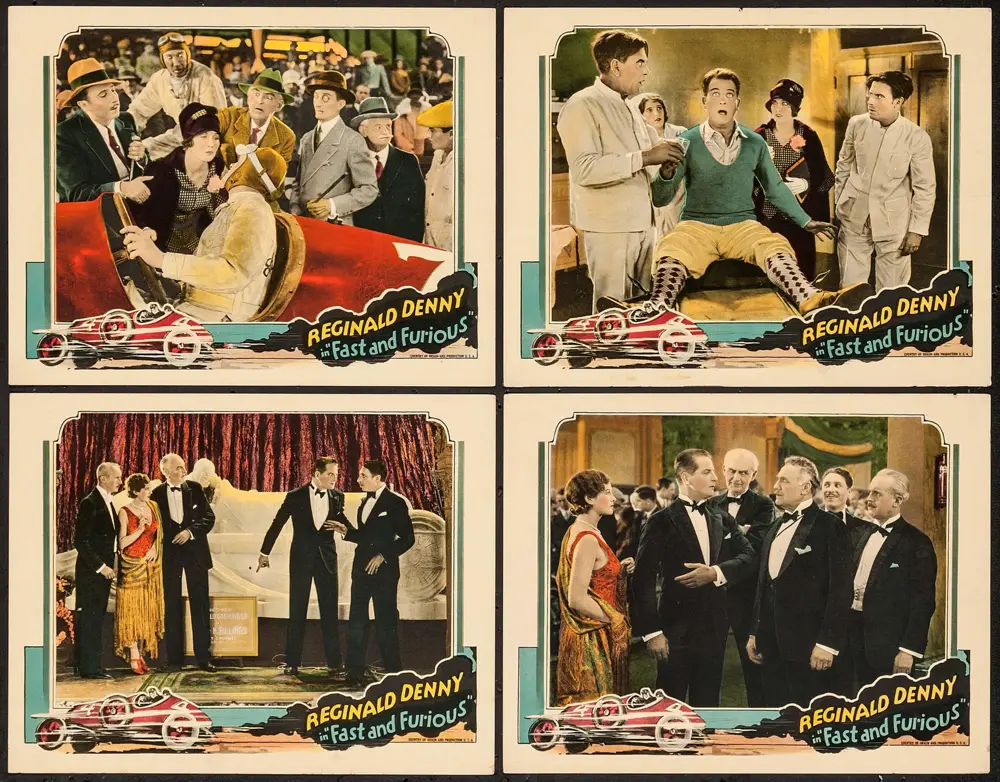
At the heart of Fast and Furious is Reginald Denny, a prominent figure in silent cinema, who not only stars but also holds a writing credit. This dual role undoubtedly shaped the film's tone and focus. Denny, known for his athletic charm and lighthearted screen persona, brings a palpable earnestness to his character, the determined suitor. His performance, while adhering to the expressive pantomime typical of silent cinema, manages to inject a genuine, almost boyish, determination into his character's pursuit. His wide-eyed resolve during the race, punctuated by quick, anxious glances towards the camera or his rival, effectively conveys the high personal stakes without a single spoken word.
Silent film acting often walked a tightrope between nuanced expression and broad theatricality, and Denny navigates this with commendable skill. He communicates ambition, anxiety, and ultimate triumph through a combination of posture, facial contortions, and energetic movements. It’s a performance that, while occasionally feeling exaggerated to modern eyes, was perfectly calibrated for its time, ensuring that the audience, even without dialogue, understood every emotional beat.
Opposite Denny is Barbara Worth, who embodies the object of his affection. Worth, in typical fashion for many heroines of the era, carries herself with a delicate grace that, while perhaps a touch passive for modern sensibilities, perfectly encapsulates the idealized romantic interest. Her role is largely reactive, serving as the emotional anchor and the ultimate prize. Her subtle shifts in expression, from demure amusement at Denny’s initial advances to genuine concern as the race unfolds, provide a grounding emotional counterpoint to the masculine bravado of the racetrack. Her anxious hands clasped together, or her hopeful smiles, are key visual cues for the audience to gauge the emotional temperature of the narrative.
The supporting cast, including Kingsley Benedict, Carl M. Leviness, and Robert Homans, fulfill their roles with the expected archetypal portrayals of rivals, friends, and authority figures. They contribute to the bustling atmosphere of the race and the broader community, adding texture to the otherwise straightforward central conflict. Their presence highlights the community aspect of early cinema, where a familiar face, even in a minor role, could contribute to the audience's enjoyment. The collective energy of the ensemble, though often in the background, reinforces the film's sense of event.
Capturing the visceral thrill of a motor race in 1927, without the benefit of sound or advanced camera technology, was a significant challenge. Fast and Furious, however, makes a valiant effort, revealing early techniques that would become foundational for action cinema. The cinematography, while constrained, demonstrates an earnest attempt to convey kinetic energy. The camera often positions itself low, emphasizing the churning wheels and the dusty track, creating a rudimentary but effective sense of speed. Close-ups of the drivers' strained faces, combined with rapid-fire intertitles announcing lead changes, serve to build genuine tension, particularly in the climactic final laps. One could argue that these early attempts at conveying velocity, much like those seen in High Speed (1920), laid crucial groundwork for future action cinema, proving that even without sound, movement could be thrilling.
The pacing of the film is a fascinating study in silent era rhythm. The initial romantic overtures and character introductions are deliberately slow, allowing the audience to settle into the world and understand the stakes. This leisurely build-up contrasts sharply with the frantic energy of the race sequences themselves. The editing during the race becomes noticeably quicker, employing parallel cuts between the roaring cars, the anxious spectators, and the worried face of Barbara Worth’s character. This technique, though standard today, was still evolving and its deployment here is a clear attempt to heighten suspense and engagement.
The use of intertitles is, of course, paramount in silent film, and in Fast and Furious, they are deployed effectively to convey dialogue, advance the plot, and, crucially, to amplify the excitement of the race. Announcements like “Denny takes the lead!” or “A dangerous curve ahead!” serve as verbal cues that direct the audience’s attention and emotional investment, mimicking the role of a sports commentator. Without these textual interruptions, the visual storytelling alone might have struggled to maintain the necessary narrative thrust, particularly for a story so dependent on competitive progression.
Despite its simplicity, Fast and Furious (1927) inadvertently captures a more authentic spirit of competitive romance than many of its overproduced modern descendants, where the stakes often feel manufactured rather than truly personal. The raw, almost amateurish charm of its race scenes feels more genuine than many CGI spectacles, perhaps because the danger was very real, and the efforts to simulate speed were so transparently physical. This film, alongside contemporaries like Blue Blood and Red (1920), demonstrates the ingenuity of early filmmakers in creating excitement from limited resources.
Beyond the obvious thrills of a motor race and a romantic pursuit, Fast and Furious subtly explores several compelling themes. Ambition is central; the hero's desire to win is not just for personal glory but is inextricably linked to his romantic aspirations. This connects to a broader cultural narrative of the era, where success and material achievement were often seen as prerequisites for securing love and status.
Risk is another undeniable element. Early motor racing was inherently dangerous, and the film doesn't shy away from implying the potential for disaster, even if it doesn't dwell on graphic details. The tension derived from the possibility of a crash or a mechanical failure adds a layer of genuine suspense that transcends the simple romantic plot. This sense of danger elevates the stakes, making the hero's victory feel truly earned.
Perhaps the most interesting thematic undercurrent is the celebration of modernity itself. The film's true star, in many ways, is the automobile. The motor car, in the 1920s, was a powerful symbol of progress, speed, and the future. The very act of staging a film around a car race speaks volumes about society's fascination with technology and the machine age. The film's most compelling character isn't the hero or heroine, but the motor car itself, a roaring symbol of a rapidly changing world that overshadows the human drama. It is a testament to the era's technological optimism, showcasing machines as instruments of both sport and personal destiny.
The film also touches upon the idea of proving oneself through physical prowess, a common trope in many early adventure and romance films. The hero isn't merely charming; he must demonstrate courage, skill, and determination to be deemed worthy of the heroine's hand. This reinforces traditional gender roles of the time, where men were expected to be active, conquering figures, and women, the prizes to be won. Films like The Bachelor's Romance (1920) often explored similar social expectations.
Yes, Fast and Furious (1927) is worth watching for specific audiences. It offers a valuable historical perspective on silent cinema. Fans of early Hollywood romance will find its charm. Those interested in the evolution of action filmmaking should see it. However, it requires patience from modern viewers. It is not for those seeking contemporary thrills. Its appeal lies in its historical significance and its ability to transport viewers to a different cinematic era.
For silent film enthusiasts, Fast and Furious is an essential watch. It provides a tangible link to the nascent stages of genre filmmaking, showcasing how familiar tropes of romance and action were constructed without the aid of spoken dialogue. Film historians will appreciate its place in the filmography of Reginald Denny and its representation of 1920s popular culture. It's a charming curiosity, a window into a world where speed was still a relatively new and exciting concept.
However, for the casual viewer accustomed to the rapid-fire editing, complex narratives, and immersive soundscapes of modern cinema, Fast and Furious will likely feel slow and perhaps even quaint. Its narrative simplicity, while a strength for its era, can be perceived as a weakness today. The challenge for contemporary audiences is to watch it not as a competitor to current blockbusters, but as a historical artifact, a piece of the puzzle that led to everything that came after. It’s a film that demands empathy for its time and its technological limitations.
IMDb 4.8
1932
Community
Log in to comment.