DbcultAccessing Vault...
7.7/10
Senior Film Conservator
A definitive 7.7/10 rating for a film that redefined the boundaries of cult cinema. He Who Gets Slapped remains a cornerstone of transgressive art.
Stepping into the melancholic grandeur of Victor Sjöström's 1924 silent epic, He Who Gets Slapped, feels less like merely watching a film and more like experiencing a raw, visceral excavation of the human psyche. This cinematic achievement, a poignant adaptation of Leonid Andreyev's play, stands as a towering testament to the expressive power of silent cinema, driven by the unparalleled artistry of Lon Chaney. From its opening frames, the film establishes a pervasive atmosphere of intellectual aspiration swiftly crushed by brutal societal treachery, setting the stage for one of cinema's most memorable and tragic character transformations.
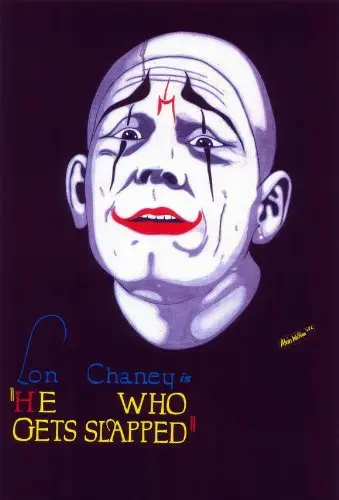
Chaney, in a performance that solidified his moniker as 'The Man of a Thousand Faces,' embodies Paul Beaumont, a brilliant scientist whose groundbreaking theories are not only stolen by his patron, the nefarious Baron Regnard (Marc McDermott), but whose wife is also seduced and taken from him. This dual betrayal, delivered with chilling efficiency, shatters Beaumont's world, propelling him into a profound existential crisis. His subsequent metamorphosis into 'He Who Gets Slapped,' a circus clown whose entire act revolves around being repeatedly struck by his fellow performers, is a stroke of narrative genius. It's a public penance, a grotesque manifestation of internal agony, where the forced smile and painted tears become indistinguishable from genuine despair. The irony is excruciating: the man of intellect, reduced to a spectacle of physical abuse, finds a strange, perverse comfort in the anonymity and theatricality of his new existence.

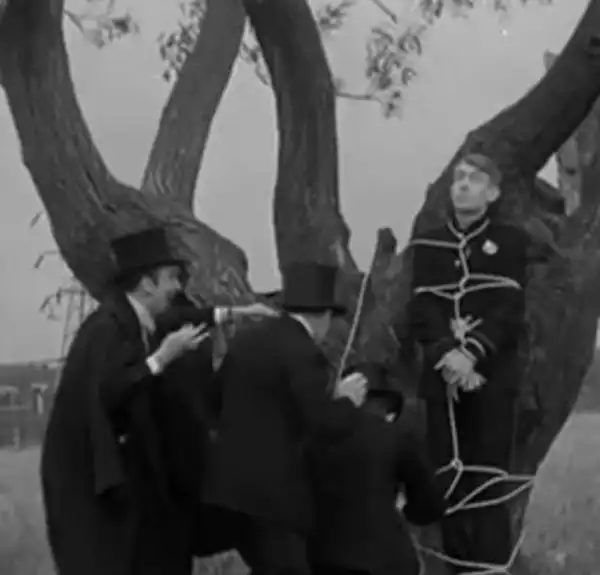
Chaney's portrayal of the clown is a masterclass in non-verbal communication. Every twitch of his facial muscles, every contortion of his body, speaks volumes. He doesn't just act; he inhabits the role with such complete immersion that the audience feels the sting of every slap, the weight of every forced laugh. It's a performance that transcends the limitations of the medium, creating a character so deeply etched in sorrow and humiliation that he becomes universally relatable. This intensity is what truly elevates He Who Gets Slapped beyond mere melodrama, transforming it into a profound meditation on identity, loss, and the nature of human suffering. One might draw parallels to the visceral emotionality found in other early dramatic works, such as the deeply psychological complexities explored in Drama na okhote, where characters are similarly trapped by circumstance and internal turmoil, though Chaney's physical embodiment of pain remains uniquely powerful.
Sjöström's direction is equally vital, orchestrating a visual symphony that complements Chaney's performance. His use of close-ups, particularly on Chaney's expressive face, magnifies the clown's inner turmoil, allowing the audience to peer into the abyss of his despair. The circus setting, often vibrant and chaotic, provides a stark, almost cruel contrast to the clown's solitary anguish. The director masterfully uses light and shadow, not merely for aesthetic appeal but to underscore the psychological states of his characters, casting long, ominous shadows that seem to cling to Beaumont like a second skin. The transition from the academic’s study to the sawdust ring is handled with an elegant, almost dreamlike fluidity that only enhances the film's tragic undertones.
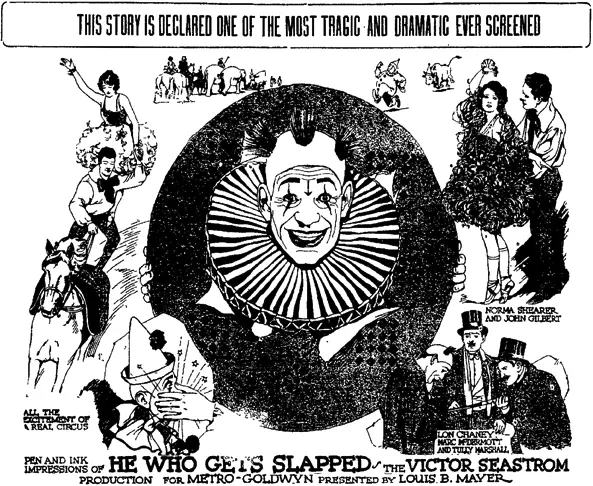
The circus in He Who Gets Slapped is far more than a mere backdrop; it's a vibrant, chaotic microcosm mirroring the larger world's cruelties and fleeting joys. Within its colorful, often grotesque confines, Beaumont finds a strange camaraderie with his fellow performers, a band of misfits and dreamers who understand the art of playing a part. Yet, even here, the echoes of his past cannot be entirely escaped. The arrival of Consuelo (Norma Shearer), a captivating bareback rider, introduces a delicate thread of hope and a renewed sense of purpose for the clown. Shearer, in one of her early, luminous roles, brings an innocence and vulnerability to Consuelo that makes her an irresistible object of the clown’s unspoken affection. His love for her is pure, protective, and utterly selfless, a stark contrast to the predatory desires that permeate the film.
The burgeoning romance between Consuelo and Bezano (John Gilbert), a dashing lion tamer, further complicates the clown's emotional landscape. He observes their youthful love with a mixture of wistful longing and paternal concern, his own capacity for happiness seemingly forever lost. Gilbert, a burgeoning star himself, embodies the charismatic hero with an effortless charm that makes his pairing with Shearer utterly believable. This dynamic trio forms the emotional core of the film, setting the stage for the inevitable collision with the forces of Beaumont's past. The circus, with its inherent theatricality, allows characters to hide behind masks – literal and figurative – making the eventual unmasking of truths all the more devastating. It's a world where illusion and reality dance a dangerous tango, much like the deceptive allure of societal status seen in films such as Piccadilly Jim, though with far more tragic consequences here.
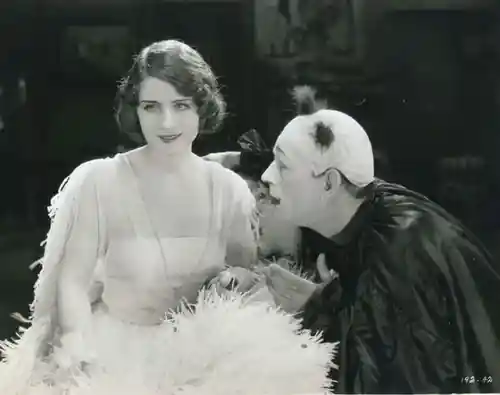
At its heart, He Who Gets Slapped is a profound exploration of betrayal's enduring scars and the corrosive nature of unfulfilled vengeance. Beaumont’s transformation isn't just a flight from his past; it's a deliberate embrace of a new, self-punishing identity. He becomes the living embodiment of his humiliation, a man who has traded intellectual dignity for the spectacle of his own suffering. Yet, beneath the greasepaint and the forced smiles, a fierce intellect and a burning desire for justice still simmer. The film masterfully builds towards the inevitable confrontation, where the past and present violently collide, forcing Beaumont to shed his clown persona and confront his tormentor.
The arrival of Baron Regnard at the circus, drawn by Consuelo's beauty and the prospect of marrying her for her family's wealth, ignites the dormant flames of Beaumont's rage. The irony is palpable: the very man who destroyed his life now seeks to destroy the happiness of the woman he loves. This plot twist, while seemingly melodramatic on paper, is executed with such psychological precision that it feels entirely organic to the narrative. The Baron, portrayed with oily condescension by Marc McDermott, is a truly loathsome antagonist, embodying the callous indifference of the powerful. His presence forces Beaumont to choose between remaining a passive victim and reclaiming a semblance of agency, even if that agency leads to a tragic end.

The supporting cast, though often overshadowed by Chaney’s towering presence, contributes significantly to the film’s rich tapestry. Norma Shearer's Consuelo is radiant, her innocence providing a stark contrast to the clown's world-weariness. John Gilbert's Bezano is charismatic and earnest, making his connection with Consuelo believable. Even the smaller roles, from the various circus performers to the smirking Baron, are imbued with a distinct presence that grounds the fantastical setting in a tangible reality. The collective effort under Sjöström's precise guidance creates an ensemble that, while not always center stage, provides crucial emotional resonance.
The cinematography of He Who Gets Slapped is a marvel for its era. From the bustling, vibrant energy of the circus tent to the intimate, shadowy moments of despair, the camera work is consistently inventive and expressive. The visual metaphors are abundant and skillfully integrated, never feeling heavy-handed. Consider the recurring motif of the clown's painted face – a mask that both conceals and reveals, a symbol of the dualities of identity and performance. The film's aesthetic choices contribute immensely to its enduring impact, demonstrating how silent cinema, through masterful visual storytelling, could convey complex narratives and profound emotional depth without a single spoken word. This visual eloquence puts it in conversation with other visually driven narratives of the period, perhaps even the stark realism found in early ethnographic films like El último malón, though applied here to a deeply personal, fictional drama.

One of the film's most striking aspects is its exploration of performance as both a shield and a prison. For Beaumont, the clown act is a form of self-annihilation, yet it also offers a perverse freedom – the freedom to express his pain without anyone truly understanding its source. The audience laughs at his slaps, oblivious to the tragic irony that they are laughing at a man whose life was literally destroyed by similar blows. This thematic layer adds a profound meta-commentary on the nature of entertainment and the often-invisible suffering of those who perform for our amusement. It invites viewers to question the superficiality of appearances and to look deeper into the souls behind the masks, an idea that resonates even in contemporary storytelling.
Nearly a century after its release, He Who Gets Slapped retains a powerful, almost haunting resonance. Its themes of betrayal, identity, unrequited love, and the search for justice are timeless. Lon Chaney’s performance remains a benchmark for character acting, a testament to his unique ability to transform and embody suffering. The film's psychological depth and Sjöström's directorial vision ensured its place not just as a silent era classic, but as a foundational work in the broader history of cinema. It’s a film that speaks to the universal experience of humiliation and the desperate human need to reclaim dignity, even if the path to redemption is paved with tragedy.
The film’s climax, a masterfully orchestrated sequence of tension and release, brings Beaumont’s journey to its inevitable, tragic conclusion. It's a moment of profound catharsis, where the clown finally sheds his mask, not for performance, but for a final, desperate act of defiance and protection. The consequences are dire, yet imbued with a sense of poetic justice. This ending solidifies the film's status as a true tragedy, where the hero, despite his noble intentions, cannot escape the crushing weight of his past. It’s a narrative arc that explores the very limits of human endurance and the profound, often destructive, nature of love and revenge. The raw emotional impact is comparable to the intense, often fatalistic narratives found in other dramas of the period, like Love's Redemption, where sacrifice and suffering are central to the characters' fates.
For contemporary audiences, He Who Gets Slapped offers a compelling entry point into the world of silent cinema, proving that stories told without spoken dialogue can be just as, if not more, emotionally potent than their sound counterparts. It challenges viewers to engage with visual storytelling on a deeper level, to interpret nuances of expression and gesture that might otherwise be overlooked. This film is more than just a historical artifact; it is a living, breathing work of art that continues to provoke thought and stir the soul, urging us to consider the masks we wear and the battles we fight, both seen and unseen. Its influence can be traced through countless subsequent films that explore themes of identity, performance, and the psychological impact of trauma. It remains a powerful reminder of cinema's capacity for profound artistic expression.
The collaborative genius of writers Carey Wilson, Leonid Andreyev, Victor Sjöström, and Marian Ainslee in adapting the source material is evident in the film’s tightly woven plot and rich character development. Their ability to translate the complex psychological landscape of the play into a visually driven narrative is a testament to their understanding of the cinematic medium. Every scene, every intertitle, serves to advance the plot and deepen the audience’s connection to Beaumont’s harrowing journey. The film's meticulous construction ensures that its emotional beats land with maximum impact, making it a truly unforgettable experience. It's a prime example of how thoughtful adaptation can elevate source material into a new, equally compelling artistic form, much like how various literary works found new life on screen during this burgeoning era of film. The craftsmanship is undeniable, placing it amongst the finest productions of its time, far surpassing many of its contemporaries in terms of narrative sophistication and emotional depth.
Ultimately, He Who Gets Slapped is a haunting masterpiece, a raw and beautiful depiction of human resilience and vulnerability. It's a film that stays with you long after the final frame, prompting reflection on the nature of suffering, the masks we present to the world, and the enduring power of love and sacrifice. Lon Chaney's iconic performance anchors a narrative that is both deeply personal and universally resonant, solidifying its place as an essential watch for anyone interested in the foundational works of cinematic art. The film is not merely observed; it is felt, a testament to the enduring power of silent storytelling when wielded by true masters of the craft. Its dark, profound beauty continues to captivate and challenge, a timeless echo of a broken heart finding its voice in the silence.
IMDb —
1921
Community
Log in to comment.