DbcultAccessing Vault...
8/10
Senior Film Conservator
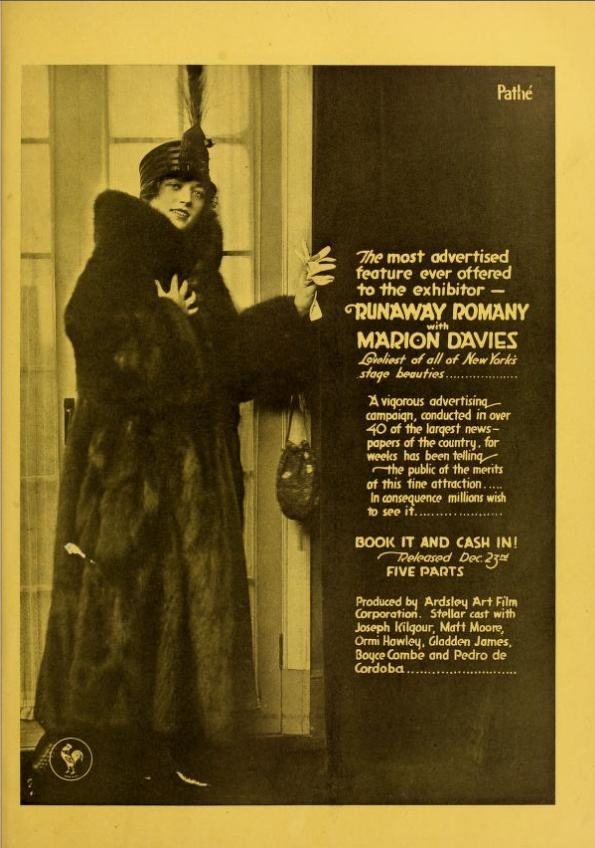
A definitive 8/10 rating for a film that redefined the boundaries of cult cinema. Runaway Romany remains a cornerstone of transgressive art.
Marion Davies's Runaway Romany, a cinematic tapestry woven with threads of deception, mistaken identity, and fervent romance, unfurls a narrative as intricate as it is compelling. This 1917 silent era gem, with Davies herself credited for its compelling screenplay, plunges the audience into a world where public perception is meticulously crafted and where the truth, like a persistent current, eventually erodes the most elaborate of facades. At its heart lies a commentary on societal values, the fluidity of identity, and the enduring power of genuine connection, all delivered with the dramatic flair characteristic of its time.
The labyrinthine plot is set in motion by the Machiavellian machinations of 'Inky' Ames, a theatrical press agent whose professional ethics are, shall we say, remarkably pliable. Ames, with a calculating eye for sensationalism, concocts an ingenious artifice: he fabricates a tale positing Anitra St. Clair, an actress of indeterminate talent, as the long-lost progeny of Theodore True, a veritable titan of the copper industry. This audacious stunt, designed to elevate Anitra's profile, unexpectedly ensnares True, the unsuspecting 'copper king,' who, perhaps swayed by sentiment or a profound yearning for family, embraces the actress as his own. It's a testament to the power of suggestion and the human desire for connection, however manufactured.
No sooner has this peculiar familial bond been forged than a summons arrives from the rugged American West. Bud Haskel, True's diligent representative, dispatches a telegram urging their immediate presence to inspect a newly discovered copper mine. This geographical shift from the urban theatrical milieu to the untamed frontier is more than a mere change of scenery; it signifies a transition into a realm where raw nature and primal instincts often supersede societal pretense. It's a classic narrative device, stripping away the veneers of civilization to reveal deeper truths. One can draw parallels to the grand, sweeping narratives of the era, where the untamed West often served as a crucible for character, much like in films such as A Romance of Billy Goat Hill, though the focus here remains firmly on human drama rather than landscape as protagonist.
Concurrently, in the heart of this Western expanse, we encounter Romany, the eponymous character, a vibrant blossom from a local gypsy encampment. Her story intertwines with Bud Haskel's, who, in a display of benevolent altruism, has taken on the role of a volunteer schoolmaster, imparting knowledge and broadening the horizons of the gypsy youth. Romany, a soul thirsting for enlightenment beyond the confines of her traditional life, finds herself in a precarious position. She is the object of Zinga's ardent affection, the son of the gypsy chief, yet simultaneously faces the daunting prospect of an arranged marriage to him, a fate she ardently resists. Her yearning for self-determination drives her to seek Bud's aid in escaping her predetermined destiny. This act of defiance, however, ignites a simmering jealousy in Zinga, who, suspecting Bud's complicity in Romany's flight, embarks on a relentless and obsessive pursuit of the schoolmaster.
Meanwhile, the fabricated life of Anitra St. Clair begins to chafe. The strictures of her newfound identity as Theodore True's daughter prove irksome, and she yearns for the carefree 'gayeties' of her former existence. In a moment of weakness or perhaps genuine boredom, she finds a willing accomplice in True's nephew, Hobart, a character whose moral compass appears to be perpetually askew. This dalliance, however, has unforeseen consequences, incurring the enmity of none other than 'Inky' Ames, the very architect of her deception. Perhaps a pang of conscience, or more likely, a professional grievance, compels Inky to resolve to expose Anitra's charade, setting the stage for a dramatic unraveling of the initial deception. The intricate dance of truth and falsehood, ambition and resentment, forms the core of this compelling narrative, echoing the complex human motivations explored in other films of the era where societal expectations clash with personal desires, such as The Gilded Cage.
As the narrative progresses, Romany, with her intellect sharpened by the 'broader knowledge of life imparted to her by books,' eagerly embraces her new world. Her inherent grace and burgeoning sophistication make her a captivating figure, and she is genuinely delighted to welcome Bud Haskel at her inaugural society party. It's a moment of quiet triumph for Romany, a symbol of her successful transition. However, this evening of hopeful beginnings is marred by a disturbing discovery: Romany witnesses Hobart at his uncle's safe. While she observes the act, the full import of his transgression – the extraction of money – remains obscured from her, a tantalizing detail that will later become a crucial piece of the larger puzzle. This sequence highlights the film's adept use of dramatic irony, as the audience is privy to information that the characters are not, thereby heightening the suspense.
The intricate web of deceit begins to fray more rapidly. 'Inky' Ames, now determined to disabuse True of Anitra's fraudulent claims, seeks out Bud Haskel. Inky reveals the entire elaborate press stunt, confessing that Anitra is not True's daughter and that the whole affair was merely a fabrication to promote her show. This confession serves as a pivotal turning point, injecting a dose of truth into the swirling vortex of lies. Simultaneously, Zinga's relentless shadowing of Bud, driven by his desire to ascertain Romany's whereabouts, finally yields success. The pieces of the puzzle are slowly but surely falling into place, albeit with tragic immediate consequences. Romany, in a moment of profound sadness and confusion, pens a letter to True, expressing her gratitude for his and Haskel's kindness but stating her heartbroken decision to depart the True home. This act of self-imposed exile, unfortunately, leads to her being wrongly implicated in the theft from True's safe, a cruel twist of fate that further complicates the already fraught situation.
The climax of the film sees the unveiling of multiple truths. Anitra's elaborate deception is finally exposed to Theodore True, shattering his illusions and forcing him to confront the reality of her manipulative charade. This revelation precipitates Hobart's confession to his uncle, admitting his culpability in extracting money from the strongbox, thereby exonerating Romany from suspicion. The pieces of the narrative jigsaw fall into place with satisfying precision. Bud, ever the steadfast and resourceful hero, discovers Romany's whereabouts and, with persuasive eloquence, convinces her to return to the True mansion. In a dramatic act of justice, Bud also secures Zinga's release from prison, where the gypsy had been confined under the intriguing premise that he possessed a vital revelation for Mr. True. It is Zinga, in a moment of selfless honesty, who finally delivers the ultimate truth: Romany is, in fact, Theodore True's biological daughter, having been raised by the gypsies and given the name 'Romany.' He confesses his own desire for her hand as she matured, adding a layer of poignant sacrifice to his revelation. This climactic disclosure brings the narrative full circle, restoring rightful identities and solidifying true familial bonds.
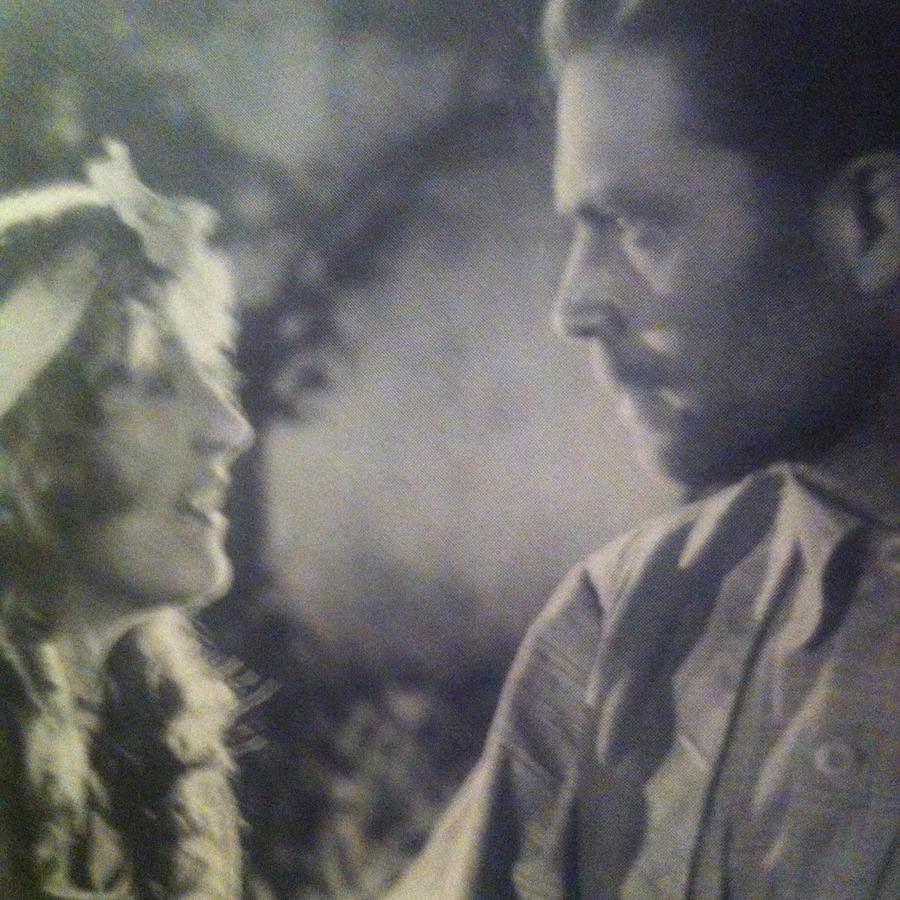
Thematic resonance courses through Runaway Romany, exploring the often-fragile nature of identity. The film masterfully contrasts fabricated personas with inherent truths, questioning the very essence of who we are when stripped of societal labels and expectations. Romany's journey from a gypsy camp to a life of intellectual pursuit and eventual familial recognition speaks volumes about the power of self-discovery and the yearning for belonging. The theme of deception, initiated by Inky Ames, propagates throughout the narrative, highlighting its corrosive effects on trust and relationships. Yet, ultimately, the film champions the triumph of truth and the enduring strength of genuine affection. The societal commentary on class distinctions, particularly between the 'copper king' and the 'gypsy flower,' is subtly handled, suggesting that true nobility resides not in lineage or wealth, but in character and integrity. This moral underpinning is a hallmark of many silent dramas, where clear distinctions between virtue and vice often guided the narrative.
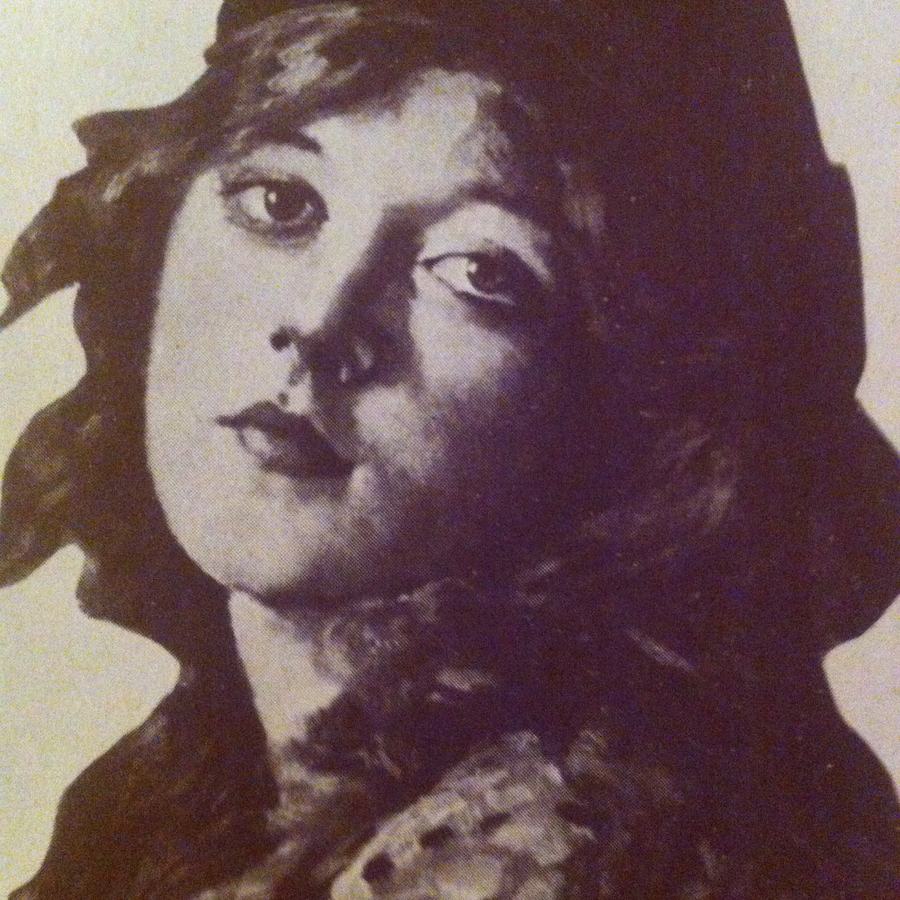
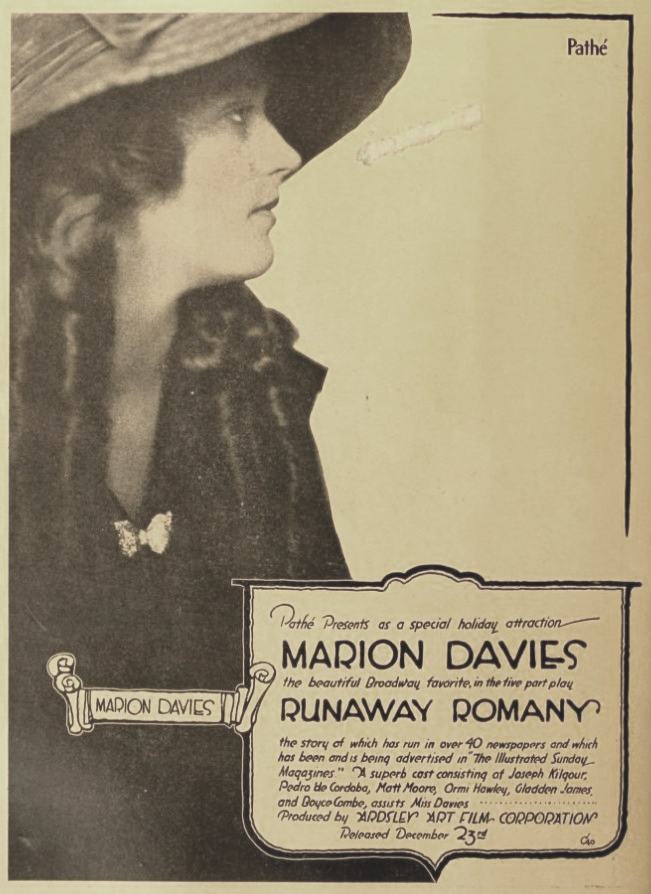
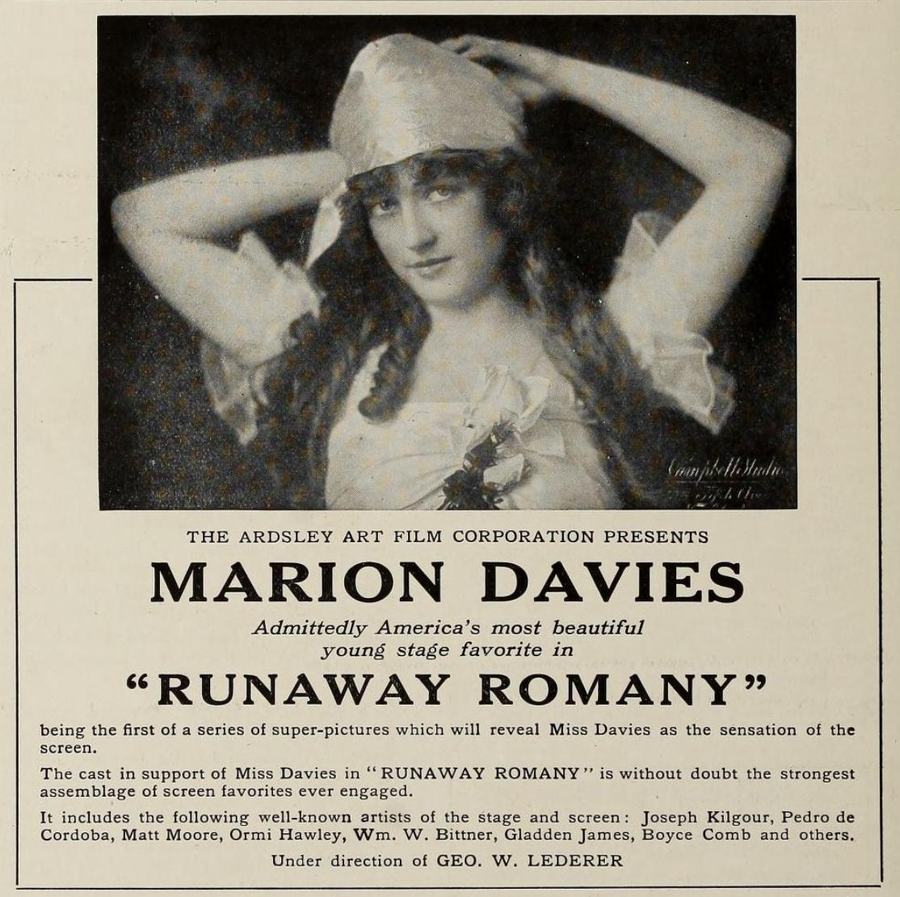
Marion Davies, in the titular role of Romany, delivers a performance that is both nuanced and captivating. Her portrayal captures Romany's initial innocence, her intellectual curiosity, her heartbreak, and ultimately, her resolute strength. Davies, often celebrated for her comedic timing, here demonstrates a remarkable dramatic range, conveying a spectrum of emotions through expressive gestures and eloquent facial expressions, a necessity in the silent era. Her transformation from a gypsy girl yearning for knowledge to a woman who finds her true heritage is handled with grace and conviction. Ormi Hawley, as the manipulative Anitra St. Clair, provides an effective counterpoint, embodying the superficiality and ambition that drives her character's deception. Pedro de Cordoba's Zinga is a figure of brooding intensity, his jealousy and eventual selflessness adding significant emotional depth. Matt Moore's Bud Haskel is the quintessential stalwart hero, embodying honesty and steadfast loyalty, a character type that resonated strongly with audiences of the time. The ensemble cast, including W.W. Bitner as the initially gullible Theodore True, Joseph Kilgour as the scheming Inky Ames, Gladden James as the unscrupulous Hobart, and Boyce Combe, collectively contribute to the richness and credibility of the film's dramatic landscape.
It is particularly noteworthy that Marion Davies herself is credited as the writer of Runaway Romany. This dual role undoubtedly afforded her a profound understanding of her character's motivations and trajectory, allowing her to imbue Romany with a depth that might otherwise have been absent. Her contribution to the screenplay speaks to her intelligence and artistic vision beyond her acclaimed acting prowess. It's a testament to the fact that many stars of the silent era were not merely performers but also significant creative forces behind the scenes, shaping the narratives that defined their public personas and left an indelible mark on cinematic history. This level of creative control was a fascinating aspect of early Hollywood, often leading to films that felt deeply personal and well-crafted.
The filmmaking style, characteristic of 1917, relies heavily on visual storytelling, intertitles to convey dialogue and exposition, and expressive performances. The melodrama, while perhaps appearing heightened to modern sensibilities, was a staple of the era, designed to evoke strong emotional responses from the audience. The transitions between the urban setting and the Western frontier are handled with a fluidity that underscores the narrative's journey, both physical and metaphorical. The film's pacing, building from initial deception to eventual revelation, maintains a consistent dramatic tension. While specific directorial choices are not detailed in the plot, the coherent unfolding of such a complex story points to a skilled hand guiding the production, ensuring that each twist and turn contributes meaningfully to the overall narrative arc. The use of chase sequences and dramatic confrontations, such as Zinga's pursuit of Bud or Hobart's confession, are handled with a clarity that ensures the audience remains invested in the characters' fates. Films like The Lost Paradise or The Primrose Path from a similar period often employed these very techniques to engage their audiences in tales of moral quandaries and personal redemption.
Ultimately, Runaway Romany stands as a compelling example of early silent cinema, offering a rich tapestry of human foibles and triumphs. Its intricate plot, driven by compelling characters and a series of dramatic revelations, keeps the audience thoroughly engaged. Marion Davies's performance as Romany is a highlight, showcasing her versatility and emotional depth. The film's exploration of identity, deception, and the eventual triumph of truth resonates even today, proving that its themes are timeless. For enthusiasts of silent film and those interested in the foundational narratives of cinematic storytelling, Runaway Romany is more than just a historical artifact; it is a vibrant, emotionally charged drama that continues to captivate with its ingenuity and heart, a testament to the enduring power of classic storytelling.
IMDb 5.4
1936
Community
Log in to comment.