DbcultAccessing Vault...
Cult Review
Senior Film Conservator
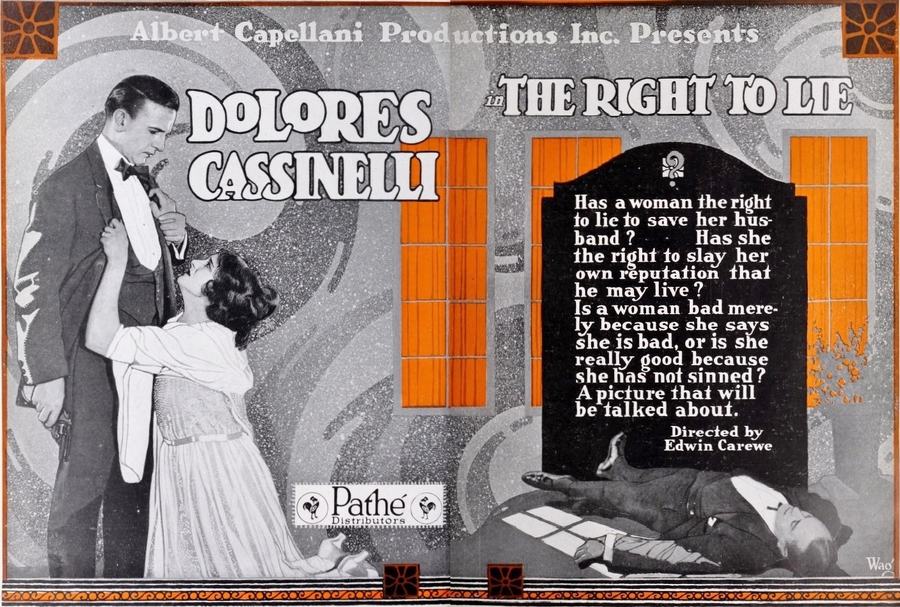
The silent film era, a tapestry woven with grand gestures, visceral emotions, and narratives that often veered into the melodramatic, presented audiences with moral quandaries and societal reflections that resonate even today. Among these cinematic offerings, The Right to Lie (1914) emerges as a fascinating artifact, a dramatic exploration of identity, sacrifice, and the intricate dance between truth and deception. This is not merely a historical curiosity; it is a compelling narrative that delves into the human heart's capacity for both profound devotion and devastating secrecy, all set against a backdrop of rigid social conventions.
At its core, The Right to Lie is a story of a woman caught in the relentless currents of circumstance, a compelling character study that, despite its century-old vintage, still manages to stir the conscience. Carlotta, brought up in the serene isolation of an Italian convent, is blissfully unaware of the tempestuous origins of her existence. Her mother, an opera singer whose life was presumably as dramatic as her art, has passed, leaving behind a legacy not of fame, but of a hidden truth: Carlotta is the illegitimate daughter of J. Winthrop Drake, a prominent American architect. This revelation, delivered to Drake belatedly, propels him across an ocean to claim a child he never knew he had. His decision to bring Carlotta back to New York, however, is fraught with a perilous omission – he conceals the truth of their relationship, inviting her into his life under the guise of benevolence rather than blood relation.
This initial deception sets in motion a cascade of events, each more tragic than the last. Drake’s wife, a woman presumably accustomed to her husband’s singular attention, views Carlotta not with compassion, but with a burgeoning jealousy. The innocence of Carlotta, juxtaposed against the wife’s suspicions, creates an unbearable tension within the Drake household. The inevitable expulsion of Carlotta from the home is a moment charged with societal implications, underscoring the precarious position of women in that era, especially those without clear familial anchors. Drake, unwilling to abandon his daughter, yet still unable to confess the truth, places Carlotta in an apartment. This living arrangement, innocent in its intent, becomes a hotbed for scandal, a whispered indictment of impropriety that quickly engulfs Carlotta, tarnishing her reputation in the unforgiving glare of public opinion. It's a stark reminder of how easily a woman's virtue could be questioned, her life derailed, by mere appearances, a theme explored with similar intensity in films like Bondwomen, which often depicted the harsh realities faced by women navigating societal constraints.
The weight of this scandal, coupled with the immense burden of his secret, proves too much for Drake. He suffers a heart attack, and in his dying moments, the truth, long suppressed, finally spills forth. He confesses to his wife that Carlotta is, in fact, their daughter. This deathbed revelation is a classic melodramatic trope, serving to both absolve the dying man and shift the narrative’s emotional weight onto the living. It’s a moment of profound irony, as the truth, once a source of conflict, now becomes a catalyst for understanding, albeit too late for Drake himself. The parallels with other narratives of hidden parentage, such as The Seed of the Fathers, become evident here, where the revelation of lineage often serves as the pivotal turning point, reshaping destinies and forcing characters to confront their pasts.
Time, as it often does in such narratives, provides a measure of healing and transformation. Carlotta, resilient and talented, cultivates her musical gifts, becoming a successful pianist. Her artistic achievements pave the way for a new chapter in her life, one of love and companionship, as she marries Curtis Austin. Their union signifies a triumph over her scandalous past, a testament to her strength and character. However, the shadows of the past are not so easily vanquished. The malevolent figure of Crosby Dana, a blackmailer, emerges from the depths, threatening to revive the old scandal and destroy Carlotta’s hard-won happiness. Dana represents the societal forces that refuse to let go of past transgressions, a constant threat to those who seek redemption or a fresh start.
The confrontation with Dana escalates into a violent climax. Curtis, driven by a desperate need to protect his wife and their future, shoots and kills the blackmailer. This act, while born of love and protection, places Curtis squarely in the crosshairs of the law, facing almost certain conviction. Here, the film pivots dramatically, moving from a domestic melodrama to a gripping courtroom drama, where the concept of justice itself is put on trial. The stakes are incredibly high, and the audience is left to ponder the moral implications of Curtis’s actions. Was it self-defense? Was it an act of passion? The legal system, in its rigid adherence to facts, seems poised to condemn him.
It is at this critical juncture that Carlotta performs her most profound act of sacrifice, embodying the very title of the film. To save her husband from conviction, she takes the stand and fabricates a story, a lie so devastating and self-incriminating that it would surely tarnish her reputation irrevocably. She claims that Curtis’s murderous act was justified because she had been unfaithful to him. This lie, a calculated and agonizing sacrifice, is meant to evoke sympathy for Curtis, painting his actions as a desperate response to his wife’s perceived betrayal. The emotional weight of this scene would have been immense for silent film audiences, conveyed through the raw expressions of the actors, the dramatic lighting, and the poignant intertitles.
Carlotta’s lie, while designed to save Curtis, simultaneously destroys her own public image, echoing the kind of moral dilemmas found in films like The Little Liar, where deceit, even with good intentions, often carries a heavy personal cost. The audience is left to grapple with the ethical implications: Is there truly a 'right to lie' when the stakes are so high, when love and loyalty hang in the balance? This question is central to the film's enduring power. Her act of self-immolation, however, does not go unnoticed. Drake's wife, who has witnessed Carlotta's unwavering devotion and profound sacrifice, finally steps forward. She reveals the long-held secret: Carlotta is truly Drake's daughter. This revelation, coming at such a climactic moment, serves to not only justify Carlotta’s character but also to underscore the depth of her love and the injustice she has faced throughout her life. The truth, once suppressed, now liberates, allowing for the reconciliation of Carlotta and Curtis, their love reaffirmed and purified by the trials they have endured.
The performances in The Right to Lie, though viewed through the lens of a century-old cinematic style, would have been characterized by the exaggerated, yet deeply expressive, acting typical of the era. Actors like Frank Mills, Clare Grenville, and Dolores Cassinelli would have relied heavily on their physicality, their facial expressions, and their mastery of pantomime to convey the complex emotional states of their characters. Carlotta, portrayed with a blend of innocence, resilience, and ultimate self-sacrifice, would have been a profoundly sympathetic figure. Her journey from convent girl to pianist, from scandalous figure to a woman willing to perjure herself for love, is a testament to the dramatic arc that silent films often excelled at depicting. The tension between her public image and her private truth is a central conflict that would have been expertly navigated by the lead actress.
The film's narrative structure, with its reliance on dramatic irony and unforeseen revelations, places it firmly within the tradition of popular melodrama. Yet, it transcends mere sensationalism by exploring profound themes. The burden of illegitimacy, the destructive power of societal gossip, the lengths to which individuals will go for love, and the ultimate triumph of truth (albeit a truth revealed through a lie) are all meticulously woven into the fabric of the story. It compels us to consider the nature of morality itself: Is a lie always wrong, even when it serves a greater good? Is true justice always found within the confines of the law, or can it reside in the realm of personal sacrifice and emotional truth? These are questions that continue to vex and fascinate, making the film's title particularly provocative.
The visual storytelling of the silent era, without the benefit of spoken dialogue, demanded a heightened sense of visual clarity and emotional intensity. Directors like J. Gordon Edwards, working with writers Jane Murfin and John Norwood, would have utilized close-ups to emphasize emotional moments, long shots to establish setting, and carefully crafted intertitles to convey dialogue and crucial plot points. The use of lighting, sets, and costumes would have been instrumental in establishing the social strata and emotional atmosphere of the film, from the austere convent to the opulent New York mansions, and later, the stark reality of the courtroom. The contrast between these settings visually reinforces Carlotta's journey and the different worlds she inhabits.
Comparing The Right to Lie to other films of its time helps contextualize its significance. While it shares thematic elements with dramas like What the Gods Decree, which also explores fate and moral choices, its specific blend of hidden parentage, societal scandal, and legal drama sets it apart. The narrative’s focus on Carlotta’s ultimate sacrifice for love is reminiscent of the profound devotion seen in some of the more tragic romantic dramas of the period. Moreover, the film’s critique of societal hypocrisy, where appearances often trump truth, would have resonated deeply with audiences familiar with the rigid social codes of the early 20th century. The emotional rollercoaster presented here is a hallmark of silent cinema, designed to elicit powerful reactions from its viewers, drawing them into the characters' plights with an almost visceral force.
The character of Drake’s wife undergoes a significant transformation, moving from a figure of jealousy and antagonism to one of profound empathy and justice. Her final act of revealing Carlotta’s true parentage is not just a plot device; it is a moment of redemption for her character, showing her growth beyond her initial petty resentments. It elevates the narrative from a simple tale of love and betrayal to one that ultimately champions truth and understanding, even if it arrives late. This arc of character development, though sometimes swift in silent films, is crucial for the emotional payoff and the audience’s sense of catharsis. It’s a powerful statement about the capacity for change and forgiveness, even in the face of deep-seated prejudice.
Ultimately, The Right to Lie is more than just a period piece; it is a timeless exploration of the human condition. It reminds us that appearances can be deceiving, that societal judgments are often cruel, and that the bonds of family and love can compel individuals to extraordinary, even morally ambiguous, acts. Carlotta’s journey, marked by both profound suffering and immense strength, is a compelling testament to the enduring power of the human spirit to navigate adversity. The film, in its dramatic conclusion, suggests that while lies can temporarily shield, the truth, when it finally emerges, has the power to heal and reconcile. It’s a testament to the compelling storytelling capabilities of early cinema, proving that even without spoken words, a narrative could communicate deep emotional truths and provoke thoughtful consideration of complex moral questions. The legacy of The Right to Lie lies not just in its historical context, but in its continued ability to stir discussion about morality, identity, and the price of protecting those we love.
The film's enduring appeal also stems from its ability to tap into universal anxieties and desires. The fear of a hidden past, the longing for acceptance, the struggle against societal condemnation – these are themes that transcend specific eras and resonate with audiences across generations. Carlotta's initial innocence, her subsequent fall from grace in the eyes of society, and her ultimate vindication through a combination of sacrifice and revelation, form a narrative arc that is both tragic and ultimately redemptive. It's a story that asks us to consider the nuances of right and wrong, and the often-blurry lines between them when human emotions and relationships are at stake. The film, through its dramatic twists and turns, ultimately celebrates the resilience of the human heart and the profound lengths to which individuals will go for love and justice, even if it means momentarily treading the path of deception.
In an age saturated with information, where truth is often contested and lies proliferate, the central premise of The Right to Lie feels remarkably pertinent. It invites us to consider the circumstances under which a falsehood might be deemed justifiable, or even necessary, to protect love, family, or reputation. This silent masterpiece, therefore, is not merely a relic of a bygone cinematic era but a potent reminder of the complex moral landscapes we continue to navigate. Its narrative power lies in its unflinching portrayal of human frailty and strength, making it a compelling study for anyone interested in the evolution of dramatic storytelling and the enduring questions it poses.
IMDb 5.7
1913
Community
Log in to comment.