DbcultAccessing Vault...
7.2/10
Senior Film Conservator
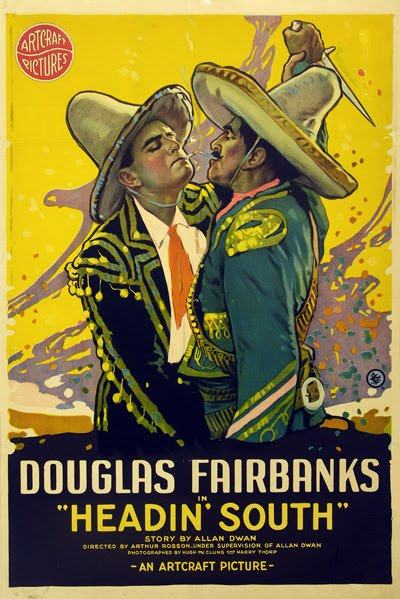
A definitive 7.2/10 rating for a film that redefined the boundaries of cult cinema. Headin' South remains a cornerstone of transgressive art.
In the nascent years of cinematic storytelling, when the flickering images on screen captivated audiences with their raw power and untamed spirit, the Western genre carved out a definitive niche. Among the myriad tales of cowboys, outlaws, and the untamed American landscape, Allan Dwan’s 1918 masterpiece, Headin' South, emerges as a compelling artifact, a vibrant tapestry woven from the threads of heroism, villainy, and the stark beauty of the borderlands. This film, starring the unparalleled Douglas Fairbanks, is more than a simple chase narrative; it’s a profound meditation on the struggle for order in a chaotic world, a silent epic that resonates with enduring themes of justice and redemption. It transports us to an era when the frontier was not just a geographical location but a crucible for human character, where the very fabric of law and civilization was forged in the heat of conflict and the dust of relentless pursuit.
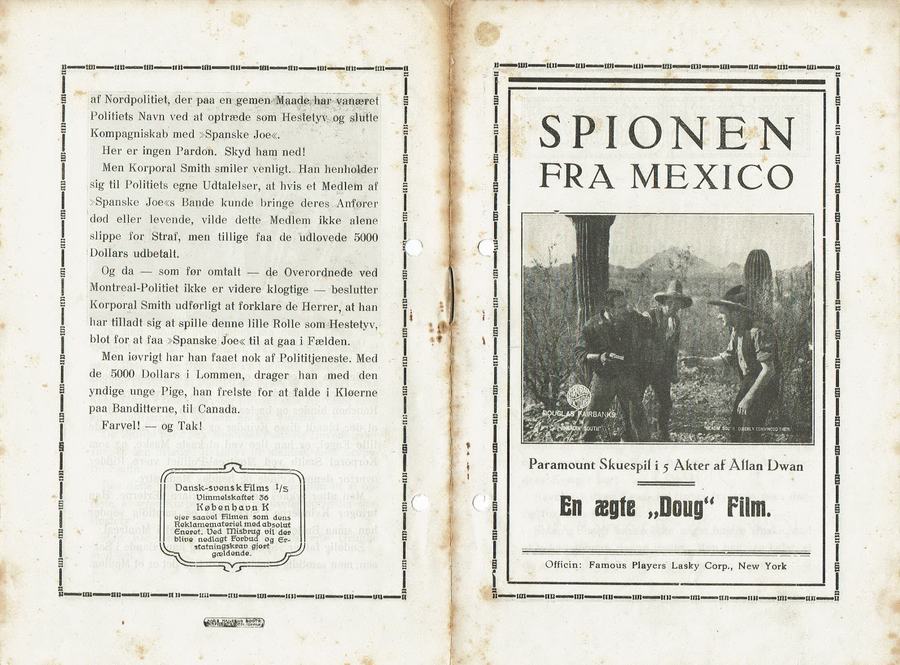
At the heart of Headin' South lies a foundational premise: the relentless pursuit of an elusive antagonist by an equally determined protagonist. Our hero, known only by his evocative moniker, Headin' South, is a forest ranger whose very existence seems defined by his mission. He is less a man and more a force of nature, an embodiment of the law’s long arm stretching across the desolate U.S.-Mexican border. His quarry is Spanish Joe, a figure of pervasive malevolence, whose name is synonymous with treachery and outlawry. Joe is not merely a common bandit; he represents the very essence of lawlessness, a cunning orchestrator of chaos whose influence permeates every shadow and every illicit transaction along the frontier. The film meticulously crafts this dynamic, presenting it not as a simple cat-and-mouse game, but as a symbolic clash between the burgeoning forces of order and the deeply entrenched roots of anarchy. Headin' South's journey is a solitary one, marked by hardship and unwavering resolve, as he navigates a landscape rife with danger and deception, driven by an almost spiritual dedication to his task. This narrative structure, focusing on a singular hero against a formidable, almost mythical villain, can be seen echoed in other silent era epics, albeit with different settings, such as the grand scale of A Tale of Two Cities, where individual fates are intertwined with larger societal struggles, or the personal quest for justice found in Until They Get Me.
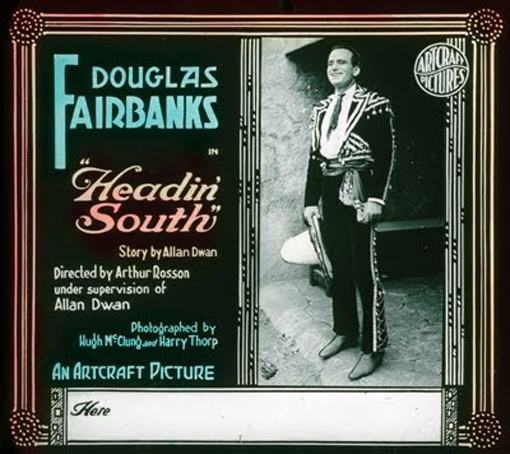
Douglas Fairbanks, as the titular Headin' South, delivers a performance that transcends the limitations of silent cinema, injecting his character with a vitality and athletic grace that became his signature. Fairbanks was a master of physical expression, and in this role, he utilizes every ounce of his acrobatic prowess and charismatic charm to bring the ranger to life. His movements are fluid, his expressions conveying a depth of emotion and unwavering resolve without a single spoken word. He embodies the idealized American hero: rugged, resourceful, and morally unyielding. The film allows Fairbanks to showcase his incredible range, from daring horseback stunts to nuanced facial expressions that communicate the weight of his mission. His interactions, particularly with Marjorie Daw, who portrays a pivotal female character, add layers of human connection to an otherwise stark narrative of pursuit. Daw, a talented actress of the era, provides a compelling counterpart to Fairbanks's dynamic energy, often serving as a moral compass or a source of emotional vulnerability amidst the hardened landscape. The ensemble cast further solidifies the film's gritty authenticity. Frank Campeau, likely portraying the nefarious Spanish Joe, crafts a villain whose menace is palpable, even in silence, through his imposing presence and cunning demeanor. Hoot Gibson, a true Western icon, adds his unmistakable authenticity to the proceedings, bringing a touch of seasoned frontier wisdom to his role. Jim Mason, Edward Burns, and Art Acord contribute to the vibrant tapestry of supporting characters, each adding a brushstroke to the expansive canvas of the borderlands. Their collective efforts create a believable world, a testament to the collaborative artistry of silent filmmaking.
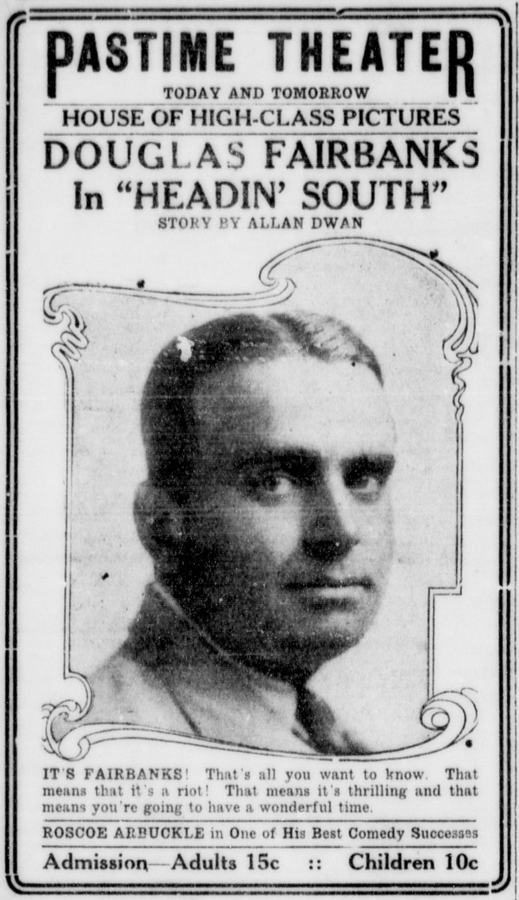
Allan Dwan, a prolific and influential director of the silent era, demonstrates his masterful command of visual storytelling in Headin' South. As both writer and director, Dwan meticulously constructs a narrative that relies heavily on evocative imagery, dynamic action sequences, and a keen understanding of the Western landscape as a character in itself. He utilizes sweeping long shots to emphasize the vastness and isolation of the border, making the ranger’s pursuit feel epic in scope. Close-ups are employed sparingly but effectively, highlighting the intensity of Fairbanks's expressions or the cunning glint in Campeau's eye. Dwan’s direction of action sequences is particularly noteworthy; the chases are exhilarating, edited with a rhythm that propels the narrative forward, showcasing Fairbanks’s physical feats without sacrificing clarity. The cinematography captures the harsh beauty of the desert, the dusty trails, and the sparse settlements, immersing the viewer in the authentic atmosphere of the frontier. The film’s visual language speaks volumes, conveying tension, danger, and the sheer exhilaration of the chase. Dwan’s ability to tell a complex story purely through images and performances is a hallmark of his genius, proving that silent cinema, in capable hands, was anything but silent in its impact. This meticulous attention to visual detail and narrative pacing is a quality that separates the truly great silent films, much like the compelling visual arcs found in The Easiest Way, which similarly used its environment to reflect character struggles, albeit in a different genre.
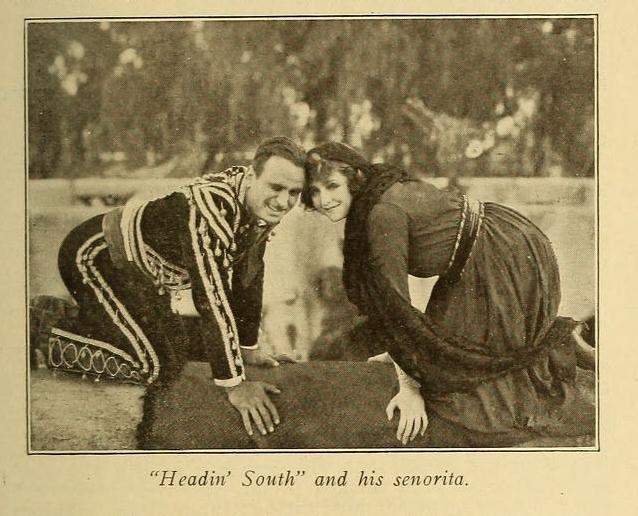
Beyond the thrilling chases and heroic deeds, Headin' South delves into profound thematic territory, exploring the very nature of justice on the frontier. The U.S.-Mexican border, in Dwan’s depiction, is a liminal space, a zone where traditional laws are often circumvented, and individual morality is put to the ultimate test. Headin' South, as the embodiment of law and order, represents the struggle to impose civilization upon a wild, untamed landscape. Spanish Joe, conversely, symbolizes the inherent resistance to such order, the primal urge towards self-interest and lawlessness. The film deftly navigates the moral ambiguities of this setting; justice is not always swift or clean, and the methods employed by the ranger, while righteous, often push the boundaries of conventional legality. This moral complexity elevates the film beyond a simple good-versus-evil narrative, inviting audiences to consider the sacrifices and compromises necessary to forge a society in the wilderness. The film also touches upon themes of national identity and the evolving perception of the American West, a land of both boundless opportunity and inherent danger. The diverse cast, including Johnny Judd, Alice H. Smith, and Katherine MacDonald, contributes to a rich portrayal of this nascent society, showcasing the various individuals, from settlers to outlaws, who populated this challenging environment. Their struggles and triumphs, however briefly depicted, add a human dimension to the grander conflict, grounding the epic in relatable experiences. The pursuit of Spanish Joe becomes a metaphor for the larger societal struggle to define itself, to choose between chaos and order, a theme explored in different contexts but with similar intensity in films like Power, which examines the corrupting influence of unchecked authority, or the more direct frontier justice narratives seen in The Wild Strain.
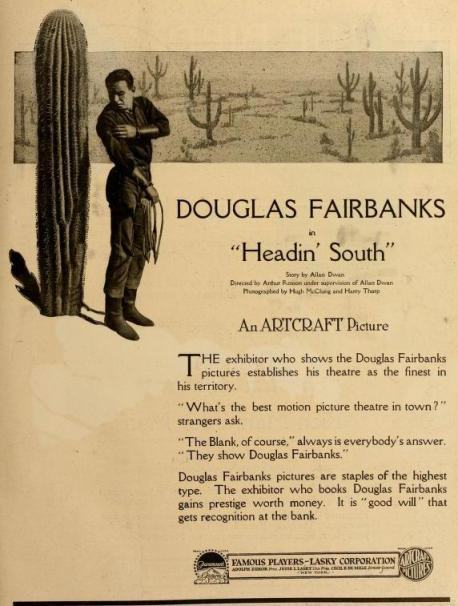
In an era saturated with cinematic spectacles, Headin' South stands as a powerful reminder of the foundational artistry of silent film. Its influence on the Western genre is undeniable, establishing many tropes and archetypes that would later become staples. Douglas Fairbanks’s performance, in particular, solidified his status as a screen legend, his athletic heroism inspiring countless subsequent action stars. Allan Dwan’s directorial flair, his ability to craft a compelling narrative through visual means, continues to be studied and admired by film historians. The film’s exploration of the U.S.-Mexican border as a site of both conflict and cultural exchange remains relevant, offering a glimpse into historical anxieties and the enduring allure of the frontier myth. While perhaps not as widely remembered as some of Fairbanks’s swashbuckling adventures, Headin' South deserves a prominent place in the pantheon of early Westerns. It is a film that speaks volumes without uttering a single word, its dramatic tension and thematic depth conveyed through the artistry of its performances, the ingenuity of its direction, and the timeless appeal of its story. It invites a re-evaluation, a deeper appreciation for the foundational works that paved the way for modern cinema. Comparing its raw, untamed energy to the more overtly dramatic narratives like Pauline, one can appreciate the diverse forms of heroism and narrative construction prevalent in the early 20th century. The sheer commitment to a singular vision, much like the focused narrative of A Jewel in Pawn, demonstrates the power of unadorned storytelling. Even when considering other border-centric narratives such as Selfish Yates, Headin' South distinguishes itself through the sheer force of its lead performance and the stark clarity of its moral conflict. The film remains a vital piece of cinematic history, offering both entertainment and profound insight into the human condition on the edge of civilization.
IMDb —
1919
Community
Log in to comment.