DbcultAccessing Vault...
6.7/10
Senior Film Conservator
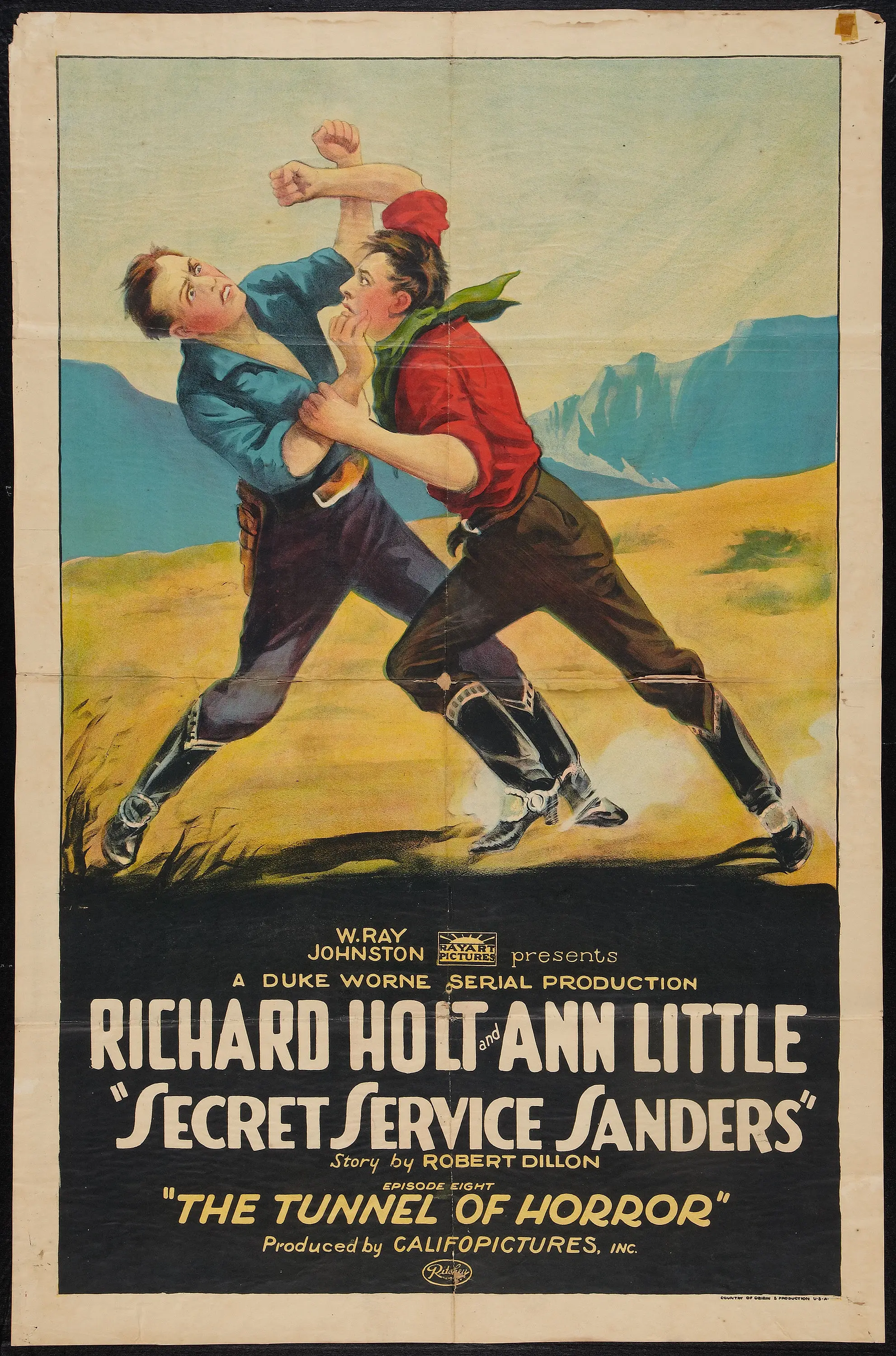
A definitive 6.7/10 rating for a film that redefined the boundaries of cult cinema. Secret Service Sanders remains a cornerstone of transgressive art.
In the grand tapestry of early cinema, few genres captured the anxiety and excitement of the 1920s quite like the espionage thriller. Secret Service Sanders stands as a towering, if often overlooked, pillar of this era. While the world was reeling from the aftermath of the Great War, audiences sought heroes who could navigate the new, fractured geopolitical landscape. Sanders, portrayed with a stoic intensity that predates the modern action hero by decades, provided exactly that. This isn't merely a film about catching spies; it is an exploration of the clandestine architecture of power. To understand this film is to understand the birth of the political thriller as we know it today.
The writing by Robert Dillon is particularly noteworthy. Dillon understood that in a silent medium, the stakes must be visual and the tension must be palpable through rhythm rather than dialogue. The screenplay avoids the common pitfalls of the time—overly melodramatic title cards and convoluted subplots—in favor of a streamlined, high-stakes hunt. Compared to other contemporary works like The Broken Coin, which relied heavily on episodic cliffhangers, Secret Service Sanders feels more like a cohesive cinematic journey, a precursor to the long-form narrative structures that would define the Golden Age of Hollywood.
The success of a film like this rests squarely on the shoulders of its cast, and here, we are treated to a masterclass. Ashton Dearholt brings a physicality to the role of Sanders that is both rugged and refined. He doesn't just occupy the frame; he dominates it with a sense of purpose. Every movement is calculated, reflecting the training of a man whose life depends on his situational awareness. There is a specific sequence involving a rooftop pursuit where Dearholt’s athleticism is on full display, yet it is his quiet moments—the way he watches a room, the subtle shift in his eyes when he realizes he’s being followed—that truly define the character.
Opposite him, Ann Little delivers a performance that challenges the 'damsel in distress' trope so prevalent in the 1920s. Little, often celebrated as a 'Serial Queen,' brings a level of agency and intelligence to her role that is refreshing. She is not merely a piece on Sanders' chessboard; she is a player in her own right. Her chemistry with Dearholt is built on a foundation of mutual professional respect, a rarity for the time. When we look at other films in this period, such as The Girl from Outback or Help Wanted - Male, the female lead is often relegated to a purely reactive role. Little, however, demands the audience's attention through sheer presence and a sharp, observational acting style.
"Secret Service Sanders is not just a relic of the past; it is a blueprint for the tension-driven cinema of the future, proving that silence is often the loudest tool in a director's arsenal."
From a technical standpoint, the cinematography in Secret Service Sanders is nothing short of revolutionary for its budget. The use of low-key lighting to create a sense of 'noir' before the term even existed is striking. The director (often credited as a collaborative effort under the studio system of the time) utilizes shadows not just for atmosphere, but as a narrative device. Sanders is frequently partially obscured, suggesting his dual nature—part man, part shadow of the state. This visual duality is a recurring theme throughout the film, emphasizing the hidden lives of those who inhabit the world of intelligence.
The pacing of the film is another area where it excels. While many silent films can feel sluggish to a modern audience, Secret Service Sanders maintains a brisk, almost breathless tempo. This is achieved through innovative editing techniques that cut between Sanders' perspective and the movements of his adversaries. It creates a sense of geographic clarity that is often missing in early action cinema. One can see the influence of this style in later masterworks like The Phantom Carriage, though Secret Service Sanders trades expressionist horror for grounded, high-stakes realism. The film understands the value of the 'slow burn' followed by a rapid-fire payoff, a rhythm that keeps the viewer engaged from the opening frame to the final resolution.
When placed alongside other 1920 releases like The Heart of a Child or Die platonische Ehe, the grit of Secret Service Sanders becomes even more apparent. While those films dealt with domesticity and social mores, Sanders was out in the world, dealing with the existential threats of a new century. There is a cynicism in this film that is quite modern. It acknowledges that the 'good guys' often have to do 'bad things' to maintain the status quo. This moral ambiguity is a bold stance for a film of this era, and it elevates the material above simple propaganda or escapism.
It is my firm opinion that Secret Service Sanders is one of the most underrated entries in the American silent canon. My first strong contention is that the film's portrayal of espionage is actually more realistic than many of the high-octane thrillers we see today. It focuses on the drudgery, the waiting, and the psychological pressure of the job. In a world of CGI explosions, there is something deeply compelling about a man sitting in a dark room, deciphering a code by candlelight, knowing that a single mistake could mean the end of his career—or his life.
Secondly, I would argue that the performance of Helen Broneau, though in a supporting role, provides the film's most essential emotional weight. While the men are busy with maps and pistols, Broneau’s character reflects the human cost of these secret wars. Her scenes are played with a quiet desperation that anchors the more fantastical elements of the plot. Without her, the film might have drifted into pure pulp; with her, it becomes a human drama. The interaction between her and Frank Baker's antagonist creates a tension that is as much about ideology as it is about the plot.
Robert Dillon’s influence on the structure cannot be overstated. As a writer who transitioned through the evolving landscape of the 1910s and 20s, he had a keen sense of what the 'new' audience wanted. They wanted speed, they wanted clarity, and they wanted a hero they could believe in. Dillon’s script for Secret Service Sanders provides all three. He avoids the flowery language of the Victorian era, opting instead for a punchy, direct style of storytelling. This is evident in the way information is revealed to the audience—rarely through a massive exposition dump, and usually through the actions of the characters themselves.
The film also benefits from a secondary cast that includes veterans like Ellis Houston and Clark B. Coffey. These actors provide a sense of world-building that makes the setting feel lived-in and dangerous. Pierre Coudre also makes a brief but memorable appearance, adding an international flair that reminds the audience of the global stakes at play. This ensemble approach ensures that the world of Sanders feels populated and complex, rather than just a stage for a single protagonist.
In conclusion, Secret Service Sanders is a vital piece of cinematic history that demands a re-evaluation. It is a film that balances the requirements of a popular thriller with the artistic ambitions of a serious drama. It takes a stance on the nature of duty and the cost of secrecy, refusing to offer easy answers or a purely happy ending. For fans of the genre, it is an essential watch; for students of film history, it is a fascinating look at the development of visual storytelling.
Whether you are drawn to it for the magnetic performances of Ann Little and Ashton Dearholt, or for the tight, disciplined writing of Robert Dillon, Secret Service Sanders will not disappoint. It is a reminder that even in the silent era, cinema was capable of complex, nuanced, and deeply thrilling narratives. It stands alongside The Adventures of Robinson Crusoe and Whitechapel as a testament to the versatility of 1920s filmmaking. If you have the chance to see a preserved print, do not hesitate. This is premium cinema in its purest, most focused form.
IMDb —
1914
Community
Log in to comment.