DbcultAccessing Vault...
Cult Review
Senior Film Conservator
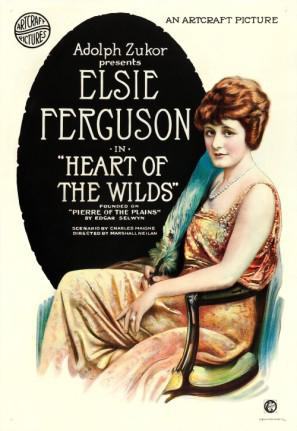
Ah, the silent era! A time when narratives unfurled not through the cacophony of spoken dialogue, but through the profound eloquence of gesture, expression, and the rhythmic cadence of intertitles. 'Heart of the Wilds' emerges from this golden age, a cinematic artifact that, even today, pulses with a primal energy, offering a stark, unvarnished glimpse into the moral complexities of the Canadian Northwest frontier. It’s a landscape as much a character as any human, shaping destinies with its unforgiving beauty and its isolation. This isn't merely a tale; it's an exploration of the human spirit pushed to its very limits, where the lines between right and wrong blur under the harsh glare of survival and deep-seated loyalties.
From the outset, the film immerses us in a world governed by its own brutal logic. The Galbraith tavern, a beacon of illicit commerce and a nexus of human drama, stands as a microcosm of the frontier's inherent contradictions. Peter Galbraith, the patriarch, is not just a tavern owner; he's a bootlegger, a purveyor of forbidden spirits to the Indigenous communities, a trade both lucrative and morally fraught. His actions set the stage for a chain of events that will unravel the lives of his children, Jen and Val. This isn't just a story about crime; it's about the economic realities and the desperate measures taken in an era where formal law often felt distant, a mere whisper against the roar of necessity. The film doesn't shy away from depicting the impact of such trade, setting up the initial conflict with Grey Cloud, an Indigenous man whose interaction with the illegal liquor trade tragically escalates into violence. It's a sobering reminder of the societal tensions and exploitation that defined many frontier narratives, echoing the more direct social commentary seen in films like Race Suicide, though 'Heart of the Wilds' channels its critique through the lens of personal tragedy rather than overt polemic.
Jen Galbraith, portrayed with a fierce intensity by Elsie Ferguson, is the emotional anchor of this tumultuous narrative. Her character is a captivating study in resilience and conflicted devotion. She loves Sergeant Tom Gellatly, a man embodying the very law that threatens her family. This romantic entanglement isn't a mere subplot; it's the very engine of the film's dramatic tension. How does one reconcile love for a man of the law with an unwavering loyalty to a family steeped in illegality? This internal struggle elevates Jen beyond a simple damsel in distress; she is an active participant in her fate, making agonizing choices that define her character. Her initial scenes paint her as a woman of quiet strength, a silent observer of her father's dealings, yet possessing an inner fire that ignites when her honor or her loved ones are threatened.
The narrative’s pivotal turning point arrives with Val’s desperate attempt to retrieve the illegally sold liquor from Grey Cloud. What begins as a practical matter quickly devolves into a personal affront when Grey Cloud, perhaps emboldened by drink or resentful of the transaction, hurls an insult at Jen. Val’s reaction is swift, visceral, and tragic. The gunshot that fells Grey Cloud is more than a plot device; it’s a seismic event that shatters the fragile peace of the Galbraith household and catapults the characters into a maelstrom of legal pursuit and moral compromise. This act of violence, born of a perceived slight against a beloved sister, underscores the volatile nature of frontier justice, where personal honor often superseded formal legal processes. It's a stark reminder of the thin veil separating civility from savagery in these untamed lands.
Enter Pierre, Val’s friend, whose true character is slowly, menacingly revealed. His resolution to win Jen, despite her evident affection for Tom, adds another layer of insidious tension. Pierre is not merely a rival; he is a manipulative force, a harbinger of betrayal whose actions will compound the already dire circumstances. His silent machinations, visible through subtle shifts in his demeanor and glances, are a testament to the power of silent film acting, where every flicker of an eye, every curl of a lip, conveys volumes. This kind of nuanced villainy, where the threat is psychological as much as physical, can be seen in the intricate plotting of films like Das Geheimschloss, where hidden motives drive much of the drama.
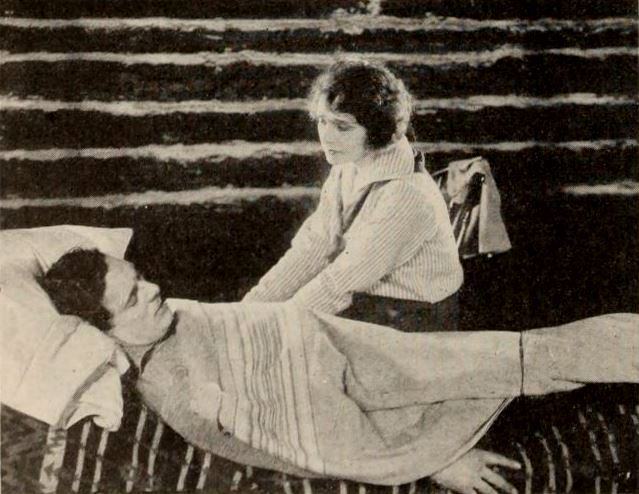
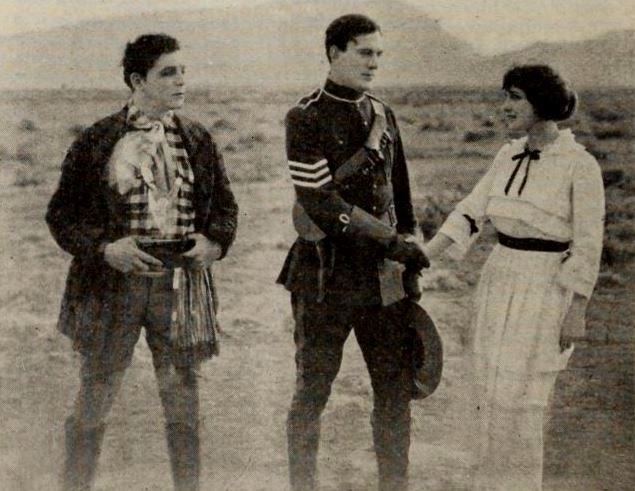
When Sergeant Tom Gellatly (Thomas Meighan) is assigned to track down Grey Cloud’s murderer, the irony is palpable and profoundly tragic. The man Jen loves is now tasked with hunting her brother. This is where the film truly excels in building suspense and emotional conflict. Tom's arrival at the tavern, a place he frequents for love, now becomes a stage for subterfuge and desperate measures. The decision by Galbraith and Pierre to drug Tom is a desperate, ethically murky act, highlighting the extreme lengths to which people will go to protect their own, even if it means compromising the very fabric of justice. It speaks to a profound belief in family above all else, a theme often explored in the gritty realism of early cinema.
Jen's subsequent journey to police headquarters, carrying Tom's papers, is fraught with silent dread. The moment of revelation, when she discovers the arrest orders for Val, is a masterclass in cinematic tension. Elsie Ferguson's portrayal of Jen's internal agony, the visible conflict between her love for Tom and her loyalty to Val, is heartbreaking. It’s a moment of profound moral dilemma, where the only choices seem to lead to further pain. Her decision to shoot Tom, a desperate, illogical act born of panic and love, is the dramatic apex of the film. It's an act that, on the surface, appears to be a betrayal of her love, yet it stems from the deepest wellspring of familial devotion. This complex portrayal of a woman making impossible choices resonates strongly, echoing the tragic romantic entanglements and difficult decisions faced by protagonists in films like La vie de Bohème, where love often collides with harsh reality.
The immediate aftermath of Jen's desperate act is chaos. Pierre, ever the opportunist, seizes the moment to attack Jen, revealing his true predatory nature. His actions solidify his role as the true antagonist, not just a rival for Jen's affection but a genuinely malevolent force. The timely return of Val, closely followed by a squad of police, ramps up the tension to an almost unbearable degree. The tavern, once a place of illicit comfort, transforms into a claustrophobic arena of confrontation and revelation. The forced confession of Pierre by Val and Jen is a powerful scene, a testament to their combined strength and their desperate need for truth to emerge amidst the lies and misunderstandings. It’s a moment of raw, unbridled justice, enacted not by the formal institutions of law, but by those directly impacted by the crime, a primal scream for vindication.
But it is Tom Gellatly's final act that truly elevates 'Heart of the Wilds' beyond a mere frontier drama. His declaration to the police, claiming his wound was an accidental self-infliction, is an extraordinary moment of self-sacrifice and profound love. It's a choice that defies logic and duty, placing love and loyalty above the letter of the law. This act of grace not only protects Jen from the consequences of her desperate choice but also subtly shifts the moral compass of the narrative. It suggests that true justice, in this wild and untamed land, sometimes requires a bending of rules, a human touch that transcends rigid legal frameworks. This kind of moral ambiguity, where heroes make difficult, even illegal, choices for a greater good, is a fascinating aspect of early cinema, perhaps even hinting at the vigilante themes explored in serials like The New Mission of Judex, albeit on a more personal scale.
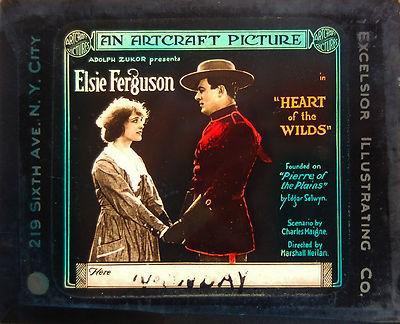
The performances in 'Heart of the Wilds' are a masterclass in silent film acting. Elsie Ferguson, in particular, commands the screen with her expressive eyes and nuanced physicality. She conveys Jen's inner turmoil, her fierce protectiveness, and her enduring love without uttering a single word. Thomas Meighan, as Tom Gellatly, embodies the stoic heroism of the Mounted Police while subtly revealing the emotional depth beneath the uniform. His final act of self-sacrifice is made all the more powerful by his restrained performance throughout the film. Matt Moore as Val and Sidney D'Albrook as Pierre also deliver compelling performances, with D'Albrook's portrayal of the villainous Pierre being particularly chilling in its understated menace.
The film's pacing is remarkably effective, building tension incrementally, punctuated by bursts of dramatic action. The sequences in the wilderness, though perhaps not as expansive as those in a film like Tarzan of the Apes, still evoke the isolation and grandeur of the Canadian Northwest. The cinematography, while constrained by the technology of its era, effectively uses close-ups to capture the emotional intensity of the actors and wide shots to establish the desolate beauty of the setting. The use of light and shadow, characteristic of early cinema, adds to the dramatic atmosphere, particularly in the tavern scenes where secrets and betrayals lurk in the dimly lit corners.
'Heart of the Wilds' is more than just a historical curiosity; it's a potent reminder of the enduring power of storytelling, even without spoken dialogue. It delves into universal themes of love, loyalty, sacrifice, and the often-blurry lines of morality in extraordinary circumstances. The film doesn't offer easy answers, instead preferring to explore the complex motivations that drive human behavior when pushed to the brink. It leaves the audience pondering the true meaning of justice and the profound impact of individual choices on the lives of others. The ending, while providing a form of resolution, still carries the weight of the moral compromises made, suggesting that even in moments of triumph, the shadows of past actions linger.
The film's exploration of frontier life, the interactions between different cultural groups (even if simplified for the screen), and the challenges of establishing law and order in a vast, untamed territory offers valuable insight into the preoccupations of its time. It’s a compelling piece of cinematic history that showcases the nascent artistry of filmmaking, demonstrating how powerful narratives could be crafted through visual storytelling alone. For those interested in the evolution of film and the rich tapestry of silent cinema, 'Heart of the Wilds' is a worthy watch, a dramatic journey into the untamed heart of both a landscape and the human soul.
In an era that often glorified clear-cut heroes and villains, 'Heart of the Wilds' dared to paint its characters in shades of gray, allowing for a more nuanced and ultimately more human story. It’s a testament to the vision of its writers, Charles Maigne, Gilbert Parker, and Edgar Selwyn, who crafted a narrative rich in emotional depth and dramatic urgency. The film stands as a vibrant example of how early cinema, far from being simplistic, was already grappling with complex psychological and social issues, laying the groundwork for the intricate storytelling we enjoy today. Its enduring appeal lies in its ability to connect with timeless human dilemmas, making it a powerful experience even a century after its initial release. It's a wild ride, indeed, one that stays with you long after the final frame.
IMDb 6.5
1932
Community
Log in to comment.