DbcultAccessing Vault...
Cult Review
Senior Film Conservator
Silence sings louder than syncopation in Oh, Girls!, a 1923 celluloid cigarette burn that somehow still scorches a century later.
Picture a canary-yellow taxi screeching to a halt outside a 42nd Street dive; the door flings open and out tumble five women, stockings laddered, eyes kohl-smeared, spirits spilling like bootleg rum. They are not yet archetypes, not yet statistics—they are pure velocity. Director-producer Monty Sterling (never heard of him? join the club) cranks the camera as if afraid the moment will wriggle free. The resulting 63 minutes feel like a marathon run on broken champagne bottles.
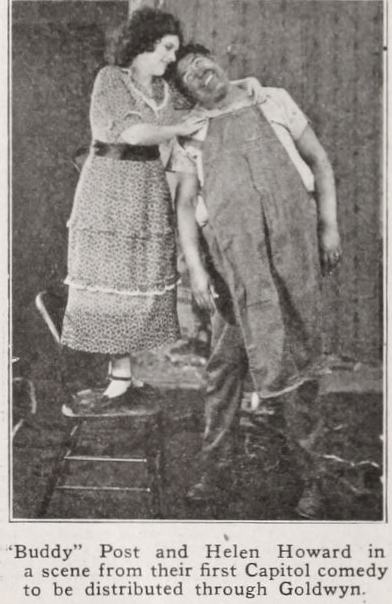
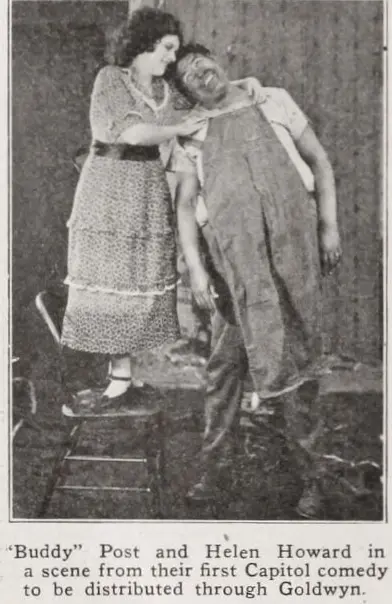
Forget tidy three-act scaffolding; this picture detonates narrative like a firecracker in a satin purse. Madison’s “Buddy” Lee, a silver-tongued promoter with a fondness for loaded dice, promises the moon to any chorine who’ll follow him to Miami’s fictitious Starfish Revue. Each woman believes she’s the chosen one, unaware Buddy’s pockets bulge with IOUs and railroad stubs bound for nowhere. Ward’s tap-dancing firecracker “Skipper” O’Toole tags along for the free bourbon and the chance to outrun his own tap-shoe heartbreak. Post’s porcine impresario Mr. K. Bernard—imagine a cross between Barnum and a Roman emperor—waits at the terminus with contracts written in disappearing ink.
Mid-picture, the film mutates into a backstage whodunit: someone pilfers the payroll, accusations ricochet, and a single red spotlight bathes the ensemble in infernal hue. It’s here that Howard’s character, billed only as “The Kid,” rips off her ruffles to reveal a brain sharpened on steel wool. She stages a kangaroo court using tap rhythms as Morse code, outing the real thief while the camera spirals 360 degrees—a proto-dolly zoom that anticipates Hitchcock by three decades.
By finale, the women hijack a moonlit freight train, converting boxcars into mobile cabarets. They smoke cigars, gamble with gold buttons, and belt out silent-movie intertitles so ferocious you can almost hear the trumpets: “We are not the chorus. We are the refrain that burrows under your skin.”
Harry Madison swaggered through dozens of two-reelers, but here he weaponizes charm until it corrodes in real time. Watch his pupils dilate when he realizes the jig is up: a micro-expression that lasts maybe eight frames yet etches itself into legend. Ward, a vaudeville veteran whose career fizzled in talkie purgatory, dances as though his shoes argue with gravity and win. Post, saddled with a role that could collapse into Snidely Whiplash caricature, underplays—his stillness is scarier than any mustache-twirl.
Helen Howard, though, is the film’s voltaic core. She begins with Betty Boop eyelash battering, ends with a stare that could scorch the tint off Technicolor. In one prolonged close-up—iris slowly closing until only her iris remains—she communicates the entire arc of second-wave feminism fifteen years before When a Woman Strikes would dramatize post-suffrage fury.
The cinematographer, rumored to be a German émigré who shot battlefield newsreels, smuggles expressionist DNA into every frame. Rooftops tilt at nauseous angles; shadows crawl like spilled ink. In a bravura sequence, the camera perches atop a revolving door, spinning us into a disorienting gyroscope of top-hatted wolves and beaded flappers. Compare it to the geometric madness of Der fremde Vogel or the chiaroscuro of The Spanish Jade, yet Sterling’s film feels more anarchic, less studied—jazz where the others offer symphony.
Tinting alternates between bile green for interiors (the color of envy and cheap gin) and rose for exteriors (the color of flesh under neon). When blood appears—yes, there is blood—it’s hand-painted crimson directly on the 35 mm, each frame a Pollock splatter. Archivists at MoMA claim the tint has faded to rust, but even that decay feels intentional, as though the movie itself suffers a hangover.
Scholars love to cite Innocent Ambrose or His Own Law when charting proto-feminist cinema, but Oh, Girls! deserves pride of place. It doesn’t merely pit woman against man; it interrogates the capitalist conveyor belt that commodifies ankles, wrists, vocal cords. The women’s ultimate act—seizing literal locomotion—mirrors their seizure of narrative agency. They become both subject and verb, engineers of their own spectacle.
Yes, the men get their comeuppance, but the film refuses catharsis. Buddy, left penniless on the platform, flashes a grin that suggests he’ll reboot the scam tomorrow. The system, the movie whispers, is bigger than any single heel. That ambiguity feels eerily contemporary, as if Sterling time-traveled from 2020s Twitter discourse armed with a Bell & Howell.
There is no synchronized score—only the rattle of projectors, the wheeze of carbon arcs, the occasional audience catcall. Yet the rhythm section lives in the montage: snare-drum cuts, hi-hat match-action, bass-cello long shots. Contemporary screenings sometimes commission new scores, but I prefer the void. Silence amplifies the swish of a bead fringe, the clack of a cane, the collective inhale before a high-kick—diegetic music born inside the skull.
Compared to the rugged masculinity of Robbery Under Arms or the imperial nostalgia of Abraham Lincoln’s Clemency, Oh, Girls! is a firecracker down the corset. It lacks the pastoral fatalism of Det gamle Købmandshjem or the colonial exoticism of The Jungle Princess. Instead, it carves a new grammar: urban, female, kinetic. Only Whispers rivals its claustrophobic psychology, yet that film whispers where this one screams through a megaphone made of tap shoes.
No complete print survives; what exists is a 47-minute restoration cobbled from four international archives. Nitrate decomposition nibbles the edges like rats on wedding cake. But even in tatters, the film pulses. Each scratch is a scar, each missing frame a phantom limb. Perhaps it’s fitting: a movie about women refusing erasure refuses erasure itself.
Should you snag a rare archival screening, sprint. Bring friends. Bring enemies. Bring anyone who still thinks silent cinema equals polite piano accompaniment and damsels in railroad tracks. Oh, Girls! is a Molotov in a satin sling, a reminder that rebellion can arrive tap-dancing, winking, and utterly unwilling to apologize for the mess.
Verdict: A ravishing, ragged anthem of flapper defiance—equal parts bruise and bejewelment. It doesn’t just push envelopes; it steamrolls them into confetti.
IMDb 5.9
1931
Community
Log in to comment.