DbcultAccessing Vault...
Cult Review
Senior Film Conservator
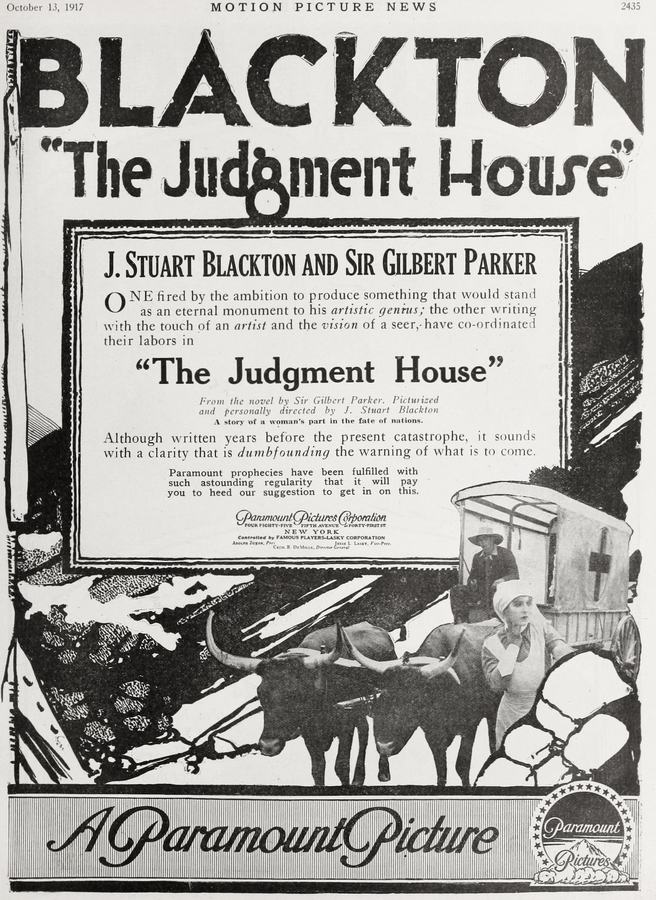
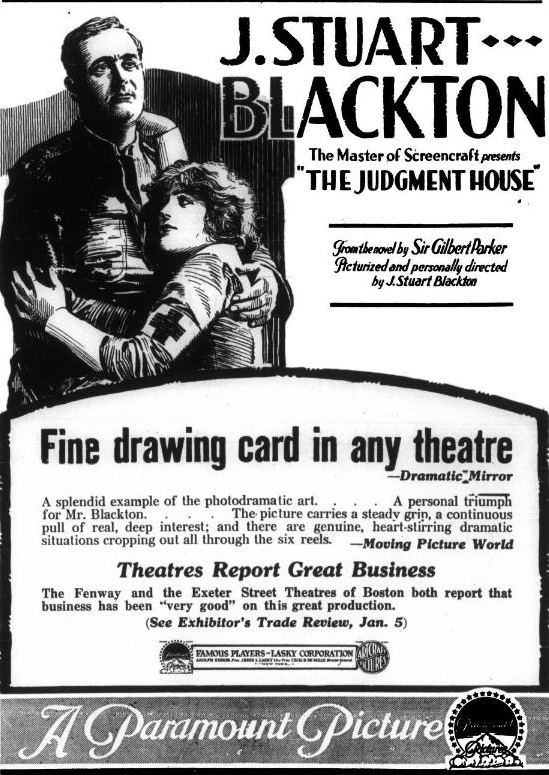
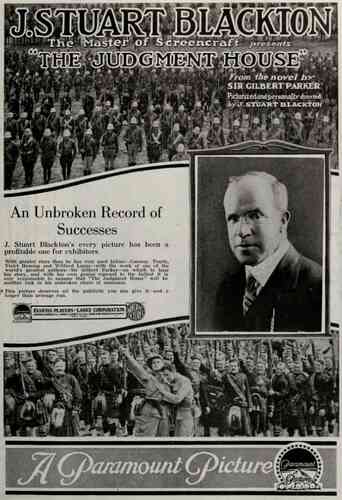
In the pantheon of early silent cinema, few works attempt the sheer thematic density of The Judgment House (1917). Directed by the pioneering J. Stuart Blackton and adapted from the novel by Sir Gilbert Parker, this film is a colossal exploration of the human psyche under the duress of both social expectation and the brutalizing realities of war. It is a film that refuses to settle into a single genre, oscillating between a drawing-room melodrama and a sweeping military epic, much like the volatile heart of its protagonist, Jasmine Grenfel.
The narrative begins in a London that feels both opulent and suffocating. Violet Heming portrays Jasmine with a nuanced volatility that was rare for the era. Unlike the more straightforward heroines found in contemporary works like The Girl and the Game, Jasmine is a creature of impulse and aesthetic longing. She is flanked by two men who represent the duality of the British Empire: the raw, colonial energy of Rudyard Byng (Wilfred Lucas) and the refined, diplomatic stoicism of Ian Stafford (Conway Tearle). When she chooses Byng, it isn't out of love, but out of a submission to his sheer 'forcefulness'—a decision that sets the stage for a tragic deconstruction of the Victorian marriage.
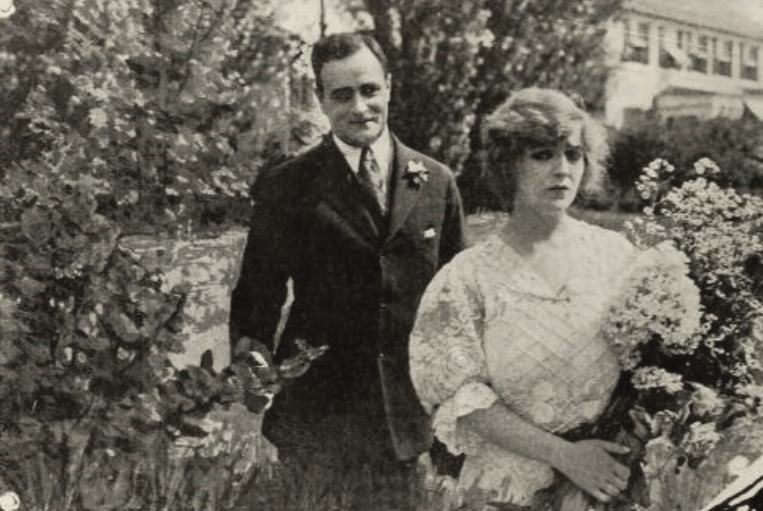
The film’s first act is a masterclass in tension. We see the slow decay of the Byngs' domestic bliss. Byng, once a man of action, becomes a man of dissipation, his wealth acting as a slow poison. This moral rot is mirrored in the character of Adrian Fellow, Byng’s secretary, played with a slinking, reptilian grace by Paul Doucet. Fellow’s presence in the household is a malignancy; his dual affairs with Jasmine and the dancer Al'Mah (Florence Deshon) create a tangled web of deceit that rivals the intricate plotting of The Secret Game. The cinematography here is claustrophobic, using shadows and tight framing to emphasize the feeling of being trapped within one's own choices—a theme also explored in the somber Souls Enchained.
The pivot from the domestic sphere to the battlefields of South Africa is jarring, but intentionally so. Blackton uses the Boer War not merely as a backdrop, but as a spiritual 'Judgment House' where the characters are stripped of their pretenses. The transition is reminiscent of the tonal shifts in The Joan of Arc of Loos, where personal grievances are subsumed by the collective agony of a nation at war. The production values here are staggering for 1917; the battle sequences possess a gritty verisimilitude that avoids the sanitized heroics often seen in early war films.
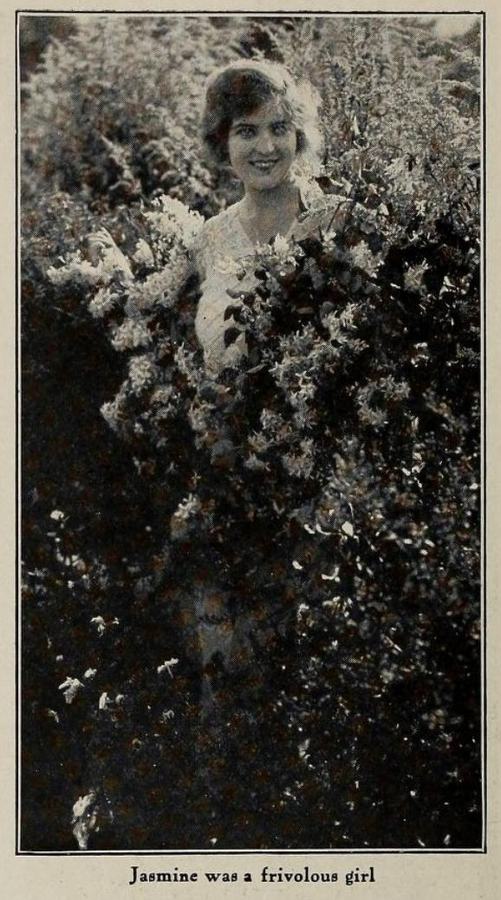
Byng’s journey to the front is a classic arc of redemption. He sheds the lethargy of his London life, finding a primitive clarity in the violence of the veldt. Meanwhile, the return of Ian Stafford provides the film’s emotional anchor. Stafford’s death in battle is not just a plot point; it is the ultimate sacrifice that forces Jasmine to confront the vacuity of her previous flirtations. The film suggests that only through the witnessing of such absolute loss can a character like Jasmine find the 'true commitment' she so desperately lacked in the comfort of her London parlor.
The mystery surrounding Adrian Fellow’s murder introduces a proto-noir element to the proceedings. The discovery of the poisoned needle is a flourish of high melodrama that might feel out of place in a modern film, yet within the context of 1910s cinema, it serves as a potent symbol of the 'hidden' dangers of the social climber. Much like the narrative twists in The House of a Thousand Candles, the mystery keeps the audience off-balance, ensuring that the moral lessons are wrapped in a compelling genre skin.
Al'Mah’s confession is the film's most operatic moment. Florence Deshon delivers a performance of tragic intensity, her character representing the 'outsider' who ultimately possesses more moral courage than the aristocrats she serves. Her death as a nurse on the battlefield provides a symmetry to the story; she kills for love and dies for duty, a path that Jasmine must eventually emulate, albeit in a less literal sense. This focus on the redemptive power of female sacrifice is a recurring trope in films of this era, such as The Silent Voice.
When comparing The Judgment House to other Vitagraph productions like The Education of Mr. Pipp, one notices a significant leap in narrative ambition. While the latter is a charming social comedy, Blackton’s work here is an attempt at a 'total cinema' that addresses the political and the personal simultaneously. It shares some DNA with the Hungarian drama Akit ketten szeretnek (Those Whom Two Love), particularly in its exploration of the destructive nature of the romantic triangle.
However, where Gambling Inside and Out might focus on the vice itself, The Judgment House focuses on the *consequences* of character flaws. The 'gambling' here is not with cards, but with lives and reputations. The film’s pacing is more deliberate than the action-oriented The Greyhound, allowing the psychological weight of the situations to settle. Even when compared to the youthful innocence of Tom Brown's Schooldays, Blackton’s film feels like a cynical, yet ultimately hopeful, adult counterpart.
Visually, the film is a feast for those who appreciate the 'tableau' style of early cinema. The set designs for the Grenfel and Byng estates are marvels of Edwardian detail, providing a stark contrast to the desolate, wind-swept landscapes of the South African front. The use of tinting—though often lost in modern reproductions—would have originally guided the audience through the emotional shifts of the film, from the cool blues of the London nights to the fiery reds of the battlefield. This aesthetic sophistication is what separates a Vitagraph prestige picture from the more utilitarian output of the time, such as The Good Bad-Man.
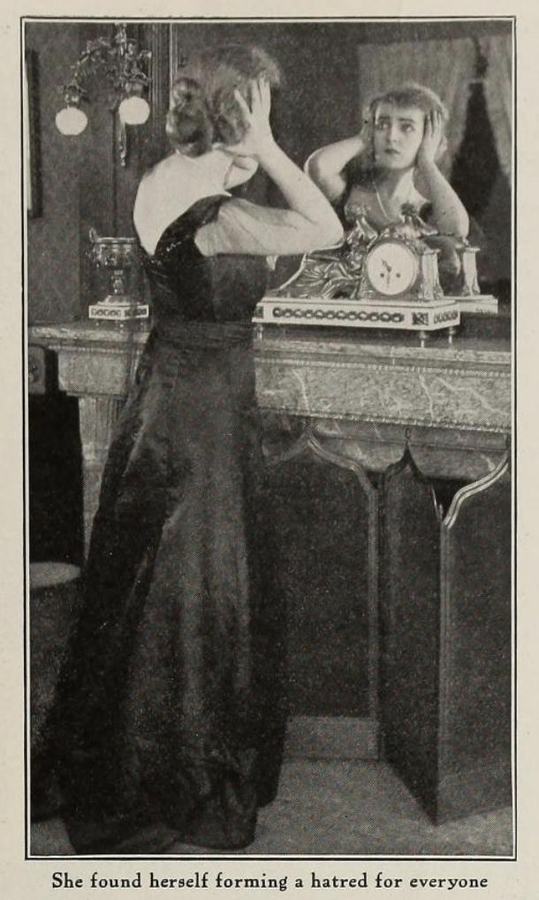
The screenplay by Gilbert Parker and J. Stuart Blackton is remarkably literate. It avoids the over-reliance on intertitles, allowing the actors’ expressions to carry the narrative burden. There is a specific scene—the discovery of the letter—where the camera lingers on Wilfred Lucas's face. We see the transition from confusion to a murderous, atavistic rage, a moment of acting that predates the psychological realism of the 1920s. It is a far cry from the more staged theatricality of Sonho de Valsa or the light-heartedness of After the Ball.
Ultimately, The Judgment House is a film about the end of an era. It captures the moment when the Victorian world-view was shattered by the global conflicts of the 20th century. Jasmine’s 'realization' at the end of the film—that she is responsible for her own unhappiness—is a modern sentiment. It moves away from the 'damsel in distress' trope and places the agency (and the blame) squarely on the woman’s shoulders. This proto-feminist undercurrent, though wrapped in the trappings of a war drama, makes the film feel surprisingly contemporary.
In the broader context of silent film history, this work stands alongside El amor que huye as a testament to the power of the melodrama to address complex social issues. It is a long, demanding watch, but for those willing to step into the 'Judgment House,' the rewards are immense. It is a cinematic experience that demands we look at our own 'dissipations' and ask what crucible would be required to bring us back to our true selves.
The Judgment House remains a vital piece of the Vitagraph legacy, a sprawling, ambitious, and deeply human document of a world in transition. It is a film that doesn't just tell a story; it builds an world where every action has a weight, and every soul must eventually face its own day of reckoning.
IMDb 5.9
1927
Community
Log in to comment.