DbcultAccessing Vault...
Cult Review
Senior Film Conservator
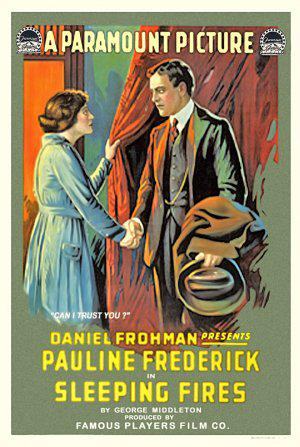
The first time I encountered Sleeping Fires it was a 16-mm print spliced together with masking tape, flickering like a damaged nerve in a university basement. Even battered, the film radiated a chill that has not left me since. Pauline Frederick plays Eleanor Maitland, a woman whose body becomes the contested borderland of a marriage that was never a marriage but a property deed written in flesh. Watch how Frederick lowers her gaze when the husband—John St. Polis at his most reptilian—enters the nursery: the eyelids are opera curtains dropping on a crime scene.
Director Hugh Ford, usually dismissed as a metteur-en-scène for hire, here operates like a surveilling god. He parks the camera at the threshold of doorways so that every interior looks like a witness box. The courtroom, in fact, is never shown; we understand jurisprudence only as something whispered in hallways or stamped on the backs of envelopes. The legal ledger is replaced by the more merciless accounting of lullabies: every time Eleanor sings to her child the husband snaps the music box shut, counting the seconds of withheld affection like coins.
Compare this domestic panopticon to The Devil's Bondwoman where corridors are merely ominous. In Sleeping Fires they are mnemonic devices: each step from nursery to study measures the radius of Eleanor’s permitted life. The set designers embed family portraits whose eyes have been scratched out, so that even ancestors collude in the erasure. Notice the wallpaper—an ochre arabesque that seems to crawl toward the crib at night, as though the room itself were hungry.
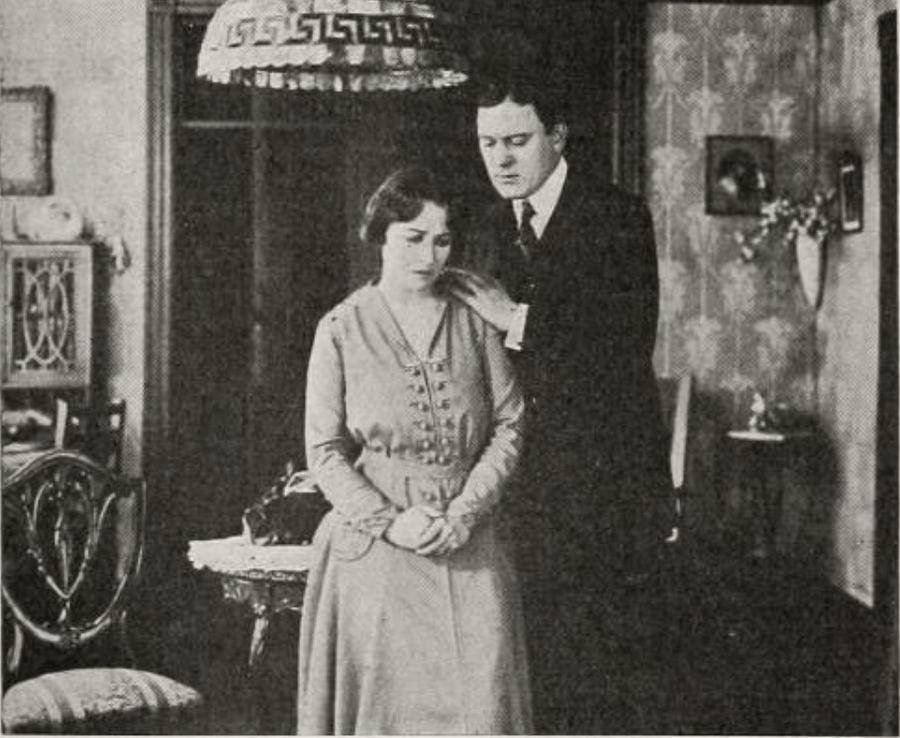
Cinematographer William Marshall (unjustly forgotten) lights faces from below using kerosene lamps, turning cheekbones into cliffs and eye-sockets into caves. The child, played by an angelic Helen Dahl, is the only character allowed genuine high-key brightness; everyone else glowers under Rembrandt gloom. When Eleanor finally lifts the baby over the garden gate, the moon suddenly breaks through—a magnesium flare of possibility—yet Marshall lets the light pool only on her forearms, leaving her face in eclipse. The effect is ethical rather than aesthetic: motherhood is illuminated, personhood remains in negotiable darkness.
George Middleton’s intertitles refuse the usual sentimental gush. One card reads: "He gave her roses—thorns intact—and called it peace." The aphorism stings precisely because it withholds exclamation marks; the cruelty is rhetorical as well as marital. Middleton reportedly trimmed 30% of the dialogue in post, forcing the actors to convey plot through micro-gesture: the way Maurice Steuart’s attorney brushes non-existent lint from his sleeve while advising Eleanor to "be reasonable," the flicker of Thomas Meighan’s reformed-villain doctor as he recognises Stockholm syndrome decades before the term exists.
This verbal austerity contrasts sharply with The Love Liar, where intertitles sprawl like ivy. Here, silence is the more sophisticated blade. When the husband declares, "The child stays; you may visit—by appointment," the camera cuts to Eleanor’s hands, not her face. The fingers splay as if pressing against an invisible pane. That pane is the fourth wall, and by extension the audience’s own voyeurism—we become co-conspirators in the spectacle of maternal dispossession.
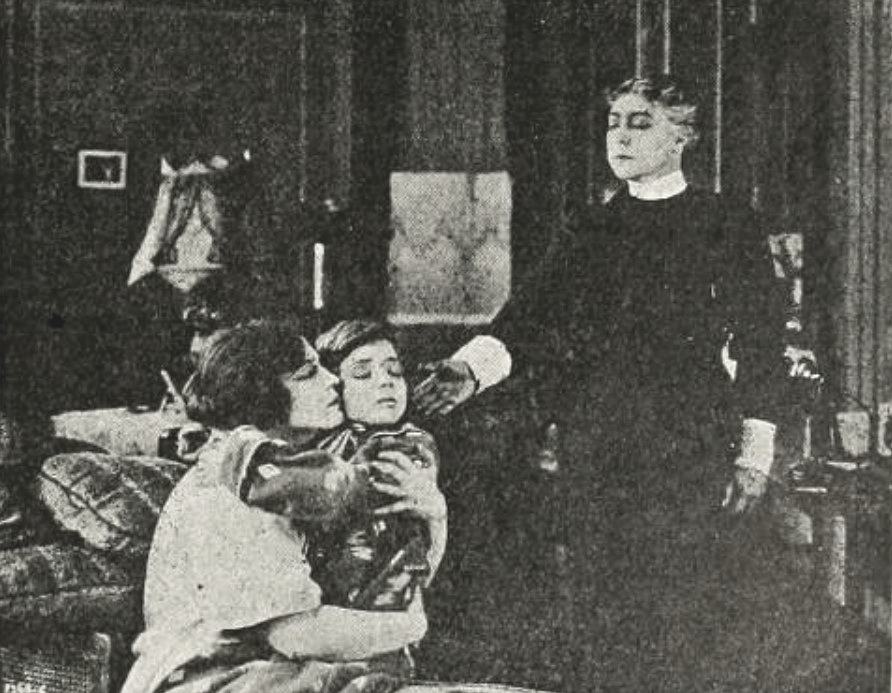
Silent-era divas were taught to semaphore emotion; Frederick instead works in millimeters. Observe the scene where she listens through the keyhole to her husband promising the child to his mistress. A lesser performer would collapse. Frederick allows only the left eye to twitch—a flutter so precise it could be sutured into the filmstrip itself. The tear that finally emerges travels horizontally, caught on the ridge of her cheekbone like a bead of mercury refusing gravity. The moment is so intimate you feel you should look away; the camera refuses you that courtesy.
Critics often compare her to Masks and Faces star Hedda Vernon, yet Vernon externalised conflict through flamboyant masquerade. Frederick internalises until the mask becomes bone. The performance ages like tannin: the more distance we gain from 1917, the more contemporary she feels, predicating the minimalist ferocity of Liv Ullmann or even Julianne Moore in Still Alice.
Beneath its melodramatic skin Sleeping Fires is a Marxist pamphlet disguised as maternal weepie. The husband’s power derives less from patriarchal entitlement than from liquidity: he has converted ancestral land into railroad stock, and can therefore relocate the child to any jurisdiction where courts favor capital. Eleanor’s counter-move is to weaponise the very intangible he dismisses—domestic knowledge. She knows which floorboards creak at 2 a.m., which maid owes her gambling brother, which lawyer still drinks tea with her abolitionist father’s name on his lips. Revolution, the film whispers, begins not in the street but in the scullery.
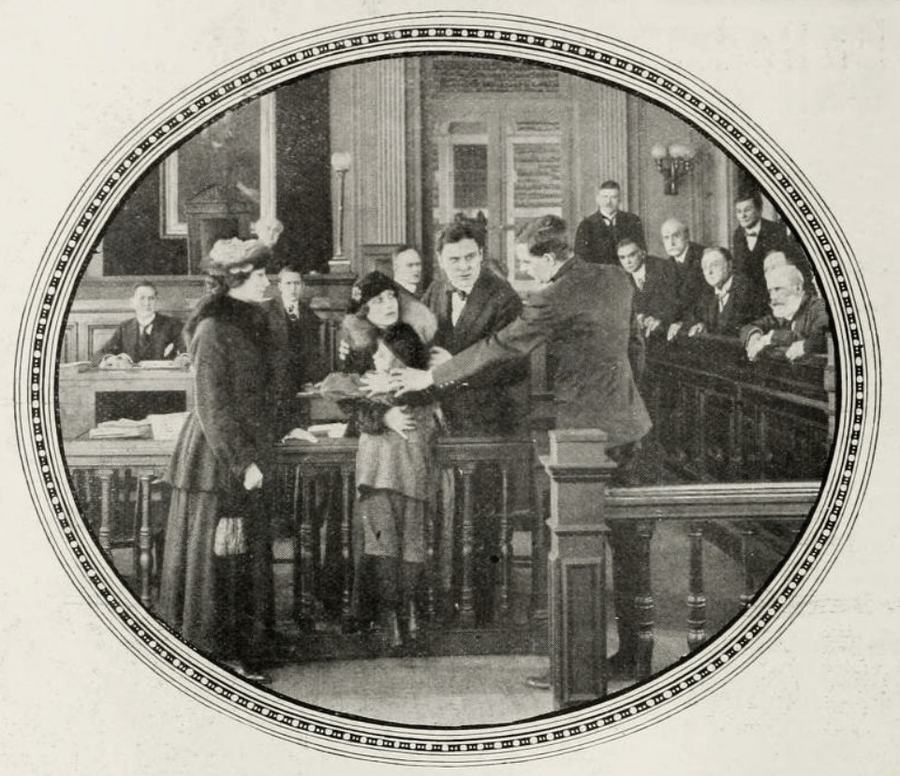
This critique anticipates Destiny's Toy yet goes further, suggesting that children themselves are the final commodity in a market where wives are already foreclosed property. When Eleanor finally bars the nursery door with her own body, the gesture is less maternal than proletarian: she is occupying the factory floor of reproduction.
No original score survives, so each curator must re-compose the silence. At the 2019 Pordenone Silent Film Festival, Maud Nelissen premiered a chamber quartet that begins with a lullaby in A-minor played on toy piano, gradually invaded by double bass until the lullaby is indistinguishable from a funeral march. The match-cut to the burning gate syncs with a sudden shift to major key—an audacious move that makes liberation sound eerily like lullaby in reverse. Viewers reported nightmares not from the flames but from the unresolved cadence that follows.
Set Sleeping Fires beside Straight Shooting and you see Ford’s frontier morality laid bare: when women avenge in the West they ride horses; in the East they ride silence. Pair it with The Woman Who Dared and the difference is jurisprudential: the earlier film petitions the state for rights, the later film recognises the state as co-abuser. Only The Remittance Man shares its nihilism, yet that nihilism is masculine, colonial, and ultimately escapist. Eleanor’s triumph is that she cannot escape; she must remake the prison into a hearth.
The current 4K restoration by EYE Filmmuseum reinstates two missing intertitles that flip the moral polarity: we learn the husband once saved Eleanor’s father from bankruptcy, binding her to him via reciprocal debt. This revelation stains the heroine’s vengeance with a shade of ingratitude, complicating every prior sympathy. The tinting schedule also reintroduces amber for interiors and viridian for exteriors—code for domesticity vs. peril. Yet some cinephiles protest the choice, arguing the original was entirely in bromide grey, making the world a single courtroom without exits. Either way, the scars remain visible: scratches shaped like forked lightning across the gate-burning scene, emulsion bubbles that resemble milk curdling on the child’s lip—testament that archival rescue is itself a form of controlled arson.
To watch Sleeping Fires is to be cross-examined on your own complacency. The film ends on a freeze-frame that was not in the shooting script—Eleanor’s silhouette against the burning manor, the child’s hand raised in what could be either farewell or blessing. The optical printer jammed during that reel; the freeze is technically an accident. Like all great accidents it feels predestined, a crack in time where cinema admits that justice, like nitrate, is flammable. You leave the screening room sniffing smoke that isn’t there, carrying home a silence louder than any verdict.
If you emerge unscorched, congratulations: you have become the new jury, and the film has just sequestered your heart.
IMDb 6.8
1929
Community
Log in to comment.